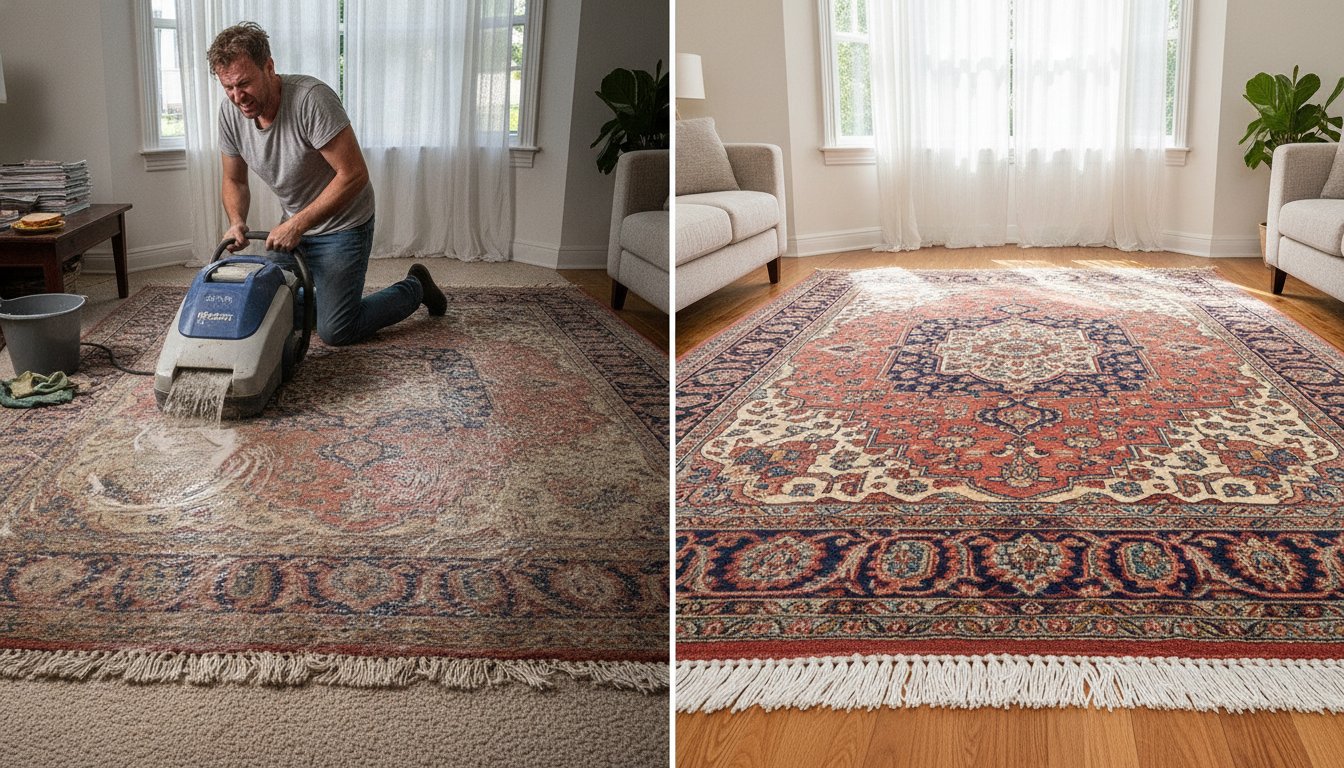
What if that rental machine you picked up from the local supermarket is actually doing more harm to your heirloom wool rug than the dirt itself? It’s a common dilemma for many of our neighbours in Stockport and Manchester when pet odours linger or high-traffic areas start to look dull. You want your home to be a healthy sanctuary for your family, and it’s natural to seek a quick fix. However, when evaluating professional rug cleaning vs diy options, the risk of permanent structural damage often outweighs the convenience of a rental.
We know the stress of worrying about colour-running or shrinking. This article will show you why professional care is a protective investment for your home and how to avoid the common mistakes that ruin delicate wool and silk fibres. While consumer machines might only remove around 60% of allergens, we’ll explain how professional deep extraction achieves a much higher standard of hygiene. You will learn how our specialized, eco-friendly methods protect your rug’s value while ensuring your living space remains fresh, safe, and welcoming for your children and pets.
Key Takeaways
- Understand why your rug’s unique backing and delicate fringes require different care than standard wall-to-wall carpets to avoid permanent damage.
- Learn about the “over-wetting” trap and how improper drying times from rental machines can lead to mould growth in your favourite textiles.
- Discover the critical “dusting” stage used in professional rug cleaning vs diy methods to remove deep-seated grit before any water is applied.
- Get a simple step-by-step guide on how to perform a “damp cloth test” to check if your rug’s dyes are safe for basic home spot cleaning.
- See how local specialists in Stockport and Manchester use eco-friendly, pet-safe solutions to restore your rug’s beauty without using harsh chemicals.
Professional Rug Cleaning vs DIY: Why Your Rug Isn’t Just a Small Carpet
Rugs are often the centrepiece of a room in Stockport homes, but they are frequently misunderstood. While your wall-to-wall carpet is a fixed utility, a rug is a mobile textile with its own unique structural foundation. This distinction is the primary reason why the debate of professional rug cleaning vs diy isn’t just about price; it’s about the survival of the fabric. Standard carpet cleaning machines designed for synthetic office floors are often far too aggressive for delicate rug fringes, which can be shredded or tangled in a matter of seconds. True rug care is about preservation, ensuring the textile remains a part of your home for decades rather than just scrubbing away a surface spill.
There are various carpet cleaning methods used today, but many domestic rental units rely on high-pressure water and high-heat settings that can cause natural rug foundations to buckle or shrink. Unlike carpets, rugs are designed with dense weaves that trap “dry soil” deep within the foundation. This grit acts like sandpaper, slowly grinding away at the fibres from the bottom up every time you walk across it. A standard vacuum or a domestic rental machine simply cannot reach this hidden layer of debris.
The Anatomy of a Rug: Fibres and Foundations
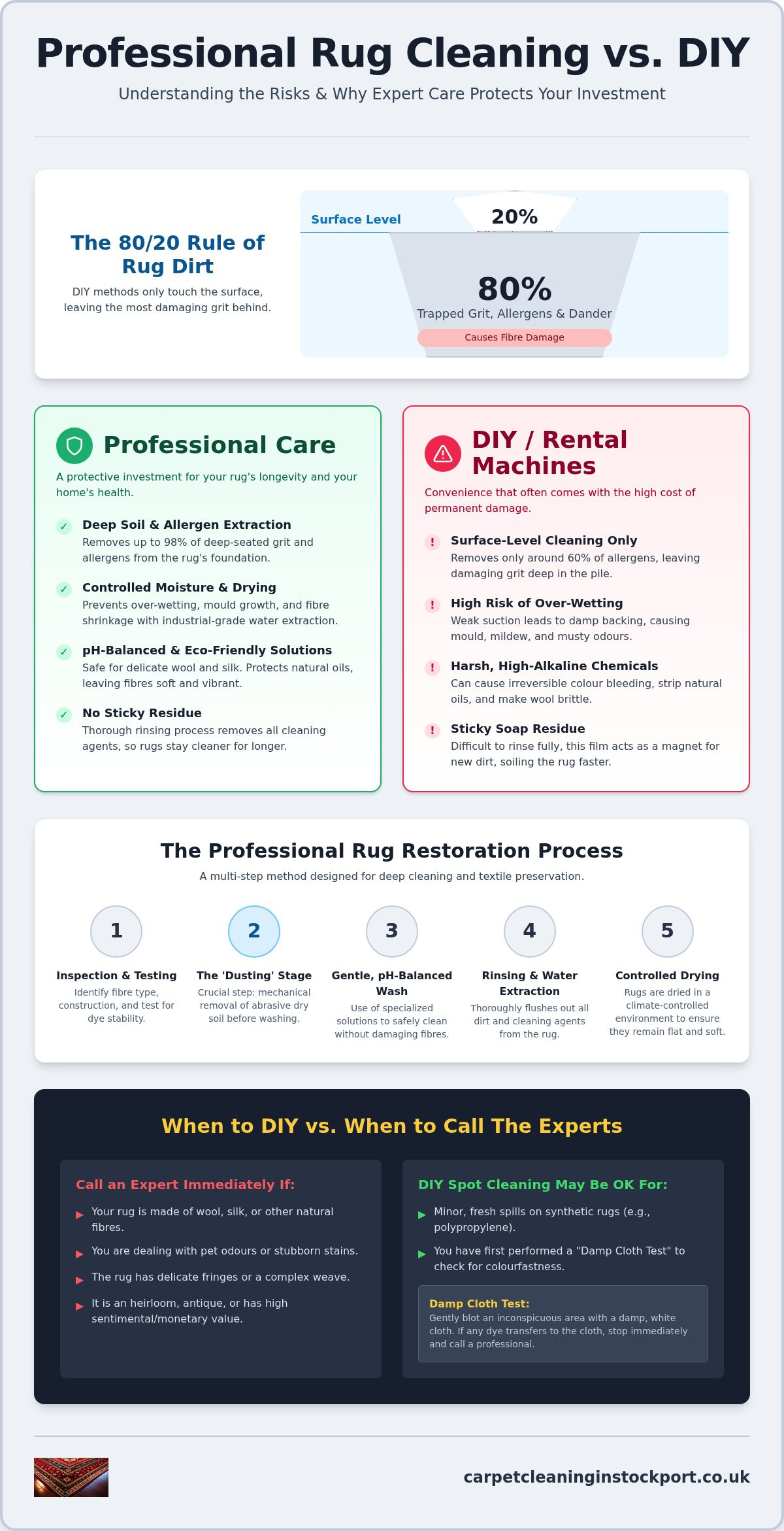
Natural fibres like wool and silk are protein-based, much like human hair. They require a balanced pH and gentle handling to stay soft and resilient. Synthetic rugs made from polypropylene are more forgiving, but the weave of any rug acts as a filter for your home’s air. DIY surface cleaning typically only addresses the top 20% of the pile. This leaves the remaining 80% of dirt, pet dander, and allergens trapped in the backing. Over time, this buildup weakens the structure of the rug, leading to “traffic lane” wear that no amount of scrubbing can fix.
The High Stakes of DIY Mistakes
Colour bleeding, or “migration,” is the most common DIY disaster we see across Manchester. When a rug is over-saturated with a high-alkaline supermarket spray, the dyes can run into the lighter areas, causing permanent staining. Improper pH levels in these shop-bought solutions can also strip the natural oils from wool, leaving it brittle and scratchy. A ruined heirloom rug often costs significantly more to replace than a decade of expert maintenance. Choosing a professional approach ensures that your investment is protected by technical knowledge and industrial-grade equipment designed specifically for delicate textiles.
The Hidden Risks of Rented Machines and Supermarket Sprays
The convenience of a rental machine from a local Stockport supermarket is hard to ignore. It seems like a cost-effective Saturday project. However, the true comparison of professional rug cleaning vs diy reveals hidden risks that often lead to permanent damage. Domestic machines lack the sophisticated moisture control of industrial tools. This often results in “over-wetting,” where water penetrates deep into the foundation and stays there for days. This moisture is incredibly difficult to extract without professional-grade suction.
When natural fibres like wool or cotton stay wet too long, they are prone to a phenomenon called wicking. This is when deep-seated soil travels up the damp fibres to the surface as they dry, leaving behind unsightly brown stains. Adhering to Carpet and Rug Institute guidelines helps prevent these issues, but DIY equipment rarely has the vacuum power required to follow these standards effectively. The result is often a rug that looks worse after it dries than it did when it was dirty.
Over-Wetting and the Musty Odour Trap
Excess water is the enemy of a healthy home. When a rug foundation remains damp, it becomes a breeding ground for mould and mildew. This is the source of that lingering musty odour that DIY sprays just can’t fix. Domestic rentals simply don’t have the vacuum strength to pull moisture from the dense weave of a quality rug. Beyond the smell, prolonged dampness can cause the backing to rot or the natural fibres to shrink. This leaves your rug misshapen and buckled, which is a structural issue that is often impossible to reverse.
The Soap Residue Magnet
Many supermarket shampoos are designed to produce lots of foam. While this looks impressive during the process, the high soap content is incredibly difficult to rinse out with a domestic machine. This leaves a sticky, invisible film on the fibres. This residue acts as a magnet for dust and pet hair. You might notice your rug feels slightly “tacky” after a DIY clean. This is why rugs often re-soil faster after a home attempt than they did before. It creates a frustrating cycle of cleaning that actually accelerates the wear on your textile.
Professional cleaning involves a neutralising rinse that leaves the textile clean, soft, and residue-free. If you want to avoid the cycle of rapid re-soiling and protect your home’s hygiene, consider booking expert rug cleaning from a local team that understands your specific materials. Our methods ensure your rug is sanitised deep down without leaving behind the sticky magnets that attract more dirt.
How the Professionals Restore Rugs in Stockport and Manchester
Many homeowners believe that cleaning starts with water, but our professional process begins with a methodical “dusting” stage. This is a critical step where we use specialised equipment to vibrate dry grit and soil out of the rug’s foundation. In a typical living room rug, we often remove several pounds of abrasive dirt that a domestic vacuum simply cannot reach. This mechanical removal of dry soil is one of the biggest differences in professional rug cleaning vs diy approaches. By removing the grit first, we prevent it from turning into mud during the wet cleaning stage, which protects the base of your rug from rot and premature wear.
Our team understands the local climate challenges in Greater Manchester. With our frequent rain and high humidity, rugs cleaned at home often struggle to dry, leading to the musty odours and mould risks mentioned earlier. We solve this by using controlled drying environments and industrial-grade extraction. This ensures that moisture is removed quickly and safely, even during the dampest winter months in Stockport. We also prioritise the health of your home by using eco-friendly, pet-safe chemicals as standard. These solutions are tough on stains but gentle on the environment and your family’s well-being.
Industrial Extraction vs Domestic Suction
The equipment we bring to your home or use in our facility is significantly more powerful than any rental unit. While a consumer machine might only remove 60% of allergens, our advanced deep extraction equipment is capable of removing up to 95% of bacteria and dust mites. When comparing professional rug cleaning vs diy, the power of industrial suction is often the deciding factor for hygiene. We use regulated steam to sanitise the fibres, killing germs without damaging the natural proteins in wool or silk. Our agitation methods are also designed to be gentle; we lift the pile and restore its texture without the harsh scrubbing that can fray delicate fibres.
Specialised Treatments for Fine Fibres
Every rug is different, and a “one size fits all” approach is the fastest way to ruin a valuable textile. We treat an antique Persian rug with a completely different set of pH-balanced rinses than we would use for a modern synthetic rug. These specialised rinses are vital for restoring the natural softness of the fibres and preventing the “crunchy” feel often left behind by soapy DIY residues. For those with particularly delicate or antique pieces, you can find more about our Professional Rug Cleaning in Manchester and how we handle complex restoration projects. We take pride in our workmanship, ensuring that every rug we touch is returned to you looking vibrant and smelling fresh.
When to DIY and When to Call the Experts: A Decision Guide
Deciding between professional rug cleaning vs diy often comes down to one question: how much do you value the textile? If you’re dealing with a budget synthetic rug from a high-street retailer, a home refresh might be a low-risk project. However, for heirloom pieces or natural fibres, you need a methodical approach. Start by performing a “damp cloth test.” Take a clean white cotton cloth, dampen it with warm water, and press it firmly into a discreet corner of the rug for 60 seconds. If even a hint of colour transfers to the cloth, stop immediately. Your rug’s dyes are unstable, and any DIY attempt will lead to permanent colour bleeding.
Value isn’t always about the price tag; sentimental value is just as important. We often see rugs in Stockport homes that have been passed down through generations. These pieces, along with “red flag” materials like silk and viscose, should never be touched by domestic machines. Viscose, frequently sold as “art silk,” is essentially a wood-pulp fibre. It loses significant structural strength when wet and can turn yellow or become brittle if treated with the wrong pH. For these delicate textiles, the risk of a DIY mistake far outweighs the cost of expert care.
Safe DIY First Aid for Spills
When a spill occurs, your immediate reaction determines the rug’s future. Always follow the “Blot, Don’t Rub” rule. Rubbing a stain agitates the fibres and creates “fuzzing,” which is permanent physical damage that no professional can reverse. Use a clean, dry towel to soak up as much liquid as possible. We strongly advise against using salt or white wine as cleaning agents. Salt is abrasive and difficult to fully extract, while white wine simply adds more sugar and acidity to the stain. If you find yourself constantly spot-cleaning, it’s usually a sign your home is ready for a full domestic carpet cleaning service to restore your living space’s hygiene.
The Tipping Point: When DIY Becomes Dangerous
Some problems are physically impossible to solve with supermarket sprays. Pet urine is the perfect example. While a spray might mask the odour for a few hours, it won’t remove the alkaline salts trapped in the rug’s foundation. These salts act like tiny sponges, absorbing moisture from the air and keeping the bacteria active. Stubborn stains like coffee or red wine on light wool also require specialised neutralising agents that aren’t available in shops. Finally, avoid scrubbing the fringes. These delicate cotton threads are the most common place DIYers ruin rugs, as domestic brushes quickly fray the weave. If you’re facing deep-seated odours or delicate fringes, it’s time to call our Stockport rug restoration team for a safe, deep-extraction clean.
Choosing Commercial Carpet Cleaners Stockport for Your Rug Restoration
When you choose our team, you aren’t just hiring a cleaning service; you’re inviting a local specialist into your home who treats your property with the same care as their own. We understand that the debate of professional rug cleaning vs diy is often rooted in a desire to maintain a healthy, comfortable living space without unnecessary stress. Our approach is designed to be dependable and transparent from the moment you request a quote to the final inspection of your restored textile. We take immense pride in our workmanship, focusing on technical expertise that goes far beyond surface-level aesthetics.
Our process is methodical and thorough. We begin by assessing the specific needs of your rug, identifying the fibre type and any potential areas of concern like pet odours or structural wear. This honesty and transparency ensure you know exactly what results to expect. Whether you have a cherished family heirloom or high-traffic commercial carpets in a local office, our experience allows us to tailor our methods for the best possible outcome. We believe that a clean home is a foundation for well-being, and our service is a vital contribution to that hygiene.
Our Eco-Friendly, Pet-Safe Approach
The health and safety of your family and pets are our top priorities. We use eco-friendly, non-toxic cleaning agents as standard, ensuring that your home remains free from harsh chemical odours or irritants. These green solutions are professionally formulated to provide deep sanitization and allergen removal, matching the performance of traditional chemicals without the environmental cost. Because our extraction equipment is so powerful, we leave your rug completely residue-free. This means there are no sticky soaps left behind to attract new dirt, providing you with a lasting clean and total peace of mind for your children and pets.
Local Expertise You Can Trust
We are proud to serve Stockport, Manchester, Bury, and Bolton with a neighborly touch that generic corporations simply cannot match. Our local roots mean we have a unique understanding of the specific challenges faced by homeowners in the North West. Manchester’s damp climate is no secret; it’s a factor that significantly affects drying times and moisture management. We use advanced deep extraction equipment and controlled drying techniques to ensure your rug is returned to its best condition quickly and safely, regardless of the weather outside. If you are ready to protect your investment and restore the comfort of your home, reach out to our nearby team.
Get a Free Rug Cleaning Quote in Stockport Today
Restore Your Rug’s Beauty and Protect Your Home
Choosing between professional rug cleaning vs diy is about more than just removing surface stains; it’s about the long-term health of your living space and the preservation of your valuable textiles. We’ve explored how improper drying and sticky soapy residues can trap dirt and lead to lingering musty odours. By opting for an expert approach, you ensure that deep-seated grit is removed through mechanical dusting and advanced deep extraction technology. This isn’t just a simple chore, it’s a protective investment in the hygiene and comfort of your family home.
Our team is proud to serve Greater Manchester and Cheshire with a meticulous, neighborly service that prioritises your well-being. We use eco-friendly and pet-safe chemicals as standard, giving you total confidence that your rugs are as safe as they are clean. Don’t risk the structural integrity of your favourite heirloom or the air quality of your home. Book Your Professional Rug Restoration in Stockport Today and let us return the vibrancy and freshness to your living space with our expert care.
Frequently Asked Questions
Can I use a rented carpet cleaner on a wool rug?
No, using a rented machine on a wool rug is highly risky. These domestic units often use high heat and excessive water that can shrink natural fibres or cause the backing to buckle. Wool is a protein-based fibre that requires a specific pH balance and controlled moisture levels. Our team uses specialized equipment designed to protect the delicate structure of the wool while removing the deep-seated grit that simple vacuums miss.
Is professional rug cleaning better than DIY for removing pet odours?
Yes, professional cleaning is significantly more effective because it addresses the source of the smell. DIY sprays typically use heavy perfumes to mask odours, but they don’t remove the underlying urine salts trapped in the foundation. Our advanced deep extraction equipment flushes these salts out, while our eco-friendly, pet-safe chemicals neutralize the bacteria. This prevents the unpleasant musty smell from returning when the humidity rises in Manchester.
How long does it take for a rug to dry after professional cleaning?
Most rugs will be dry within 4 to 8 hours depending on the material and the humidity levels in your home. We use industrial-grade suction to remove the vast majority of moisture during the extraction process. This rapid drying time is a key advantage in the professional rug cleaning vs diy debate, as home-cleaned rugs can stay damp for days, risking mould growth and the development of musty odours in your living space.
Will professional cleaning remove all stains from my rug?
While we remove the vast majority of stains, some substances can cause permanent dye changes in the fibres. Stains like bleach, certain acids, or old red wine spills that have already “set” may not be fully reversible. However, our technical expertise allows us to identify the specific stain type and apply the safest, most effective treatment possible. We always aim for full restoration while prioritizing the long-term safety and value of your textile.
Is it cheaper to clean a rug myself or hire a professional in Stockport?
DIY might seem cheaper initially, but the potential costs of permanent damage often make professional service the more economical choice. A single mistake with a rental machine can ruin an expensive rug or damage the floorboards underneath. We provide a transparent, dependable service across Stockport and Manchester that protects your investment. Professional cleaning extends the life of your rug, saving you from the high cost of early replacement and maintaining your home’s hygiene.
Can professional cleaning fix a rug that has already been ruined by DIY?
It depends on the extent of the damage, but we can often improve rugs that have suffered from over-wetting or soap residue. If a rug has “browned” due to slow drying or feels crunchy from leftover shampoo, our deep extraction process can often restore the texture and appearance. However, permanent physical damage like fibre fuzzing or severe colour bleeding is much harder to reverse once the rug’s structural integrity is compromised by improper techniques.
What is the risk of colour bleeding during DIY rug cleaning?
The risk of colour bleeding is very high when using high-alkaline supermarket sprays and excessive amounts of water. Many rugs, especially hand-dyed or antique pieces, have unstable dyes that “migrate” when they become too wet. Professionals perform a dye-stability test before starting and use pH-balanced rinses to keep colours locked in place. This technical step is often missed in DIY attempts, frequently leading to permanent staining across the lighter areas of the rug’s pattern.
How often should I have my rugs professionally cleaned?
Most industry experts recommend a professional deep clean every 12 to 18 months to maintain a healthy and hygienic home environment. If you have pets or children, or if the rug is in a high-traffic area, you might consider a clean every 6 to 9 months. Regular maintenance removes the abrasive grit that wears down fibres over time, ensuring your rug remains a beautiful and fresh part of your Stockport home for many years.