Table of Contents
- Identify the Source of Your Carpet Odor
- How to Remove Pet Urine Smell from Carpet
- Baking Soda and Vinegar Carpet Cleaning Method
- How to Get Rid of Musty Carpet Smell
- Best Carpet Deodorizer for Pets and Households
- Deep Cleaning Techniques to Eliminate How to Get Rid of Carpet Odors
- Preventative Carpet Maintenance and Long-Term Odor Control
- Common Mistakes to Avoid When Removing Carpet Odors
Last Updated: July 14, 2026
Carpet odors can make your home feel less inviting, but many common smells respond well to straightforward cleaning methods. Whether you’re dealing with pet accidents, mustiness from moisture, or stale odors trapped in fibers, learning how to eliminate carpet odors is a practical investment in your home’s comfort. This guide shows you how to identify the source, apply targeted treatments, and prevent the problem from returning.
Identify the Source of Your Carpet Odor
Finding the real cause is the critical first step. Different odors require different solutions. A musty smell points to moisture and mildew, while sharp ammonia indicates pet urine. Stale or smoke odors suggest trapped particles in the fibers.
Get down at carpet level and sniff directly at the surface. Walk through your home systematically, noting where the smell is strongest. Is it concentrated in one room or spread throughout? Does it worsen in humid weather? These clues tell you whether you’re dealing with a localized pet accident or a broader moisture issue.
Common Carpet Odor Sources
Pet accidents are the most common culprit, particularly urine from cats and dogs. The ammonia smell worsens when the carpet gets wet or humid because moisture reactivates the urine compounds.
Moisture and mildew develop when carpets stay damp too long. This happens after spills, flooding, high humidity, or poor ventilation. The smell is earthy and musty, often accompanied by dark spots.
Smoke odors linger in carpet fibers even after the source is gone. Cigarette smoke, cooking fumes, or fireplace smoke leave behind particles that trap odor molecules deep in the carpet.
General staleness develops when carpets aren’t cleaned regularly. Dead skin cells, dust, and organic matter accumulate in the fibers, creating a dull smell.
Conducting a Spot Test on Hidden Areas
Before applying any cleaning solution to visible carpet, test it on a hidden area first. This prevents discoloration or damage. Choose a spot in a closet, under furniture, or in a corner.
Apply your chosen solution to the test spot and wait 10-15 minutes. Check whether the color holds and whether it actually reduces the odor. If the carpet is wool or delicate synthetic, be cautious with acidic solutions like vinegar.
Keep a spray bottle of plain water nearby when testing. If a solution causes unexpected discoloration, spray water on the area immediately to dilute and rinse it out.
How to Remove Pet Urine Smell from Carpet
Pet urine is among the most stubborn carpet odors because it soaks deep into fibers and padding. The ammonia smell intensifies when the carpet gets wet. Urine contains uric acid crystals that don’t fully dissolve in water alone. Standard cleaning may temporarily mask the smell, but the crystals remain and reactivate when moisture returns. Enzyme-based cleaners break down the uric acid at a molecular level.
Enzyme Cleaners for Pet Odor Neutralization
Enzyme cleaners contain bacteria and enzymes that consume uric acid and other organic compounds in pet urine. They eliminate odors by breaking down the molecules that cause them, rather than masking the smell.
Locate the urine spot using a blacklight or your nose. Saturate the area thoroughly, the solution needs to reach the padding, not just the surface. Follow product instructions for how long to let it sit; most enzyme cleaners need 12-24 hours to work properly.
After the waiting period, blot the area with clean towels to remove excess moisture. Don’t rinse with water immediately, as this dilutes the enzyme solution before it’s finished working. If the smell persists, apply the enzyme cleaner a second time.
Never mix enzyme cleaners with bleach or ammonia-based products. The chemical reaction can release toxic fumes.
Baking Soda and Vinegar Carpet Cleaning Method
Baking soda and white vinegar are affordable and effective tools for neutralizing carpet odors. Baking soda absorbs odor molecules, while vinegar neutralizes them through its acidic pH. This method works well for general staleness, light pet odors, and musty smells.
Step-by-Step Application Process
Vacuum the carpet thoroughly with a HEPA filter vacuum to remove loose particles. This ensures the baking soda makes direct contact with carpet fibers.
Sprinkle baking soda generously over the affected area. Let it sit for at least 15-30 minutes. For stronger odors, leave it overnight.
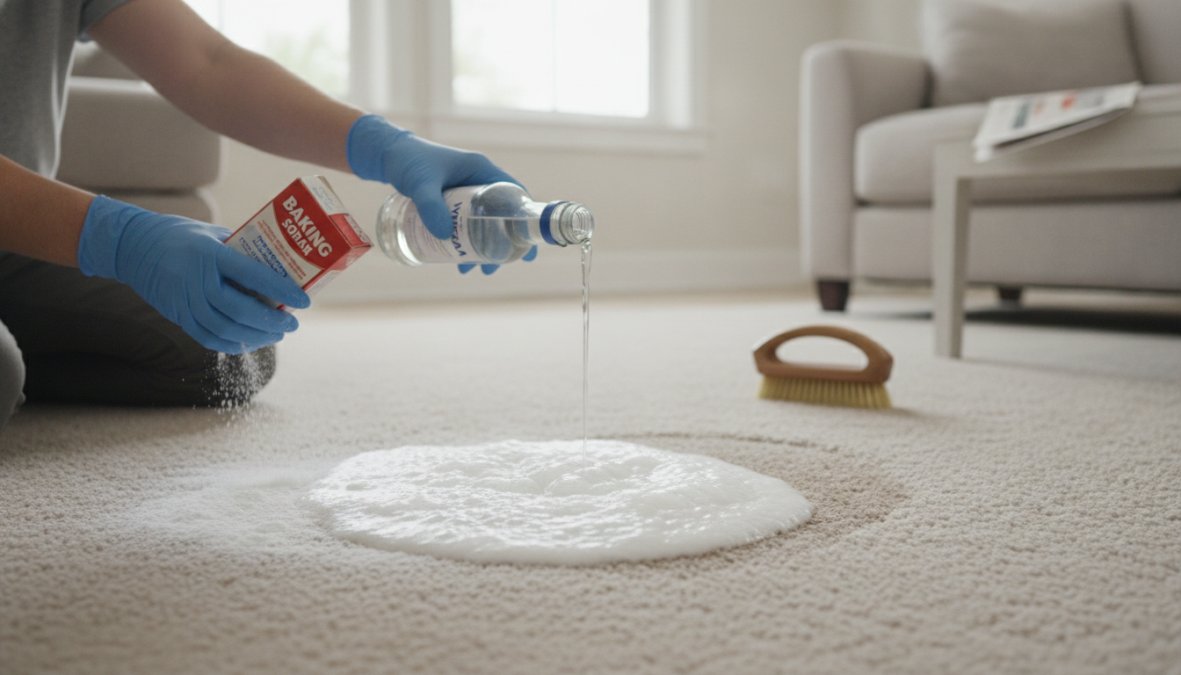
Vacuum up all the baking soda thoroughly. Mix equal parts white vinegar and water in a spray bottle. Lightly mist the carpet area, but don’t saturate it. The goal is to dampen the fibers, not soak the padding. The vinegar will react with any remaining baking soda residue, creating a fizzing action that lifts odors.
Allow the carpet to air dry completely. Open windows and doors to increase ventilation. Run a fan across the carpet to speed drying. Once dry, the vinegar smell dissipates, and your carpet should smell fresher. If odor remains, repeat the process.
For wall-to-wall carpet treatments, do one room at a time to avoid making your entire home uncomfortably wet.
How to Get Rid of Musty Carpet Smell
Musty carpet odors signal moisture and mildew growth. You’re not just dealing with a smell; you’re dealing with a potential health issue. Mildew thrives in damp environments, and once it establishes in carpet padding, the smell becomes persistent.
The first step is identifying and fixing the moisture source. Is there an active leak? Is humidity in the room above 60%? Until you address the root cause, any odor treatment is temporary.
Increase ventilation immediately. Open windows and doors, run ceiling fans, and use a portable fan to direct air across the carpet. In basements or bathrooms, consider running a dehumidifier to pull moisture from the air.
For light musty smells, sprinkle baking soda and let it sit for 24 hours, then vacuum thoroughly. For stronger mildew smells, use a mixture of one part white vinegar to one part water, spray lightly, and allow to air dry with maximum ventilation.
If the musty smell is severe or the carpet feels damp to the touch, professional cleaning may be necessary.
If you see visible mold growth or the carpet feels squishy underfoot, the padding is likely saturated. Replacement may be more cost-effective than attempting to salvage the carpet.
Best Carpet Deodorizer for Pets and Households
Choosing between natural and commercial deodorizers depends on your carpet type, odor severity, and preferences for chemical exposure. Natural deodorizers like baking soda, vinegar, and essential oils are safer around pets and children, less likely to cause allergic reactions, and significantly cheaper. Commercial deodorizers are more concentrated, work faster, and handle stubborn odors that natural methods struggle with.
Natural vs. Commercial Deodorizing Solutions
Natural deodorizers rely on absorption and chemical neutralization. Baking soda absorbs odors passively, while vinegar neutralizes them through pH balance. The advantage is safety; these products won’t harm pets if ingested in small amounts.
The limitation is effectiveness on deeply embedded or severe odors. If pet urine has soaked into the padding, baking soda alone won’t reach it. Commercial enzyme cleaners and oxygen-based deodorizers are more aggressive and work faster on stubborn odors.
For most households, the best approach is layered: use natural methods for routine maintenance, and bring in commercial enzyme cleaners or professional services when natural methods plateau.
| Deodorizer Type | Best For | Application | Drying Time |
|---|---|---|---|
| Baking soda | General staleness, light odors | Sprinkle, wait 15-30 min, vacuum | Immediate |
| White vinegar solution | Musty smells, light odors | Spray lightly, air dry | 2-4 hours |
| Enzyme cleaner | Pet urine, stubborn odors | Saturate area, wait 12-24 hours, blot | 4-8 hours |
| Oxygen-based cleaner | Deep odors, mildew | Spray, wait 1-2 hours, vacuum | 2-4 hours |
| Professional steam cleaning | Severe/multiple odors, full carpet | Equipment-based extraction | 4-6 hours |
Deep Cleaning Techniques to Eliminate Carpet Odors
When DIY methods plateau, deep cleaning techniques reach odor sources that surface treatments can’t touch. These methods extract moisture, kill bacteria, and remove trapped particles from deep within the carpet and padding.
Vacuuming with HEPA Filters and Steam Cleaning
A HEPA filter vacuum traps microscopic particles that carry odor molecules. HEPA stands for High-Efficiency Particulate Air, and these filters capture 99.97% of particles down to 0.3 microns. For pet odors and mildew spores, HEPA filtration makes a measurable difference.
Vacuum your carpet weekly if you have pets, and twice weekly in high-traffic areas. Use slow, deliberate strokes that allow the vacuum to extract particles.
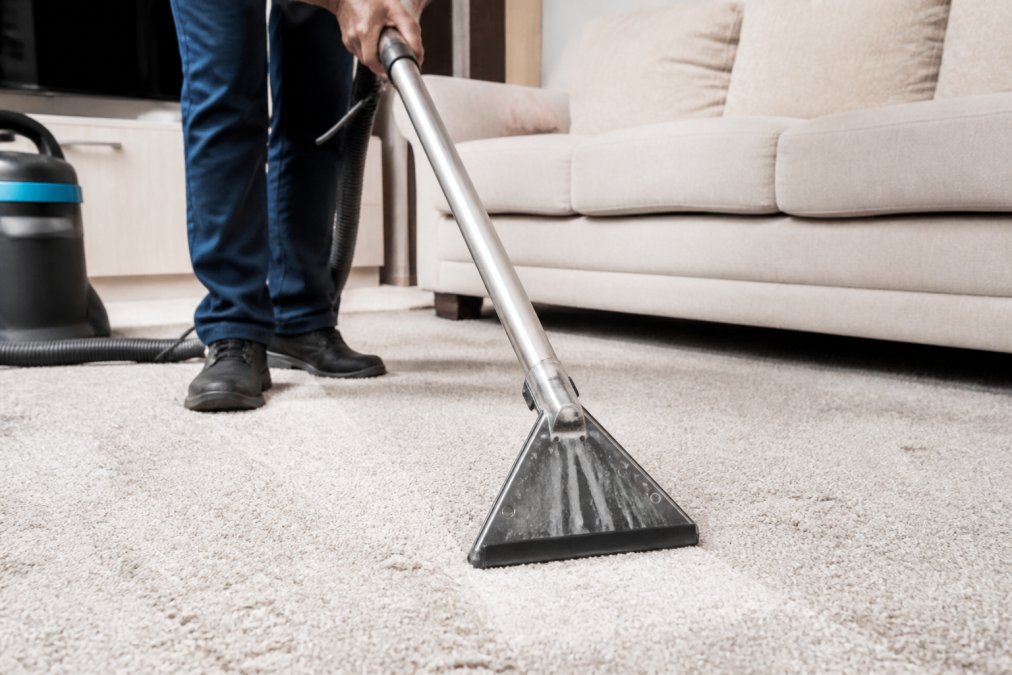
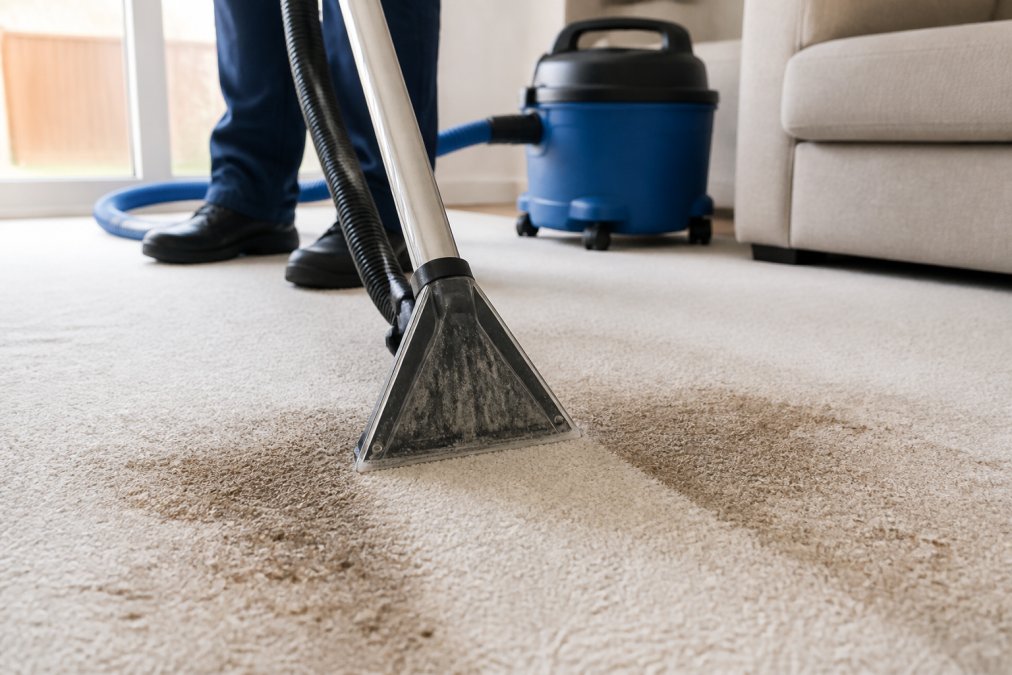
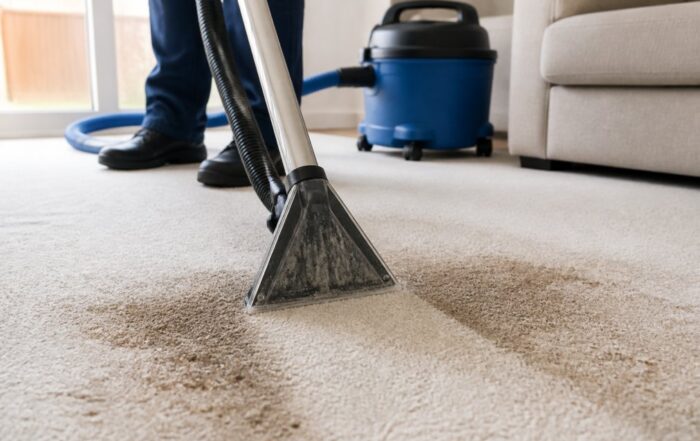
Steam cleaning uses pressurized hot water and cleaning solution to penetrate the carpet and padding, then immediately extracts the liquid back out. This removes odor-causing bacteria, dissolved urine compounds, and mildew spores that dry methods leave behind.
Water needs to be hot enough (typically 200°F or higher) to break down odor compounds and kill bacteria. The solution needs to sit in the carpet long enough to dissolve odors before extraction pulls it out. For pet urine, steam cleaning works best after enzyme treatment.
Professional Deep Cleaning When DIY Methods Aren’t Enough
Professional carpet cleaning companies have equipment and expertise that rental machines and DIY methods can’t match. They use truck-mounted extraction systems that generate more suction and heat than portable units, allowing them to pull water deep from the padding and dry the carpet much faster.
Professional cleaning is worth considering if your carpet has multiple odor sources, if DIY methods have failed after repeated attempts, or if the carpet was exposed to flooding or severe pet damage.
The most cost-effective approach is consistent maintenance: vacuum weekly with a HEPA filter, treat spills immediately, and address moisture sources promptly. This prevents odors from becoming deeply embedded.
Preventative Carpet Maintenance and Long-Term Odor Control
Preventing carpet odors is far easier and cheaper than eliminating them once they’ve taken hold. Carpet odors develop when conditions allow bacteria and mildew to flourish: moisture, organic matter, and poor air circulation.
Ventilation, Air Circulation, and Regular Maintenance
Open windows daily to allow fresh air to circulate through your home. This is especially important in bathrooms, kitchens, and basements where moisture accumulates.
Use ceiling fans and portable fans to keep air moving across carpet surfaces. Stagnant air allows moisture to linger and mildew to grow.
Vacuum high-traffic areas twice weekly and the entire carpet at least weekly. This removes dust, dead skin cells, and pet hair before they accumulate and decompose into odor. A HEPA filter vacuum captures particles that standard vacuums miss.
Address spills and accidents immediately. The longer liquid sits in carpet, the deeper it penetrates into the padding. Speed is critical, waiting even a few hours allows liquid to soak into the padding where it becomes much harder to remove.
Keep humidity below 60% in your home. Use a dehumidifier in basements and bathrooms. Fix any leaks promptly. Ensure gutters and downspouts direct water away from your home’s foundation.
Sprinkle baking soda on carpet monthly as a preventative measure. Let it sit for 15-30 minutes, then vacuum thoroughly. For pet owners, designate a washable mat in the area where your pet spends the most time and wash it weekly.
Common Mistakes to Avoid When Removing Carpet Odors
The most common mistake is treating the symptom instead of the cause. Using air freshener on a carpet with active pet urine or moisture problems only masks the smell temporarily. The underlying issue remains and worsens.
Another frequent error is applying too little solution. Many people lightly sprinkle baking soda or spray vinegar, expecting results. These treatments need adequate contact with the carpet to work.
Rushing the drying process is another pitfall. If you rinse away baking soda or enzyme cleaner before they’ve had time to work, you lose their effectiveness. If carpet stays damp too long after cleaning, mildew develops.
Mixing incompatible products causes problems. Never combine bleach with ammonia or vinegar. Don’t mix enzyme cleaners with other products. Stick to one treatment method at a time.
Ignoring moisture sources wastes effort. If your basement carpet smells musty because the room is humid, no amount of baking soda or vinegar will permanently solve the problem. Address the moisture first, then treat the odor.
Finally, many people wait too long before seeking professional help. If DIY methods haven’t worked after two or three attempts, or if the carpet smells worse after cleaning, professional intervention is the next logical step.
If your carpet odors persist despite your best DIY efforts, or if the smell involves pet urine deep in the padding, professional cleaning becomes the most practical solution. Carpet Cleaning In Stockport uses advanced extraction equipment and family-friendly, pet-safe cleaning solutions to remove dirt, stains, bacteria, and allergens that cause persistent odors. With same-day service available and fast drying times, professional cleaning restores your carpet to original quality while ensuring a fresher home environment for your family.
Frequently Asked Questions
Does baking soda really remove carpet odors?
Yes, baking soda is effective at neutralizing odor molecules in carpet fibers through moisture absorption. Sprinkle it directly on affected areas, let it sit for several hours or overnight, then vacuum thoroughly. For best results, combine baking soda with white vinegar, the acidic solution helps break down odor-causing residue while baking soda absorbs remaining smells. This method works on both synthetic and natural rugs, though always test on a hidden area first.
How do you get rid of pet urine smell in carpet?
Pet urine requires enzyme cleaners that break down the organic compounds causing the odor. First, blot the affected area thoroughly. Apply an enzyme-based cleaner, which neutralizes urine at the molecular level, these are more effective than baking soda alone for pet accidents. If the smell persists, the urine may have soaked through carpet fibers into the padding. In such cases, professional deep cleaning or carpet replacement may be necessary. Always test any solution on a hidden spot first.
Why does my carpet smell musty even after cleaning?
Musty smells indicate moisture, mildew, or mold growth in carpet fibers or padding. This happens when carpets dry too slowly after cleaning or if humidity levels remain high. Improve air circulation with fans and open windows, use a dehumidifier to reduce dampness, and ensure carpets dry completely within 24 hours. If the smell persists, professional steam cleaning combined with proper ventilation is needed. Check carpet padding for hidden moisture, sometimes padding replacement is the only solution.
What's the safest way to deodorize carpet without damaging fibers?
Always spot test any solution on a hidden area first, especially with natural rugs or delicate synthetic carpets. Baking soda is generally safe for all carpet types, but white vinegar can affect certain dyes, test it first. Avoid oversaturating carpets, as excess moisture causes mildew. Essential oils mixed with baking soda add fragrance safely, though use sparingly. For pet-friendly households, enzyme cleaners are safer than harsh chemical sprays. If unsure about your carpet material, consult professionals who use family-friendly, pet-safe cleaning solutions.
This article was written using GrandRanker