Table of Contents
- Act Fast: Immediate Water Removal for Wet Carpet
- Best Tools for Drying Wet Carpet
- Ventilation and Dehumidification: Creating Optimal Drying Conditions
- How Long Does It Take for Carpet to Dry
- Preventing Mold and Mildew Growth During and After Drying
- When to Call Professional Carpet Cleaners
- Subfloor Inspection and Post-Drying Health Safety
- Conclusion
Act Fast: Immediate Water Removal for Wet Carpet
The first few hours after carpet gets wet are critical. Water seeps deeper into carpet fibres and padding within the first 24 hours, making restoration exponentially harder the longer you wait (peer-reviewed research).
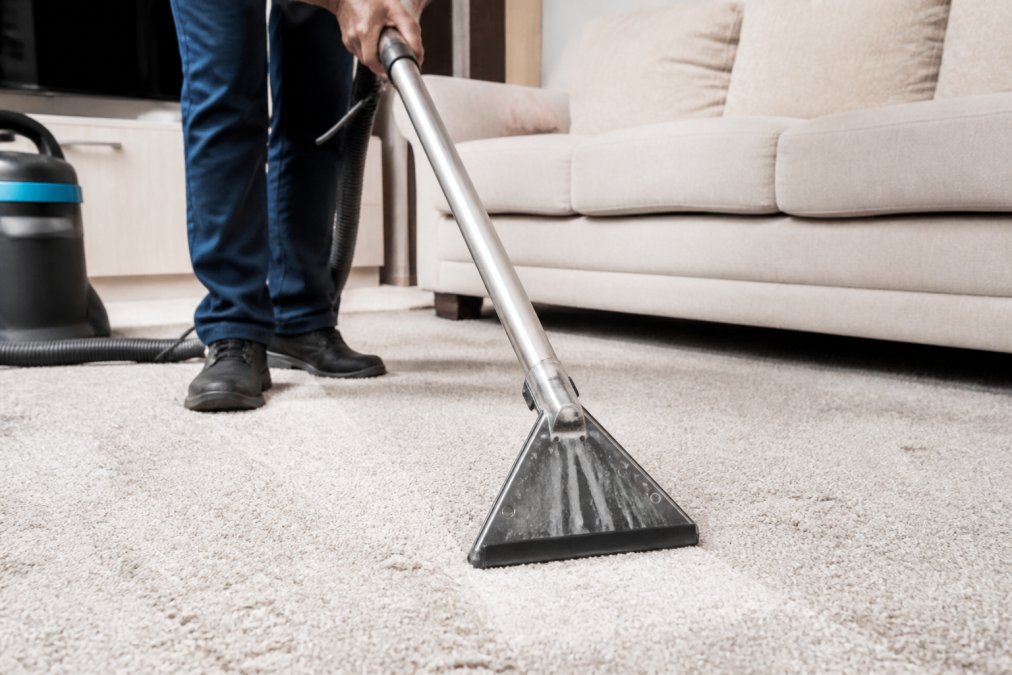
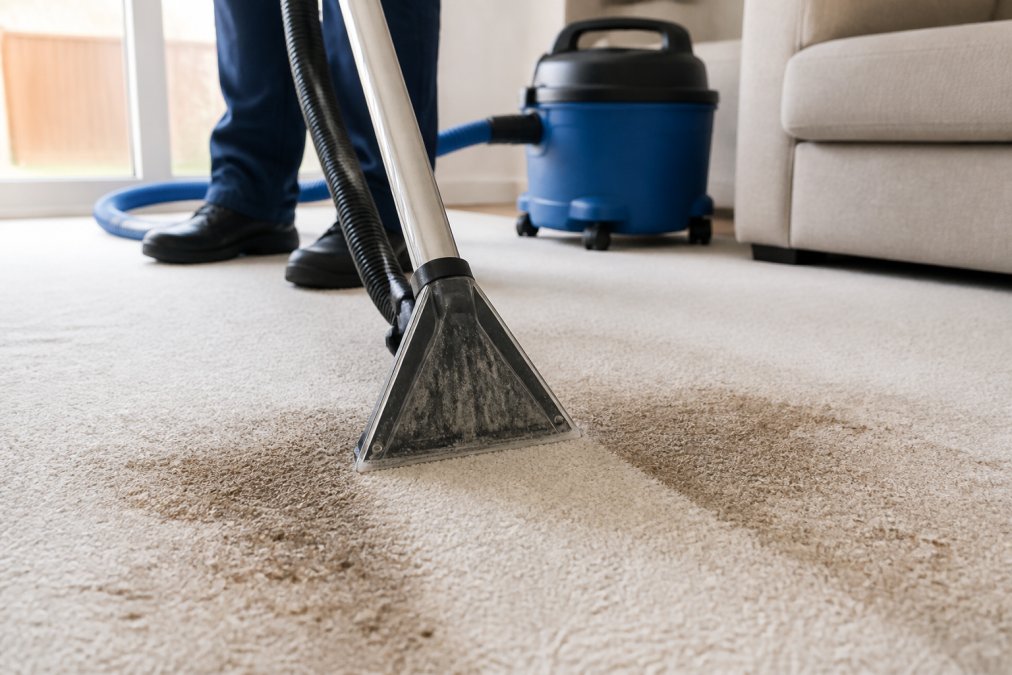
Start by removing standing water immediately using a wet-dry vacuum to extract water from the surface and backing. If you don’t have one, blot the area with clean towels by pressing down firmly, don’t rub, as this pushes water deeper into the fibres. For larger spills, professional extraction equipment makes a real difference.
Next, identify and stop the water source if possible. Once controlled, focus entirely on moisture removal. Open windows and doors to allow air exchange; ventilation is non-negotiable to avoid mildew growth. Position fans to push damp air toward open windows rather than circulating it around the room.
Don’t wait for the carpet to “feel dry” before moving to the next step. Carpet can feel relatively dry on the surface while remaining saturated at the backing and subfloor. This hidden moisture is where [mold and odour problems](/2026/08/28/why-carpets-smell-after-cleaning/) begin. Professional-grade extraction removes far more water than manual methods, which is why speed matters in the first hours.
The goal is simple: remove as much water as physically possible before it migrates deeper into the carpet structure.
Best Tools for Drying Wet Carpet
Effective drying requires the right equipment. Consumer-grade tools help, but professional-grade equipment is necessary for significant carpet damage.
Wet-Dry Vacuums and Extraction Equipment
A wet-dry vacuum is the most important tool for immediate water removal. Unlike standard household vacuums, these have sealed motors and collection tanks designed specifically for water without electrical hazard or motor damage.
Smaller portable units (5-10 litre capacity) work for minor spills. Larger units (20+ litres) are necessary for rooms with significant saturation. For heavy water damage, consider hiring commercial-grade carpet extractors, which use hot water and powerful suction to remove moisture far more effectively than portable wet-dry vacuums.
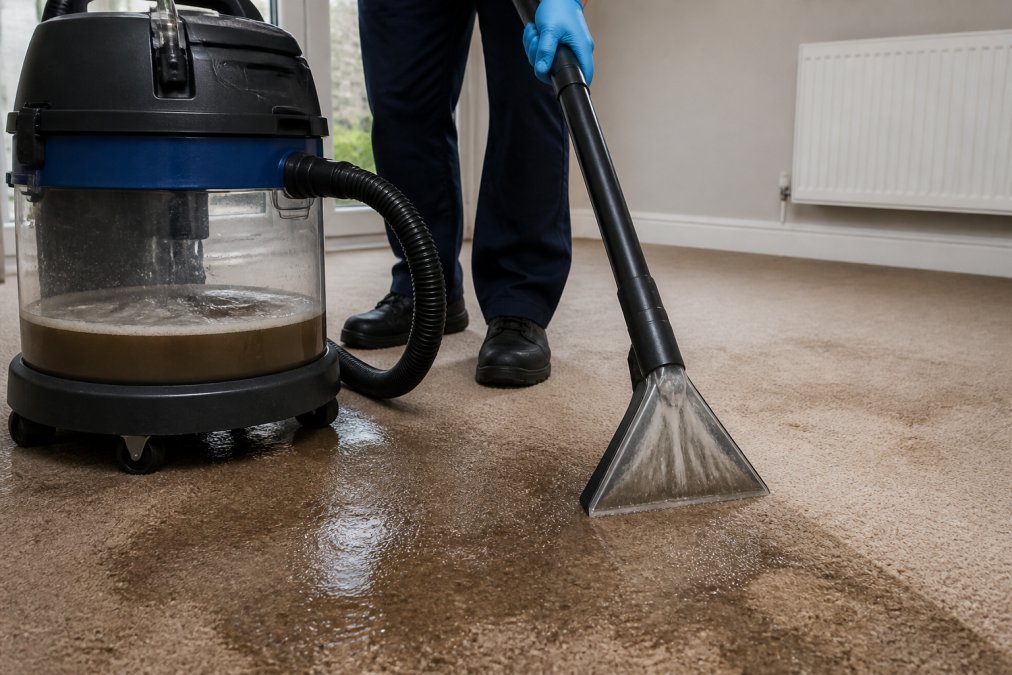
Carpet treated with professional extraction typically dries in 24-48 hours (peer-reviewed research). Carpet treated only with manual towel blotting and a standard wet-dry vacuum may take 5-7 days or longer, dramatically increasing mold risk and fibre degradation.
Air Movers and Fans for Air Circulation
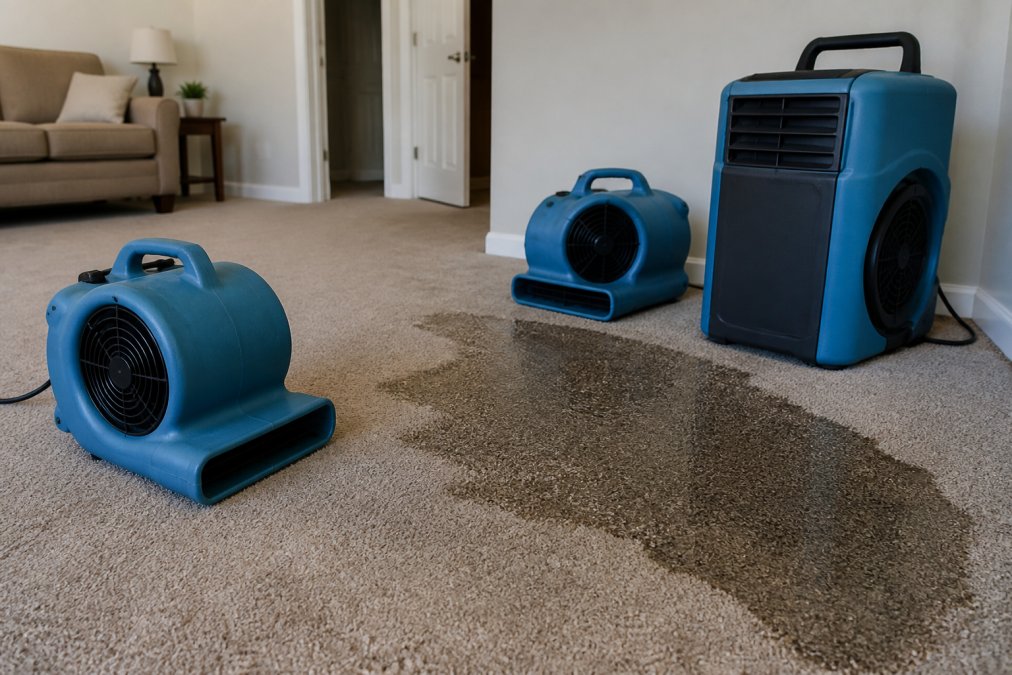
Once you’ve extracted standing water, air circulation becomes your primary tool for removing remaining moisture. Air movers, industrial-strength fans designed for water damage restoration, accelerate evaporation by creating continuous air flow across carpet surfaces.
Position air movers to push air across the carpet surface toward open windows or doors. Aim for at least 3-4 air movers in a typical room, positioned to create overlapping coverage. Run them continuously for 24-48 hours minimum. Consistent air circulation is far more effective than sporadic use.
Never seal the room or close windows while drying. Trapped moisture will condense on walls and other surfaces, potentially spreading water damage beyond the carpet itself. Keep windows and doors open and maintain constant air exchange with the outside environment.
Ventilation and Dehumidification: Creating Optimal Drying Conditions
Ventilation and humidity control work together to create conditions where carpet can actually dry. Without proper ventilation, moisture-laden air simply circulates without removing water. Without humidity control, the air becomes saturated and stops absorbing additional moisture from the carpet.
A dehumidifier removes moisture from the air, maintaining lower relative humidity and allowing evaporation to continue. For significant water damage, a dehumidifier is essential.
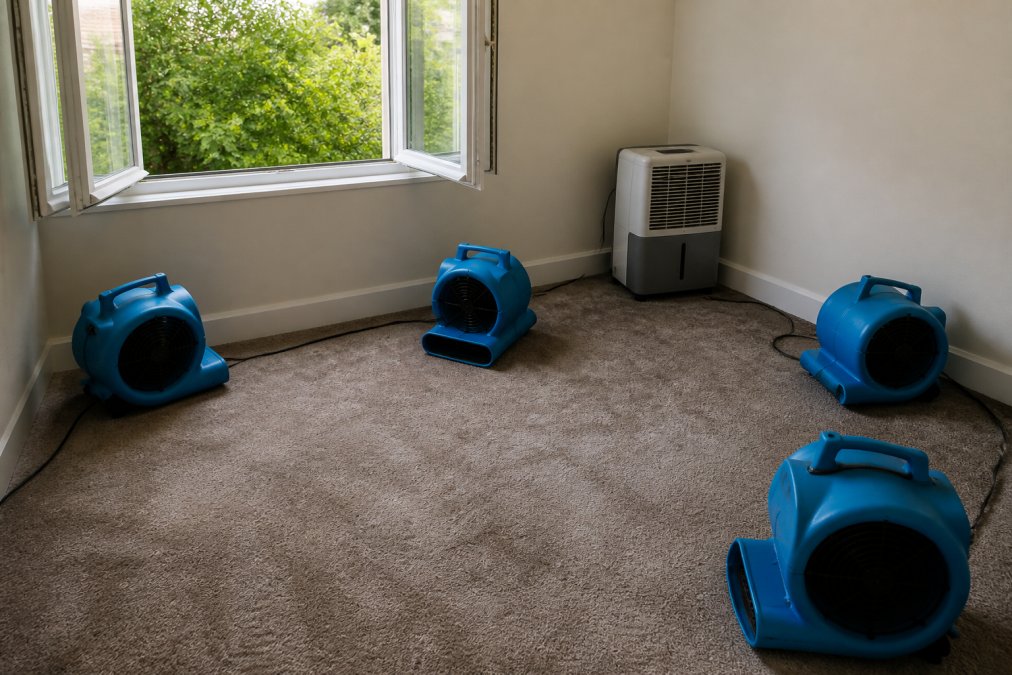
Position a dehumidifier in the centre of the affected room with windows open. This creates a system where air movers push moisture-laden air across the carpet, the dehumidifier removes that moisture, and ventilation allows drier air to escape outside.
Maintain indoor relative humidity below 50% during drying. A hygrometer (humidity meter) helps you monitor progress. If humidity remains above 60% after 24 hours, you likely need a larger or additional dehumidifier, or your ventilation is insufficient.
Maintain room temperature between 18-24°C during drying. Focus on humidity reduction and air circulation rather than artificial heating, which can cause uneven carpet fibre shrinkage.
How Long Does It Take for Carpet to Dry
Drying time depends on water amount, carpet type, padding thickness, subfloor material, ambient humidity, and equipment used.
Carpet treated with professional extraction typically dries in 24-48 hours with proper air circulation and dehumidification. Carpet dried using only manual methods may take 5-7 days or longer, significantly increasing mold risk, which typically begins within 24-48 hours of water exposure if conditions remain damp.
Thick carpet with dense padding retains more water and takes longer to dry than thin, low-pile carpet. Natural fibre carpets dry more slowly than synthetic fibres. Concrete subfloors dry faster than wooden subfloors. fix basement moisture.
Monitor progress by pressing a clean, dry towel firmly into the carpet for 10 seconds. If the towel picks up moisture, the carpet isn’t ready. By day 2-3, the towel should come away completely dry. If it’s still picking up moisture after 48 hours of aggressive drying, you need additional equipment or professional help.
The most important factor in drying time is how quickly you extract water in the first few hours. Professional extraction in hour one creates dramatically faster drying than waiting until hour six or later. This speed difference directly translates to lower mold risk and better carpet preservation.
Preventing Mold and Mildew Growth During and After Drying
Mold and mildew thrive in damp environments, particularly in carpet padding and subfloors where moisture remains hidden. Prevention during drying is far easier than treating mold after it’s established.
Mold spores germinate within 24-48 hours if the environment stays damp (the CDC). By maintaining aggressive drying with air circulation and dehumidification, you prevent spores from establishing colonies.
Understanding Moisture Extraction and Relative Humidity
Moisture extraction removes water physically from the carpet. Relative humidity management removes water from the air, preventing re-absorption. Both are necessary.
Carpet padding is particularly vulnerable, it absorbs water readily and dries very slowly. If padding remains wet after 48 hours, it’s likely to develop microbial growth. In severe cases, padding cannot be salvaged and must be replaced. This is why professional extraction in early stages is critical.
Check the subfloor if water damage was significant. Lift a corner of the carpet to inspect the padding and subfloor. If the subfloor is wet, it must dry completely before carpet is replaced. Wet wood subfloors can warp and develop rot. Concrete subfloors dry faster but still require thorough drying before reinstallation.
Baking Soda and Sanitisation for Odor and Microbial Control
Once the carpet is dry, baking soda helps neutralise odours. Sprinkle it generously over the dried carpet, allow it to sit for several hours, then vacuum thoroughly.
For carpets that experienced significant water exposure, professional sanitisation after drying provides additional protection by applying antimicrobial treatments to kill bacteria or fungal spores that may have colonised the fibres. The Carpet Cleaning In Stockport team uses family-friendly and pet-safe sanitisation methods that eliminate bacteria and allergens without harsh chemical residues.
When to Call Professional Carpet Cleaners
DIY drying works for minor spills. For anything larger, professional help is the smarter choice. The cost of professional restoration is almost always less than replacing carpet damaged by inadequate drying or mold growth.
Call professionals immediately if:
- Water damage covers more than one or two rooms
- The water source is unclear (potential contamination)
- Carpet remains damp after 24 hours of aggressive drying
- You notice any musty odour or visible mold growth
- Carpet padding is saturated or soggy to the touch
- The water came from a flood, sewage backup, or other non-clean source
Professional restoration includes extraction, drying, dehumidification, and sanitisation. Professionals have moisture metres to assess drying progress objectively and commercial-grade equipment that works far faster than consumer tools.
The Carpet Cleaning In Stockport team responds to water damage emergencies with same-day service availability. Professional extraction removes far more water in the first hours than DIY methods, dramatically reducing drying time and mold risk.
Subfloor Inspection and Post-Drying Health Safety
After the carpet is dry, inspect the subfloor and padding carefully. Lift a corner of the carpet and examine what’s underneath for discolouration or dark spots (signs of mold), soft or spongy padding (incomplete drying), warping in wooden subfloors, or musty odours (microbial growth).
If you see any of these signs, the padding likely needs replacement. Damp padding that appears dry may still harbour mold colonies internally.
Wooden subfloors that were significantly wet should be monitored for weeks after drying. Wood dries slowly from the inside out. If the subfloor warps or buckles after the carpet is reinstalled, professional restoration is needed.
Wet carpet can harbour bacteria, particularly if the water source was contaminated. Professional sanitisation eliminates these microorganisms and reduces allergen load. This is especially important for families with young children, elderly relatives, or anyone with respiratory sensitivities.
Even after the carpet is dry, spores and bacteria may remain in the fibres. Professional deep cleaning removes these contaminants far more effectively than standard vacuuming. The Carpet Cleaning In Stockport deep cleaning process uses advanced equipment and family-friendly solutions to remove hidden contaminants that create ongoing health risks.
Water damage to carpet is recoverable if you act quickly and use the right approach. The first hours are critical; immediate water extraction sets the tone for everything that follows. Professional equipment and expertise dramatically improve outcomes, particularly for significant water damage.
If you’re facing carpet water damage, Carpet Cleaning In Stockport provides same-day emergency response with commercial-grade extraction equipment, dehumidification, and post-drying sanitisation. Our experienced technicians use family-friendly and pet-safe cleaning solutions to restore your carpet while eliminating bacteria, allergens, and odours. Contact us today for immediate assistance with water-damaged carpet.
Frequently Asked Questions
Q: How quickly can mold grow in wet carpet?
A: Mould spores can begin colonising wet carpet within 24 to 48 hours if moisture remains trapped in the fibres and padding. Mould thrives in damp conditions with poor air circulation. The speed depends on temperature, humidity levels, and carpet type. Porous carpet backing and padding absorb water deeper, creating ideal conditions for microbial growth. This is why immediate moisture extraction and ventilation are critical, every hour counts when preventing mould development.
Q: What are the best tools for drying wet carpet quickly?
A: Wet-dry vacuums extract standing water directly from carpet fibres, removing significantly more moisture than standard household vacuums. Air movers (industrial fans) accelerate evaporation by increasing air circulation across the carpet surface. Dehumidifiers reduce relative humidity in the room, preventing moisture from re-settling. Moisture metres measure remaining water content to confirm when drying is complete. Using all three together, extraction, air circulation, and dehumidification, achieves the fastest drying times and reduces mould risk.
Q: How long does it take for carpet to dry after water damage?
A: Standard drying times range from 24 to 72 hours with proper equipment and ventilation, depending on carpet thickness, padding type, and room humidity. Thin, low-pile carpets dry faster than thick, dense varieties. If padding is saturated, drying extends significantly because padding holds moisture deeper than surface fibres. Professional extraction removes significantly more water than manual blotting alone, cutting drying time substantially. Relative humidity below 50% and continuous air movers speed the process. Incomplete drying risks mould growth, so patience and monitoring are essential.
Q: When should I call professional carpet cleaners for water damage?
A: Call professionals immediately if water covers more than one room, if the carpet has been wet for over 24 hours, or if you suspect water has reached the subfloor or carpet backing. Professionals have industrial-grade moisture extraction equipment that removes far more water than household tools, and they can inspect for hidden subfloor damage and microbial growth. If DIY drying hasn't reduced moisture within 48 hours, professional remediation prevents costly mould damage and health risks. Same-day professional response is critical for flood restoration to save the carpet and protect your home.
This article was written using GrandRanker