Last Updated: October 30, 2026
Quick Summary
To clean vomit carpet safely, first wear gloves and scrape up solids gently from the edge inward without rubbing. Then blot with clean cloths, use a mild detergent or enzyme cleaner, rinse with water, and dry the area fully.
- Wear disposable gloves and keep children and pets away until the area is dry.
- Scrape solids gently from the centre toward the edge; pressing hard drives residue deeper.
- Test any cleaner on a small hidden patch before treating the visible stain.
- Enzyme cleaners break down the organic matter that causes lingering vomit smell.
- Never mix bleach with vinegar or ammonia-based cleaners, as the fumes are hazardous.
Table of Contents
- Why Vomit on Carpet Needs Careful Handling
- What You Need Before You Start Cleaning
- How to Remove Dried Vomit from Carpet Step by Step
- Does Baking Soda Remove Vomit Odour?
- Best Cleaner for Vomit Stains on Carpet
- How to Get Vomit Smell Out of Carpet
- Booking Professional Help for Deep Contamination
- Frequently Asked Questions
Why Vomit on Carpet Needs Careful Handling
Vomit on carpet is more than an unpleasant mess. It carries bacteria and leaves organic residue deep in the fibres, which is why trying to clean vomit carpet with a quick wipe often makes things worse.
The goal is simple: lift the material out, lift the moisture out, and then deal with what is left. Doing those steps in the wrong order is where most of the trouble starts.
Safety matters too. Vomit can carry germs, so wear disposable gloves and keep children and pets away from the area until it is dry. Open a window if you can, since strong cleaning products can be harsh in a closed room.
Watch out: scrubbing hard feels like the fastest route, but it grinds residue into the fibres and can fray the pile of a delicate carpet.
What You Need Before You Start Cleaning
Gather your supplies before you touch the stain. Stopping halfway to hunt for a cloth gives the mess time to set.
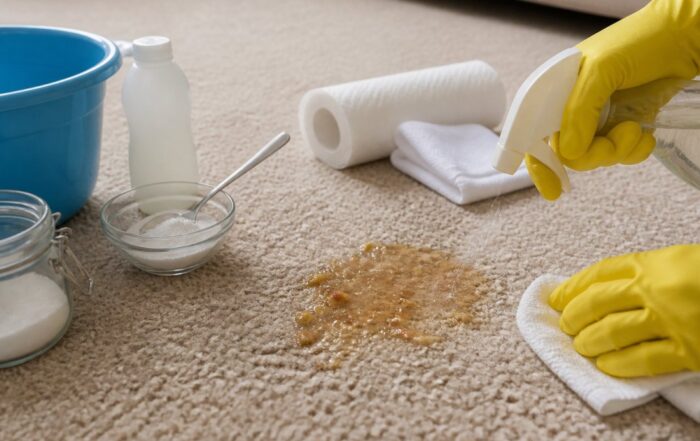
- Disposable gloves and an old apron or towel
- A blunt tool, such as a spoon, spatula, or dustpan edge
- Clean white cloths or paper towels
- A dry towel for the final pass
- A spray bottle filled with lukewarm water
- Mild detergent or a few drops of washing-up liquid
- White vinegar, if you plan to use it
- Baking soda for odour
- A carpet or enzyme cleaner made for pet or biological stains
- A bucket for rinsing and a bin bag for waste
Before applying any product to a visible area, test it on a small, hidden patch first, such as inside a cupboard. Carpets vary, and a colour change or fibre damage is far easier to avoid than to fix.
How to Remove Dried Vomit from Carpet Step by Step
Dried vomit is harder to shift than fresh, but the method is the same. Work gently and in stages.
Removing Solid Material Without Spreading the Stain
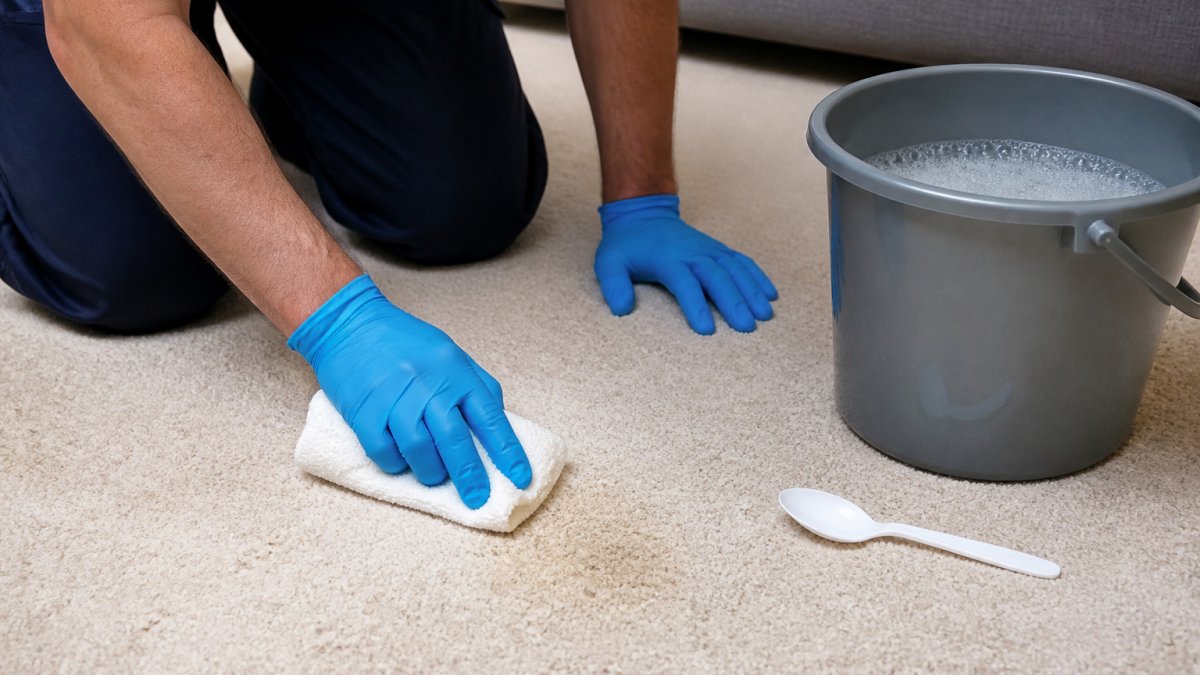
Start by lifting any solid matter off the carpet. Use the blunt edge of a spoon or spatula and scrape gently away from the centre of the stain toward the edge. Lift the material into a bag rather than smearing it across the pile.
Never press hard or rub. Each push drives residue deeper into the fibres and into the padding below. Take your time, and pick up the debris in small amounts.
Blotting and Applying a Mild Cleaning Solution
Once the solids are gone, blot the area with a clean, dry cloth to soak up any liquid. Then mix a solution of lukewarm water with a few drops of mild detergent or washing-up liquid. Spray or dab it onto the stain.
Blot again with a fresh cloth, working from the outside edge inward. Keep changing to a clean part of the cloth so you do not spread the mess. Rinse the area by blotting with clean water, then dry it with a towel. Do not leave the carpet soaking wet, as this invites mould and odour.
Watch out: never mix bleach with vinegar or ammonia-based cleaners. The fumes can be dangerous, so use one product at a time and rinse thoroughly between them (Sodium hypochlorite: toxicological overview).
The steps below are summarised in order, with the key action for each stage.
| Stage | Key action | Watch out for |
|---|---|---|
| Remove solids | Scrape gently from centre toward edge | Pressing hard spreads the stain |
| Blot liquid | Use a clean, dry cloth | Do not rub |
| Apply solution | Lukewarm water with mild detergent | Use one product at a time |
| Rinse | Blot with clean water | Do not leave carpet soaking wet |
| Dry | Towel dry, avoid soaking | Damp carpet invites mould and odour |
Does Baking Soda Remove Vomit Odour?
Baking soda helps absorb moisture and lingering smell, but it does not clean vomit carpet stains by itself. Once the area is dry, sprinkle a generous layer of baking soda over it and leave it for several hours, or overnight if the smell is strong.
Then vacuum it up thoroughly. Baking soda works best as a finishing step after you have removed the residue, not as a replacement for cleaning. If the odour persists, it usually means organic matter is still in the carpet or padding, and a stronger treatment is needed.
Best Cleaner for Vomit Stains on Carpet
For biological stains like vomit, an enzyme cleaner is often recommended. Enzyme products contain bacteria or enzymes that break down the proteins, fats and sugars in vomit, which is what causes lingering smell that ordinary detergent leaves behind.
When you are choosing an enzyme cleaner, check three things on the label:
- Suitability for the fibre. Most enzyme cleaners are formulated for synthetic carpets such as nylon, polyester and polypropylene. Wool, sisal, coir and other natural fibres can be sensitive to the enzymes, the surfactants or the pH of the product, so look for a wool-safe or neutral-pH version, or test first.
- Dwell time. Enzyme products need contact time to work. Most manufacturers recommend leaving the product on the stain for anywhere from 10 to 30 minutes, and some specify longer for old or dried stains. Cutting this short is the most common reason an enzyme treatment appears not to work. Follow the label rather than guessing.
- Residue. Enzyme cleaners can leave a sticky residue if they are not rinsed out. Blot with clean water and a fresh cloth afterwards, then dry thoroughly, or the residue will attract dirt and may cause the patch to look dull.
Mild detergent solutions and white vinegar can help with light marks and general freshening, but they are not a substitute for an enzyme treatment on a biological stain.
Never combine cleaning products. Bleach with vinegar releases chlorine gas, and bleach with ammonia-based cleaners releases chloramine vapour. Both are hazardous in a confined room. Use one product at a time, rinse thoroughly between products, and follow the label.
Before you apply any cleaner to a visible area, check the carpet manufacturer’s care label. Most carpets carry a cleaning code, for example, a code that indicates whether water-based or solvent-based cleaning is suitable, and using the wrong method can void a warranty or damage the backing. If the label is missing, test on an inconspicuous patch such as inside a cupboard or under a piece of furniture, and wait for it to dry fully before judging the result, because some damage only shows once the fibres are dry.
A common mistake is using a strong household cleaner on a large area without testing it. Start small, and only treat the whole stain once you know the carpet reacts well. If the stain covers a large area, or the carpet is wool, delicate or valuable, a professional cleaner is the safer route than experimenting with household products.
How to Get Vomit Smell Out of Carpet
A lingering smell is the most common complaint after a clean-up. It usually means the source has not been fully removed, often from deep in the carpet backing or padding.
Try these steps in order:
- Repeat the enzyme treatment and let it sit for the full recommended time
- Rinse with clean water and blot until the cloth comes up clean
- Dry the area completely, using fans or an open window to speed things up
- Sprinkle baking soda once fully dry, leave it, then vacuum it up
If the smell still returns after the area is dry, the contamination has likely reached the padding. Surface cleaning will not reach it, so the padding may need professional treatment or replacement.
Booking Professional Help for Deep Contamination
Some vomit stains go further than a home clean can reach. The liquid in vomit can soak through the carpet pile and into the backing and underlay, where surface cleaning cannot reach it. If the smell keeps returning after the carpet is dry, or a damp patch persists, the contamination has likely reached the padding.
How to tell whether the padding is affected
- Check from below where possible. If the carpet is on an upper floor and you can safely lift a corner or inspect from the room below, look for staining or a damp patch on the ceiling or floor structure.
- Press the area. A clean, dry cloth pressed firmly into the stain and held for a few seconds should come up dry. If it comes up damp or smells, moisture is still present.
- Smell test after drying. A musty or sour smell that returns once the carpet is fully dry is the clearest sign that organic matter remains in the backing or underlay.
- Feel for stiffness or delamination. A carpet that feels stiff, crunchy or separated from its backing in the affected area may have adhesive or backing damage that home cleaning will not fix.
If the underlay is contaminated, surface cleaning will not solve it. In many cases the affected section of underlay needs to be cut out and replaced, and the carpet lifted and refitted. This is a job for a professional, because refitting a carpet without damaging the backing or stretching is difficult to do well.
When to call a professional
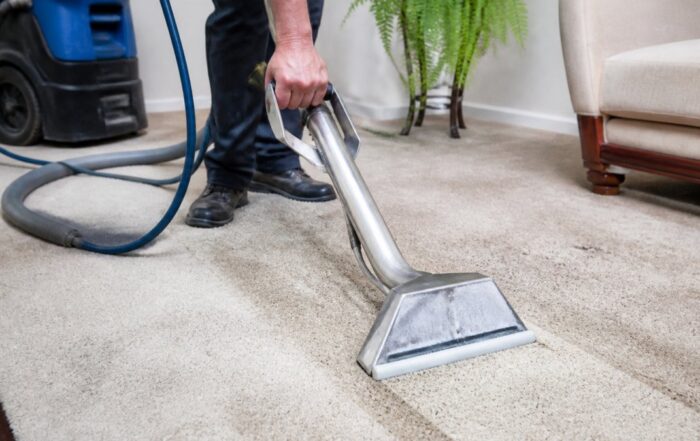
Professional deep cleaning is designed to flush contamination out of the pile and extract moisture properly, which helps prevent mould and musty odour. It is worth booking a professional clean when:
- The stain is larger than a dinner plate, or there have been repeated spills in the same spot
- The smell persists after two enzyme treatments and thorough drying
- The carpet is wool, natural fibre, delicate or valuable, or has a care label that restricts water-based cleaning
- The contamination has reached the underlay, or the carpet feels damp after drying
- Mould or a musty smell develops, which indicates moisture has been trapped
For a direct quote, book a professional deep carpet clean in Stockport or contact us for current pricing.
For more on lifting lingering odour, read our pet stain carpet cleaning guide, or see how deep odour neutralisation works. Pricing depends on the size of the area and the level of contamination, so please visit our website or contact us for a quote.
Frequently Asked Questions
What is the best way to clean up vomit from a carpet?
Start by removing any solid matter with a spoon or blunt tool, working from the edges inward so you do not spread the stain. Blot the area with a clean cloth, then apply a small amount of mild detergent or dish soap diluted in cold water. Blot again with a dry towel and rinse the spot with a damp cloth to remove residue. Always wear disposable gloves and ventilate the room, and test any solution on an inconspicuous area of the carpet first to check for colour fastness.
Does baking soda remove vomit odour from carpet?
Baking soda absorbs moisture and neutralises many odours, so it can help once the stain has been cleaned and the area is fully dry. Sprinkle a generous layer over the spot, leave it for several hours or overnight, then vacuum it up thoroughly. It will not remove a deep contamination that has soaked into the carpet padding, so if the smell persists, the padding may need professional treatment with an enzyme cleaner.
Can you use vinegar to clean vomit from carpet?
White vinegar diluted with water can help neutralise lingering odours, but it should be used with care. Mix a small amount with water, test it on a hidden section of the carpet, and blot rather than soak. Never mix vinegar with bleach or products containing ammonia, as this can release harmful fumes. For stubborn organic residue, an enzyme cleaner is usually more effective than vinegar alone.
Is it better to clean vomit while it is wet or after it dries?
Clean it as soon as possible while it is still wet, because the material is easier to lift and less likely to set into the fibres. If it has already dried, you will need to rehydrate it first with a damp cloth before scraping and treating it. Dried vomit is harder to remove completely and can leave a lingering odour, so acting quickly gives the best result.