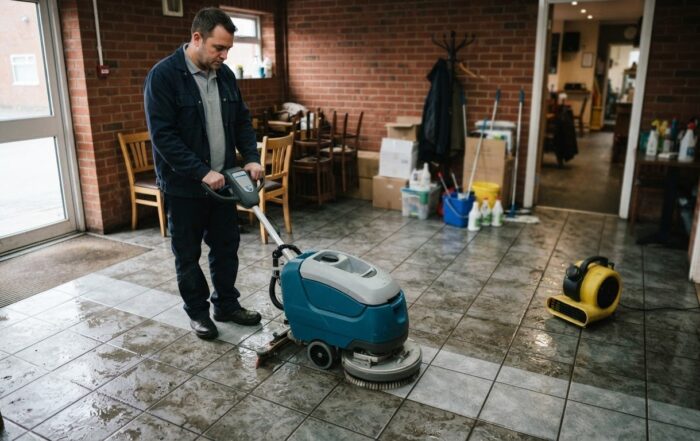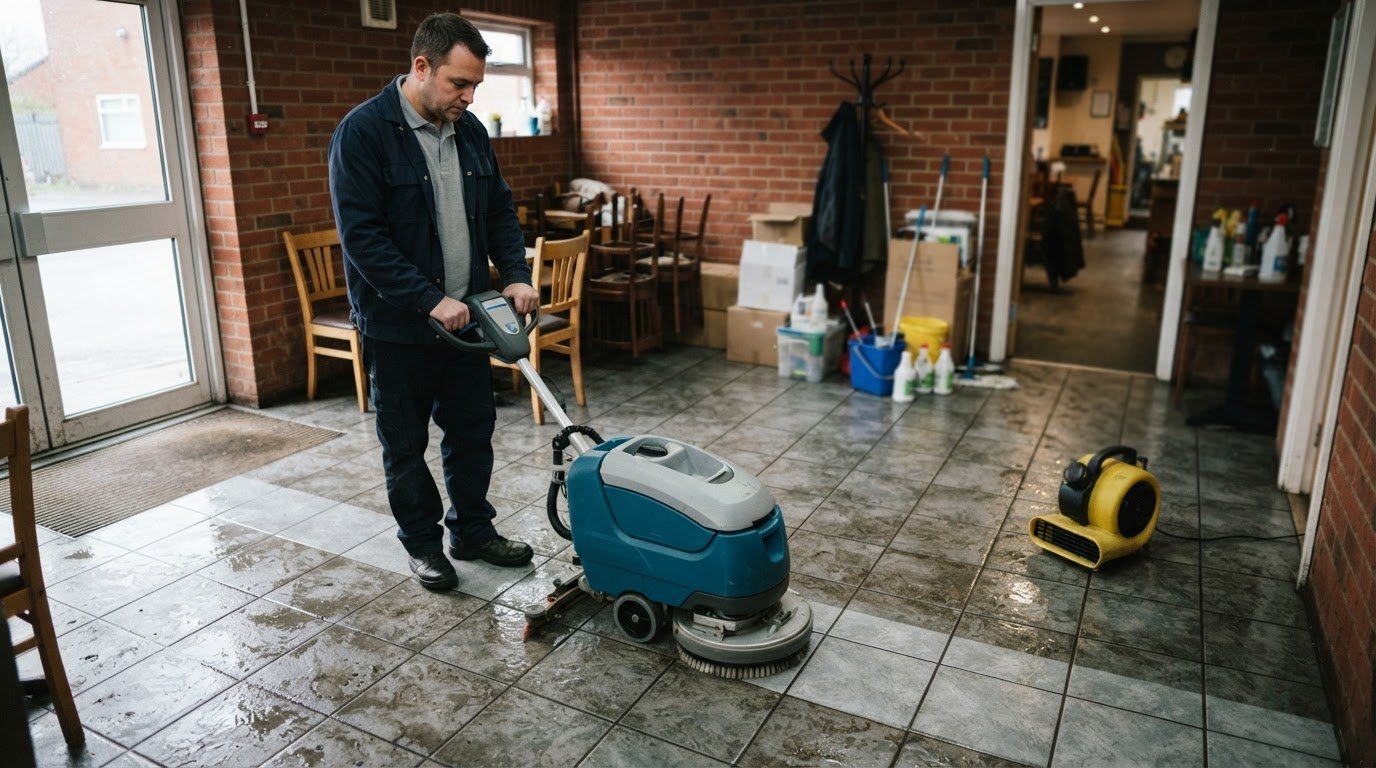
A floor emergency needs a clear plan, not guesswork. For tile and grout, emergency floor cleaning in Bury usually takes 1-3 hours; deep restoration or a large floor area may take half a day. Drying time varies with the floor material, how much moisture remains and the conditions in the room.
It’s understandable to want a floor clean and safe to use again quickly, especially in a busy home or workplace. Emergency floor cleaning in Bury starts with identifying the floor type and what has happened, then choosing suitable preparation and cleaning methods.
This guide explains what emergency floor cleaning can involve, how a floor is inspected and prepared, and what affects cleaning and drying time. It also covers the needs of Bury businesses, where a spill or leak can disrupt staff, customers and daily operations. You’ll learn what to expect and how the cleaning method depends on the floor’s condition.
Key Takeaways
- Learn what affects cleaning and drying time, including floor type, moisture and room conditions.
- See how an inspection helps determine the right preparation and cleaning approach for the floor.
- Understand why business clean-ups after leaks need to address the water source before affected areas are cleaned and disinfected.
- Find out when professional carpet, rug or upholstery cleaning can help restore a cleaner home or workplace.
Cleaning duration and drying
For tile and grout, most cleaning jobs take 1-3 hours. Deep restoration or cleaning a large floor area may take half a day. These timings describe the cleaning work, not a guaranteed time for the floor to dry. The size of the area, the level of soiling and the cleaning method all affect the schedule.
Carpet drying time depends on the cleaning method, the carpet’s condition and airflow in the room. A heavily soiled carpet may need more intensive treatment than a small, lightly marked area. Ask about the method being used and what it means for drying. Keep people off damp carpet to avoid transferring dirt or flattening wet fibres.
Cleaning methods depend on the surface and its condition. Tile and grout cleaning treats the joints as well as the tile face, while wood and vinyl need surface-appropriate care. Carpet requires a method suited to its fibres. Identifying the material and finish helps determine the right approach.
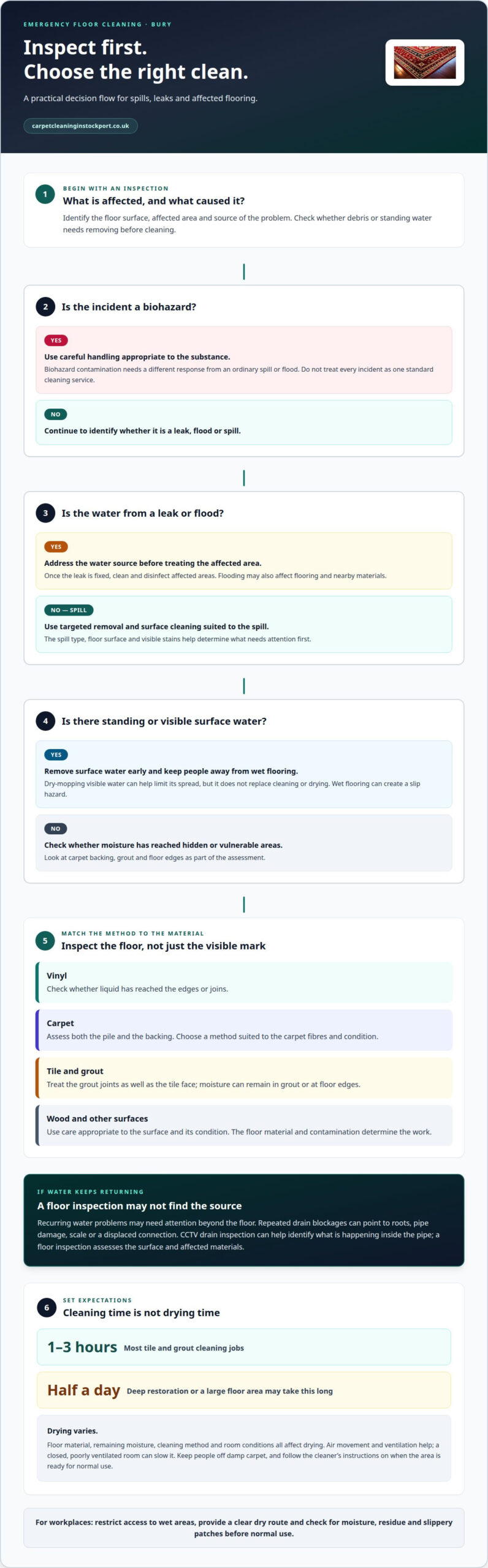
After a spill or leak, removing surface water is an early step. The Scottish Government instructed cleaning staff to respond immediately and dry-mop water on the floor. This can help limit the spread, but it does not replace cleaning or drying. Once the visible water is cleared, the remaining work depends on whether moisture has reached carpet backing, grout or floor edges.
Air movement and ventilation help a cleaned surface dry; a closed, poorly ventilated room can slow the process. For example, wet grout in a tiled entrance may take longer to dry than a small, lightly damp hard-floor patch. Follow the cleaner’s instructions about when the area is ready for normal use.
At a commercial site, the cleaning plan should reflect how each space is used. Marking a clear route around a damp area helps limit contact while the floor dries. Agreeing which areas need attention first can also help keep disruption focused.
Floor inspection and preparation
An inspection identifies the surface, affected area and source of the problem. For a spill on vinyl, the cleaner can assess whether liquid has reached edges or joins; on carpet, the pile and backing matter. This helps determine the treatment and whether debris or standing water needs removing before cleaning.
Flood, spill and biohazard incidents call for different responses. A spill may need targeted removal and surface cleaning, while flooding can affect flooring and nearby materials. Biohazard contamination requires careful handling appropriate to the substance. The floor type and contamination determine the work, so these situations should not be treated as one standard cleaning service.
After a leak is fixed, the UK Government advises cleaning and disinfecting affected areas. Keep people away from wet flooring while it is being prepared, as standing water can create a slip hazard. Free quotes and insurance-backed work are separate terms: a quote describes proposed work and cost, while insurance cover depends on the relevant policy. Neither should be assumed as part of a cleaning job.
Recurring water problems may need attention beyond the floor. A repeated drain blockage can point to roots, pipe damage, scale or a displaced connection; CCTV drain inspection can help identify what is happening inside the pipe. This differs from a floor inspection, which assesses the surface and affected materials. Addressing the source can help prevent the same area getting wet again after cleaning.
For Bury housing, Bury Council inspects a selection of housing blocks weekly to assess cleaning quality. This is a scheduled quality check, not an emergency response. At home or work, an inspection can record which areas need treatment, what preparation is required and whether cleaning alone can restore the floor. In Manchester-area properties, noting changes across rooms can also help distinguish a single spill from a recurring issue.
Cleaning for Bury businesses
A leak or spill in a Bury workplace can affect staff, visitors and daily operations. Keep people away from the wet area and direct foot traffic along a dry route. In a shop, that may mean temporarily closing one aisle; in an office, staff can use another corridor while the affected floor is assessed.
For commercial emergency cleaning, first identify the source and type of contamination. A drink spill in a reception area needs a different treatment from water tracked across a kitchen floor or a leak that has soaked carpet. The surface, affected materials and visible stains help determine suitable techniques and what needs attention first.
After a leak is fixed, the UK Government advises cleaning and disinfecting affected areas. Removing surface water is only an initial step: residue can remain around floor edges, beneath movable furniture or in grout lines. A thorough clean should address the affected area and nearby contact points, such as the floor beside a counter or the entrance to a staff kitchen.
Are there local rules or safety requirements for commercial emergency floor cleaning in Bury? Prioritise clear access, restrict entry to wet areas and follow the business’s site procedures during cleaning. The right precautions depend on the location and incident; a wet public entrance, for example, needs a clear alternative route until the floor is safe to use.
Plan the work around the business’s essential spaces. A restaurant may need its kitchen floor addressed before reopening that area, while an office can focus first on its reception route. Separate clean and untreated zones to prevent shoes or equipment spreading dirt. After cleaning, check for remaining moisture, residue and slippery patches before allowing normal use.
For Bury businesses, an incident record can note the affected room, source of water, surfaces involved and cleaning steps completed. This gives the next shift a practical update and helps identify recurring trouble spots, such as leaks beside a doorway or persistent stains near a food-preparation area.
Which emergency floor cleaning companies serve Bury, Greater Manchester?
For an incident in Bury, check whether the cleaning service covers the property address and the type of floor affected. A home with soaked carpet needs a different response from a shop with a spill on hard flooring. The service area, surface and incident all determine whether the work fits the job.
Before cleaning begins, define the work clearly: identify the affected room, floor material, source of water or spill, and any areas still in use. A leak beside an office entrance, for example, may affect the floor, doorway and visitor route. This helps set a practical scope and avoids treating an isolated patch as a whole-floor problem.
Cleaning needs vary between domestic and commercial premises across Greater Manchester. A carpeted living room, tiled restaurant kitchen and shared office entrance each call for a method suited to the surface and its use. The plan should explain which area it covers, how it will address visible residue and what conditions must be met before people return to the floor.
For an urgent incident, clear communication matters. Give the cleaner the location in Bury, describe the flooring and explain whether the source has been stopped. The affected area can then be assessed and the work outlined. A continuing leak or recurring drain blockage needs attention to its source as well as floor cleaning.
Choose the scope of work according to the damage. A small drink spill on vinyl is different from water reaching carpet underlay or grout. This affects preparation, cleaning technique and drying arrangements. A written description of the work can clarify which rooms are included and whether nearby surfaces need attention.
For Bury homes and workplaces, focus on matching the cleaning task to the material and incident, rather than relying on a company name alone. The next section explains how professional carpet and upholstery cleaning can help when those surfaces are affected.
Commercial Carpet Cleaners Stockport: Domestic Carpet Cleaning
Commercial Carpet Cleaners Stockport provides Domestic Carpet Cleaning for Bury homes affected by spills, tracked-in dirt or lingering carpet marks. The team also offers Commercial Carpet Cleaning, Rug Cleaning and Fabric Sofa Cleaning, giving homes and businesses across Bury and Greater Manchester options for professional cleaning of carpets and soft furnishings.
Carpet cleaning is for fibre surfaces, not every hard floor or the source of a leak. Once the water source is resolved, the cleaning approach can be matched to the carpet’s condition and affected area. A rug or fabric sofa can also be considered for its corresponding cleaning service.
If your home’s carpets or soft furnishings need attention, contact Commercial Carpet Cleaners Stockport for a free, no-obligation quotation.
Take the next step towards a cleaner floor
Once the immediate cause of the problem has been addressed, decide what needs restoring first. Describe the affected room, flooring and incident to help establish a suitable cleaning approach. If the issue involves carpet or a rug, professional cleaning may be appropriate; other floor materials need methods designed for their surfaces.
For emergency floor cleaning in Bury, match the work to the flooring and the disruption at your property. Commercial Carpet Cleaners Stockport serves Bury and locations across Greater Manchester, including Stockport, Manchester, Bury, Bolton and Wigan. The team can discuss domestic and commercial carpet or rug cleaning and provide a free, no-obligation quotation.
Contact Commercial Carpet Cleaners Stockport to talk through your cleaning requirements. A clear first conversation can help you move towards a clean, comfortable space with confidence.
Frequently Asked Questions
What’s Included in the Cleaning Service?
Carpet cleaning includes inspection, pre-treatment of stains and high-traffic areas, professional cleaning solutions, hot-water extraction, fibre grooming and a final quality inspection. The method depends on the carpet’s material and condition. The eco-friendly, non-toxic solutions are safe for children and pets when used correctly. Hard floors need an appropriate floor-cleaning method, not carpet extraction.
Do you offer floor cleaning near me?
Commercial Carpet Cleaners Stockport serves Bury and other locations across Greater Manchester, including Stockport, Manchester, Bolton and Wigan. The right service depends on the surface: carpet cleaning suits carpet, while tile and grout cleaning or hard-floor cleaning addresses those floor types. A carpeted hallway and tiled kitchen, for example, need different approaches. Describe the property location and affected flooring when requesting a free, no-obligation quotation.
How long does the process take?
Most tile and grout cleaning jobs take 1-3 hours, while deep restoration or a large floor area may take half a day. Carpet cleaning and drying follow a different schedule: most carpets dry within 4-8 hours, depending on ventilation, carpet type and room temperature. Cleaning time and drying time are separate, so plan for the room to remain out of use while the carpet dries.
How quickly can emergency floor cleaners in Bury respond, including 24/7 availability?
A fixed emergency response time or 24/7 call-out is not promised. Response depends on the service schedule and the work needed. If a spill or leak has just happened, keep people away from the affected area and stop the water source if it’s safe to do so. Include your Bury location, floor type and incident details in your enquiry.
What is the typical cost of emergency floor cleaning in Bury, and are call-out fees charged?
The cost depends on the floor type, affected area, condition and cleaning required. Request a free, no-obligation quotation for pricing based on your job; don’t assume a general carpet-cleaning price applies to emergency floor work. The quotation is also the point to establish whether any call-out charge applies. Describe the incident and surfaces involved so the requested work is clear.
What risks come from delaying emergency floor cleaning, including mould and slip hazards?
Standing water can create a slip hazard, so keep people away from wet flooring until it has been cleaned and is safe to use. After fixing the leak, clean and disinfect the affected areas.