Table of Contents
- Why Old Food Stains and Odors Are Harder to Shift
- Identify the Stain and Test Colorfastness First
- Step-by-Step: Lifting Dried Food Stains From Carpet
- The Best Carpet Stain Remover for Old Stains
- How to Remove Carpet Odours Naturally
- Chemical Reaction Safety and Fiber-Specific Protocols
- When to Book Professional Carpet Deep Cleaning Services
- Post-Cleaning Care: Protecting Carpet Fibres After Treatment
- Frequently Asked Questions
Last Updated: September 16, 2026
Why Old Food Stains and Odors Are Harder to Shift
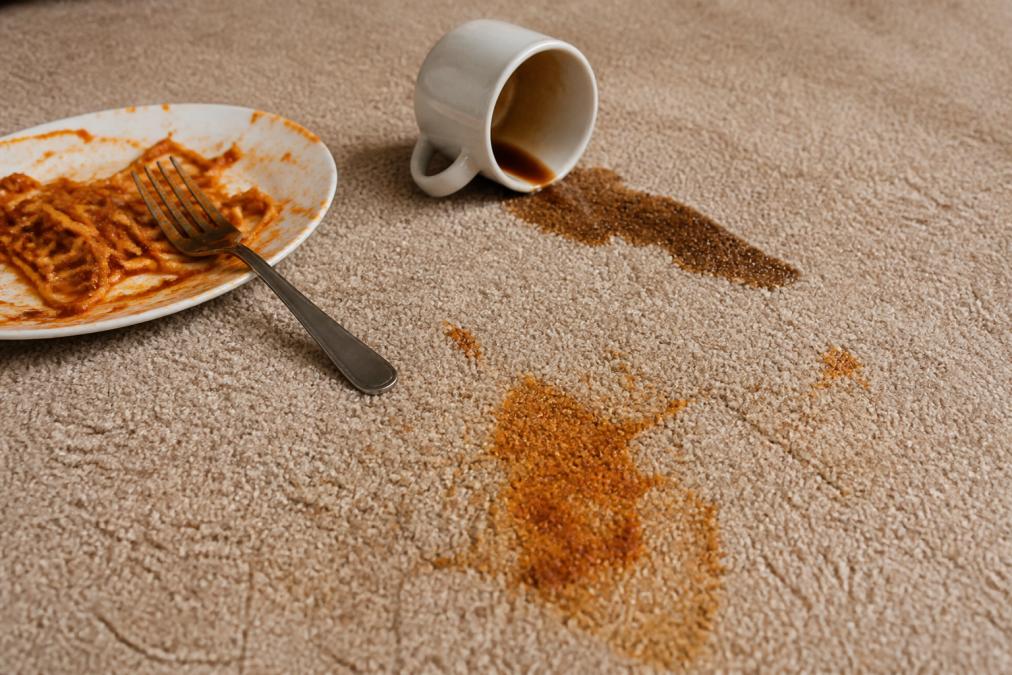
Removing old food stains and odors from carpet is far harder than tackling a fresh spill, because time allows residue to bond with carpet fibres and sink into the backing. A dried stain has already oxidised and set, while the odour has had days or weeks to colonise the sub-padding beneath.
Over-wetting is the single most common mistake with old stains. Saturating the carpet backing traps moisture underneath, which encourages mould and a musty smell that is worse than the original food odour.
Identify the Stain and Test Colorfastness First
Identification and a colourfastness test come before any liquid touches the carpet. Skip either step and you risk setting a protein stain permanently or bleaching a synthetic fibre.
Food Stain Types and What Lifts Them
Stains fall into a few broad groups, and the group decides your approach. Water-soluble stains such as fizzy drinks, fruit juice and most sauces respond to warm water and a mild detergent. Protein-based stains from milk, egg or gravy need cool water, because heat coagulates the protein and locks it into the fibre. Grease and oil from takeaways or butter require a solvent-based cleaner or a small amount of washing-up liquid.
| Stain Type | Examples | Best Approach |
|---|---|---|
| Water-soluble | Juice, fizzy drinks, sauce | Warm water, mild detergent |
| Protein | Milk, egg, gravy | Cool water, enzymatic cleaner |
| Grease or oil | Takeaways, butter | Solvent-based or washing-up liquid |
| Dye-heavy | Curry, beetroot, red wine | Specialist treatment, act fast |
How to Run a Colorfastness Test
A colourfastness test checks whether the carpet dye will bleed or fade when you apply your chosen solution. Mix a small amount of your cleaner, apply a few drops to an inconspicuous area such as a corner or inside a wardrobe, and blot with a white absorbent cloth. If any colour transfers to the cloth, or the patch lightens, stop and use a gentler product.
Step-by-Step: Lifting Dried Food Stains From Carpet
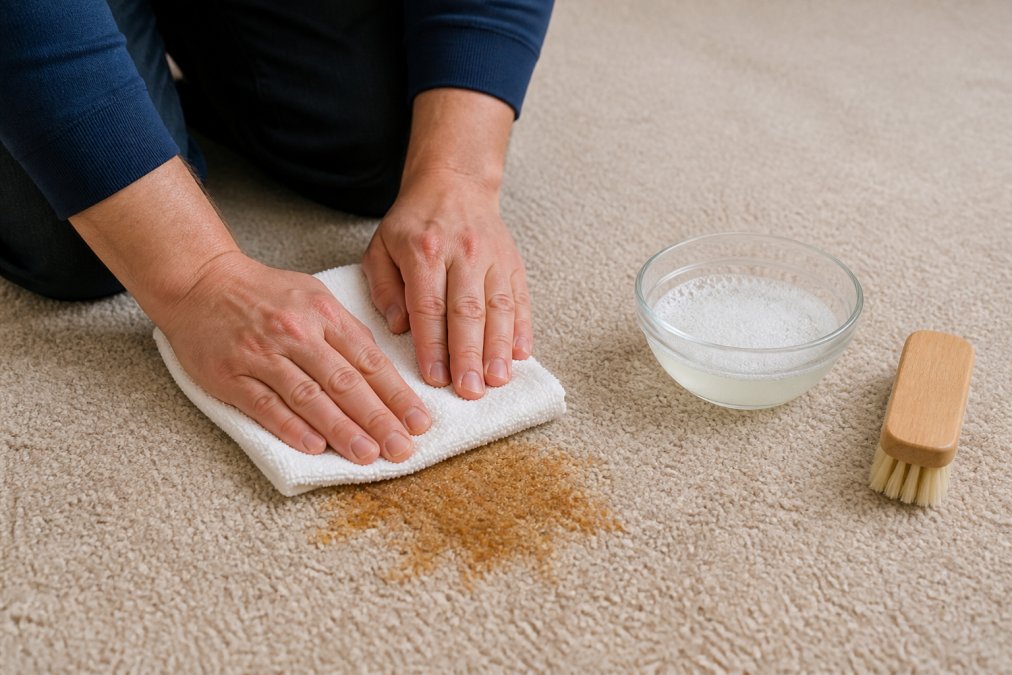
Lifting a dried stain means rehydrating it, breaking the bond, and extracting the residue without pushing it deeper. Work slowly and in small sections rather than flooding the area.
- Vacuum the area to remove loose crumbs and surface debris.
- Apply your tested solution to a cloth, not directly to the carpet.
- Blot from the outside of the stain inward to stop it spreading.
- Leave the solution to work for a few minutes to soften the residue.
- Agitate gently with a soft brush, working with the pile, not against it.
- Blot again with a clean, dry cloth to lift the loosened stain.
- Rinse with cool water on a cloth and blot dry.
- Repeat the cycle rather than scrubbing harder.
Blotting, Agitation and Rinsing Without Over-Wetting
The blotting technique is what separates a clean result from a soggy one. Press down firmly and lift straight up, using a fresh part of the cloth each time so you are not redistributing the stain. Keep agitation light: scrubbing too hard frays the carpet pile and can push residue into the backing. Rinse only with a damp cloth, never by pouring water onto the carpet, and finish by pressing a dry towel down and standing on it to draw out the moisture.
The Best Carpet Stain Remover for Old Stains
The best carpet stain remover for old stains is not a single product but a match between the chemistry of the cleaner and the fibre it touches. For most dried food spills, a pH-balanced, water-soluble solution with a small amount of mild detergent outperforms harsh chemical products because it lifts residue without leaving a sticky film. For protein and pet-related stains, an enzymatic cleaner breaks down the organic matter that causes both the mark and the smell.
Matching the Cleaner to the Fibre
Fibre type decides which products are safe. Synthetic fibres such as nylon and polyester tolerate most water-based cleaners and moderate agitation. Wool and other natural fibres are more delicate: they need pH-balanced products, cool water, and gentle handling, since alkaline cleaners can dull the fibre and heat can shrink it. For upholstery and rugs, always check the manufacturer’s cleaning code before applying anything.
| Fibre Type | Safe Cleaner | Avoid |
|---|---|---|
| Nylon, polyester | pH-balanced water-based, mild detergent | Over-wetting, harsh solvents |
| Wool, natural fibres | pH-balanced, cool water, gentle agitation | Alkaline cleaners, heat, scrubbing |
| Shag or deep pile | Foam or low-moisture cleaner | Flooding, heavy saturation |
| Unknown or dry clean only | Professional assessment | Any wet product |
Why Residue Buildup Matters More Than the Stain
What most guides miss is that residue buildup is as damaging as the stain itself. A cleaner that leaves a sticky film behind attracts fresh dirt, so the carpet looks grubby again within days. Always rinse thoroughly and avoid over-applying. For dye-heavy stains that resist a water-based approach, a solvent-based cleaner may be needed, but test it first and use it sparingly in a well-ventilated room.
Never mix cleaning products. Combining bleach with ammonia-based products releases toxic chloramine gas, and mixing vinegar with baking soda simply neutralises both into salt and water. Store products separately and rinse one out fully before trying another.
How to Remove Carpet Odours Naturally
Learning how to remove carpet odours naturally starts with understanding that smell is a symptom, not the problem. If bacteria remain in the fibres or sub-padding, the odour returns no matter how much you mask it. The key is to diagnose where the contamination sits before choosing a treatment.
Diagnosing the Source
A smell that fades after surface cleaning but returns within a day usually means the contamination has reached the sub-padding. A smell that persists even after ventilation points to bacteria feeding on sugars and proteins trapped below the surface. If the odour is localised to one area, treat that area; if it spreads, the contamination may have travelled through the backing.
Natural Treatments That Work
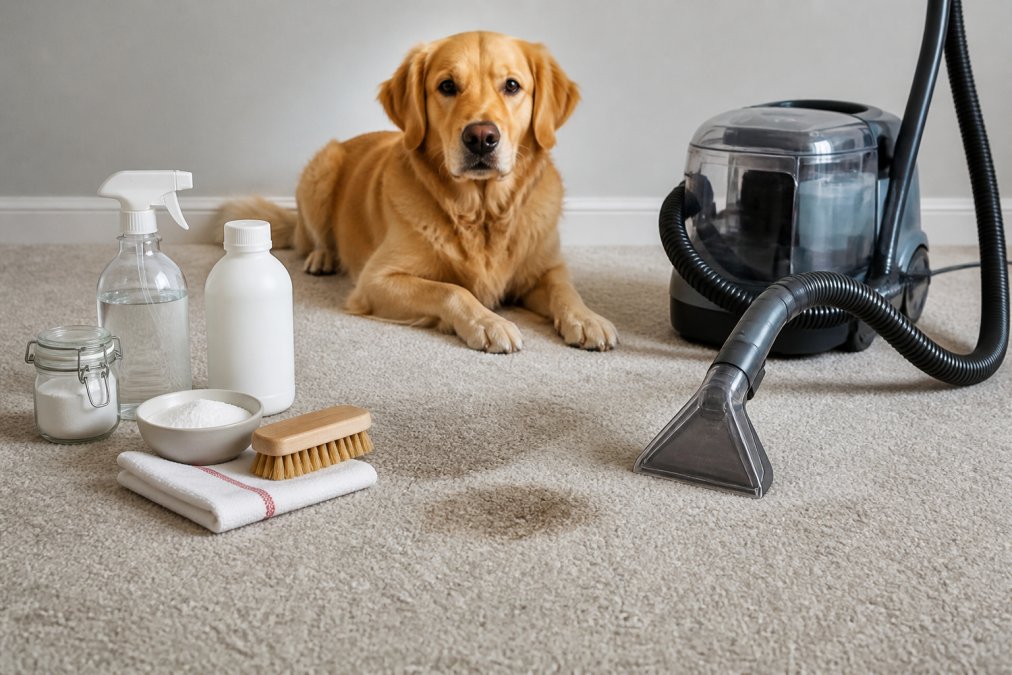
Baking soda is the workhorse here. Sprinkle a generous layer over the affected area, leave it for several hours or overnight to absorb moisture and odours, then vacuum it up. For a deodorising solution, mix white vinegar with water in equal parts, apply lightly with a cloth, and let it dry. The vinegar smell fades as it evaporates, taking much of the food odour with it.
Fibre-Specific Odour Care
Fibre type changes the protocol. Synthetic fibres such as nylon and polyester tolerate most water-based treatments and moderate agitation. Wool and other natural fibres are more delicate: they need pH-balanced products, cool water, and gentle handling, since alkaline cleaners can dull the fibre and heat can shrink it. For shag or deep pile, use a foam or low-moisture cleaner to avoid flooding the backing.
If the odour persists after two or three treatments, the contamination has likely reached the sub-padding, which is a job for extraction equipment. Continuing to treat it yourself risks spreading it or damaging the fibre.
When to Stop and Call a Professional
If the odour persists after two or three treatments, the contamination has likely reached the sub-padding, which is a job for extraction equipment. A professional uses hot water extraction and targeted neutralising agents to flush out residue that a cloth simply cannot reach, then extracts the moisture so the carpet dries quickly rather than staying damp for days.
Chemical Reaction Safety and Fiber-Specific Protocols
Mixing cleaning products is where well-meaning DIY attempts go wrong. Never combine vinegar and baking soda in the same container expecting a stronger cleaner: they neutralise each other into salt and water, wasting both. More seriously, never mix bleach with ammonia-based products, which releases toxic chloramine gas. Store products separately and rinse one out fully before trying another.
When to Book Professional Carpet Deep Cleaning Services
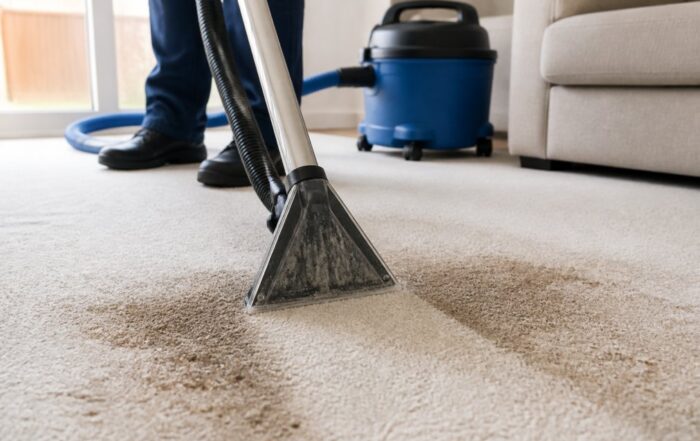
Professional carpet deep cleaning services are worth booking when the stain is large, long-standing, or has reached the sub-padding, and when home treatments have already failed twice. Continuing to treat a stubborn stain yourself risks spreading it or damaging the fibre.
Post-Cleaning Care: Protecting Carpet Fibres After Treatment
Protecting carpet fibres after treatment is about drying and prevention, not just admiring the result. Keep the room ventilated and stay off the carpet until it is fully dry, which for a professional clean is typically a matter of hours rather than days.
Frequently Asked Questions
How do you get old, dried food stains out of carpet?
Start by scraping off any crusted residue with a blunt edge, then vacuum the area. Run a colorfastness test on a hidden patch. Apply a pH-balanced spot treatment suited to the stain type, blot from the outside in with a clean absorbent cloth, and rinse with cool water. For set-in marks, an enzymatic cleaner left for 10 to 15 minutes before blotting often lifts what detergent alone cannot. Avoid over-wetting, which drives the stain into the backing and sub-padding.
What is the best way to remove lingering food odours from carpet?
Odours cling to carpet fibres and backing long after the visible stain is gone. Sprinkle baking soda over the dry area, leave it for several hours or overnight, then vacuum thoroughly. For deeper smells, a diluted white vinegar mist followed by good ventilation helps neutralise odour molecules. If the smell returns within days, the residue has likely reached the sub-padding, and professional extraction with odour encapsulation is usually the only way to remove it completely rather than mask it.
Can baking soda remove old food stains and smells from carpet?
Baking soda works well as a deodorising solution and a mild abrasive for fresh or lightly set stains, but it will not dissolve grease or protein-based marks on its own. Pair it with a small amount of washing-up liquid and warm water for water-soluble stains, or use it after treatment to absorb residual moisture and odour. For old, greasy stains, a solvent-based or enzymatic cleaner is more effective, with baking soda used as a finishing step.
When should you call a professional for carpet stain removal?
Call a professional when a stain has been set for weeks, when it covers a large area, when it has reached the sub-padding, or when DIY attempts have left residue that keeps attracting dirt. Professional carpet deep cleaning services use hot water extraction and targeted treatments that lift stains from the base of the pile, not just the surface. If you are a tenant facing a move-out inspection or a landlord preparing a property, booking early avoids deposit disputes.