Table of Contents
- Professional vs DIY Pet Stain Removal: Quick Comparison
- Why Pet Stains Keep Coming Back After DIY Cleaning
- DIY Pet Stain Removal: Tools, Methods, and Limitations
- Professional Pet Stain Removal: What the Experts Do Differently
- Pet-Safe Carpet Cleaning Solutions: What to Look For
- Professional Carpet Stain Removal Cost: Is It Worth It?
- When to Call a Professional (and When DIY Is Enough)
- Frequently Asked Questions
Last Updated: September 16, 2026
Professional vs DIY Pet Stain Removal: Quick Comparison
Pet stain removal is the process of eliminating urine, faeces, and vomit residue from carpet fibres and the padding beneath them. According to The Kennel Club’s guidance on pet ownership, the majority of households now include at least one pet, which means accidents on soft flooring are close to inevitable. This guide compares professional vs DIY pet stain removal honestly, including where DIY wins, where it fails, and how to decide which route suits your situation.
Comparison Table: Cost, Results, and Effort
| Factor | DIY Method | Professional Service |
|---|---|---|
| Upfront cost | Equipment and solutions bought outright | Pay per visit, quoted on inspection |
| Time per incident | 30-60 minutes, plus drying | Handled in a single appointment |
| Depth reached | Surface and upper fibres | Fibres, backing, and padding |
| Odour removal | Often temporary | Targets urine crystals at source |
| Drying time | Variable, can be slow | Controlled, typically hours not days |
| Best for | Fresh, small, isolated spots | Recurring stains, odour, whole rooms |
Why Pet Stains Keep Coming Back After DIY Cleaning
The biggest reason a treated stain reappears is that the liquid travelled further than the visible mark. Urine soaks through the carpet face, backing, and padding, sometimes into the subfloor. Cleaning the surface removes the colour but leaves the residue below, and that residue is what smells.
Urine Crystals, Wicking, and Subfloor Contamination
Urine contains uric acid, which crystallises as it dries and binds tightly to carpet fibres. These crystals are insoluble in water, so standard shampoo or diluted household cleaner passes straight over them. When humidity rises or the carpet is walked on damp, moisture reactivates the crystals and the odour returns.
Wicking is the second mechanism: liquid held in the padding migrates upward as it dries, carrying dissolved waste back to the surface. This is why a stain can look gone in the evening and reappear by morning. Where the spill was large or repeated, contamination can reach the subfloor, and no surface treatment will solve that.
Applying more cleaning solution to a recurring stain usually makes it worse. Excess moisture pushes the contamination deeper and leaves chemical residue that attracts fresh dirt, so the patch darkens faster than the carpet around it.
DIY Pet Stain Removal: Tools, Methods, and Limitations
DIY pet stain removal works well for fresh, small accidents on stain-resistant fibres. The limitation is depth: consumer equipment extracts from the surface, while the contamination that causes odour sits below it.
A sensible DIY kit covers four things: absorbent cloths, an enzymatic cleaner, a portable spot cleaning machine, and patience. The Bissell Little Green Pro suits frequent small accidents, while the Shark StainStriker offers stronger spray pressure for dried-in marks. Both are useful, but neither reaches padding depth on a soaked stain.
Consumer-Grade Machines and Enzymatic Cleaners
Enzymatic cleaners are the one DIY product that addresses the actual problem. Enzymatic cleaners are biological solutions containing enzymes that break down the proteins, fats, and uric acid in pet waste, digesting the source rather than masking it. Rocco & Roxie Supply Co. Stain & Odor Eliminator is designed for exactly this, and its enzyme action also removes the pheromone traces that prompt pets to re-mark the same spot.
The method matters as much as the product:
- Blot, never rub, to lift as much liquid as possible before treatment
- Apply the enzymatic cleaner generously and leave it to dwell, not seconds but the full contact time on the label
- Cover the area with a clean cloth and weight it down so the solution stays in contact with the fibres
- Allow it to air dry fully, then vacuum
- Check the backing and padding by pressing a dry cloth underneath if you can lift the carpet edge
Consumer machines help with rinsing and extraction, but their tank capacity and suction limit how much moisture they pull out. Slow drying leaves the carpet damp, encouraging bacterial growth and that musty smell many households recognise.
Professional Pet Stain Removal: What the Experts Do Differently
Professional pet stain removal differs from DIY in three ways: the equipment reaches deeper, the technician identifies what the carpet can tolerate, and the process controls moisture rather than leaving it to air dry. A trained technician checks the fibre type, tests for colourfastness, and treats the stain accordingly.
Hot Water Extraction and Professional-Grade Equipment
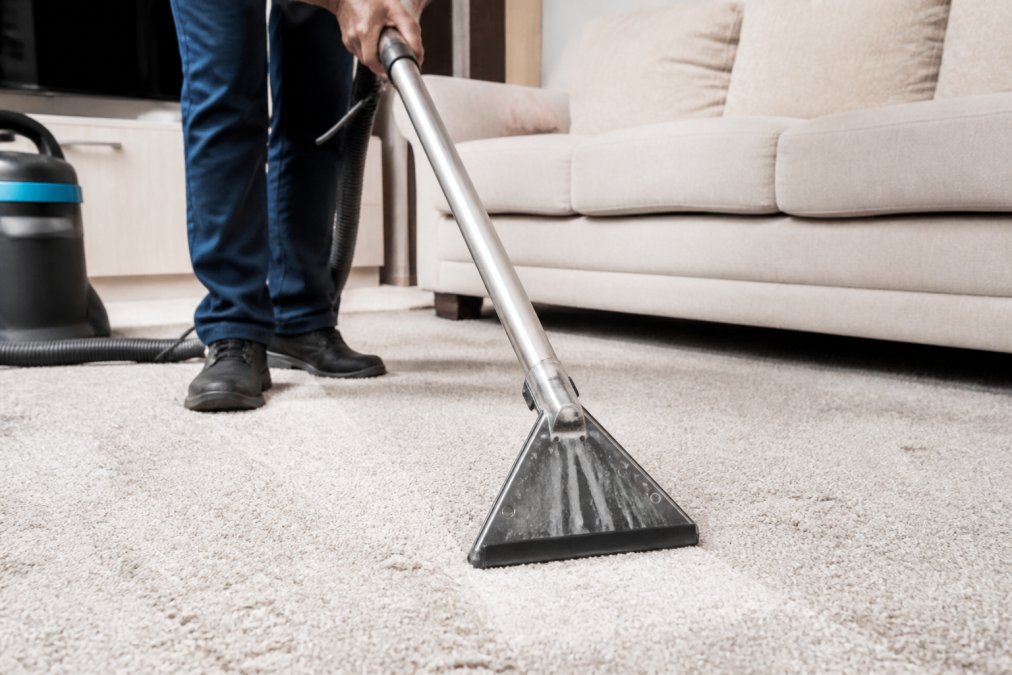
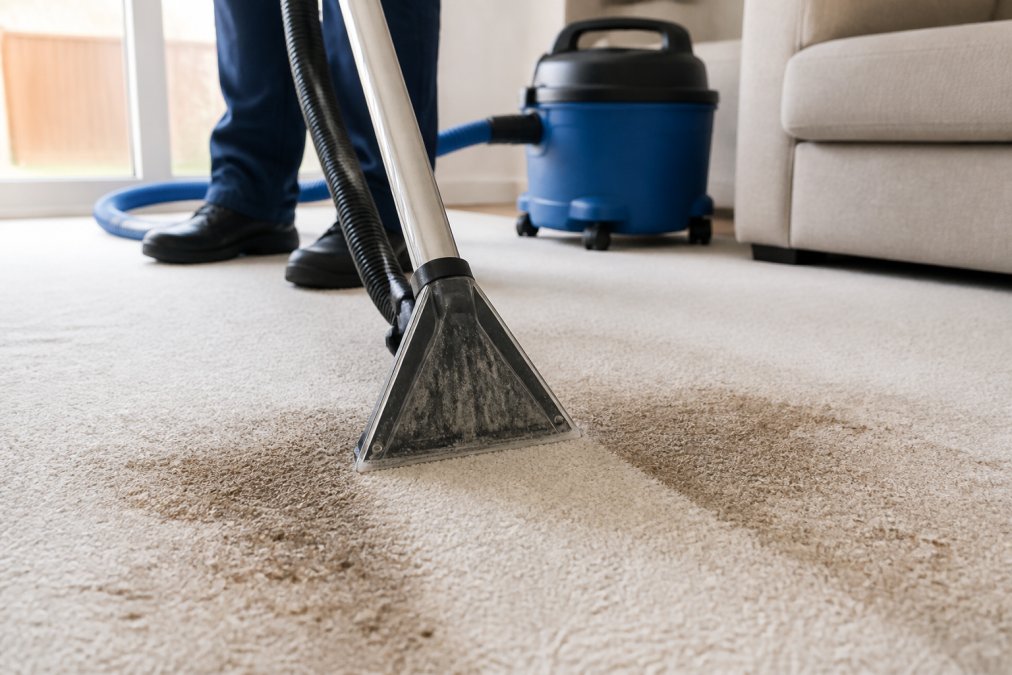
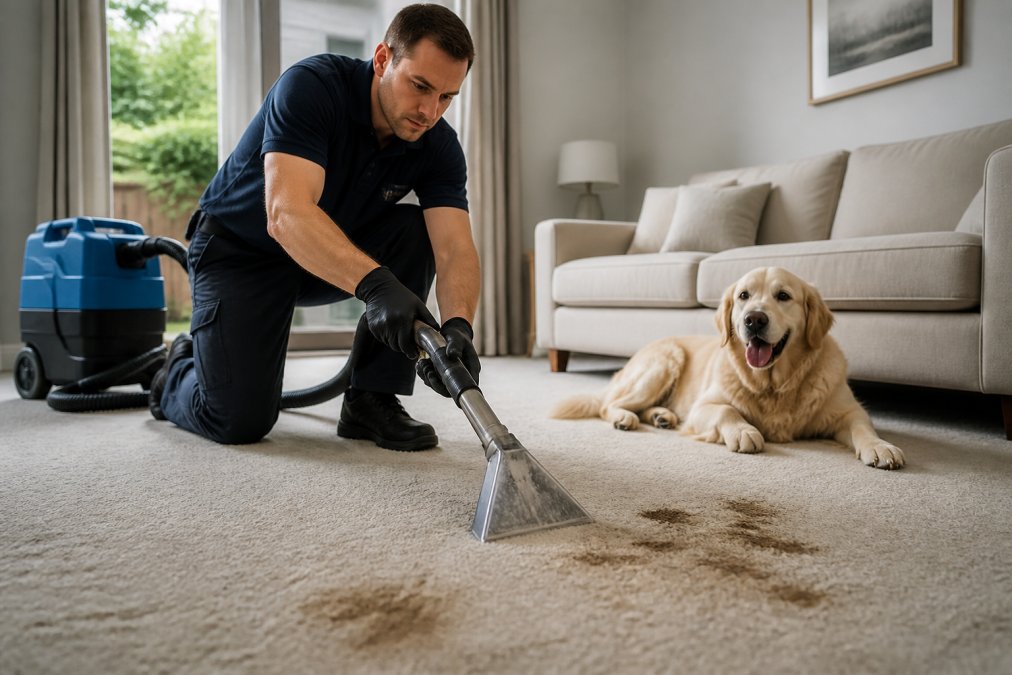
Hot water extraction, often called steam cleaning, injects heated solution into the carpet under pressure and immediately extracts it along with suspended soil and dissolved waste. Professional-grade machines generate far more suction than consumer units, letting them pull contamination out of the backing and padding rather than just the surface.
Where odour has penetrated deeply, technicians may flush the padding directly or use an enzyme pre-treatment with a longer dwell time than any home product allows. The practical difference shows in drying: strong extraction leaves the carpet barely damp, so it dries in hours, which matters for bacterial growth and the risk of the smell returning.
Carpet Cleaning In Stockport uses this approach for domestic and commercial clients, with pet-safe solutions and same-day appointments available for urgent spills.
Pet-Safe Carpet Cleaning Solutions: What to Look For
Pet-safe carpet cleaning solutions remove pet waste without leaving residues that harm animals or children once the carpet is dry. The label matters more than the marketing, so check for three things.
- Enzyme content: look for named enzymes rather than “biological” as a vague claim
- Residue behaviour: solutions that leave sticky film attract dirt and cause rapid re-soiling
- pH balance: overly alkaline cleaners can affect dye stability in wool and some synthetics
Wool and wool-blend carpets are the most sensitive, responding poorly to high alkalinity and prolonged moisture, so both DIY and professional treatments should be adjusted for them. Solution-dyed synthetics such as polypropylene tolerate far more. If unsure what your carpet is made from, check the manufacturer’s label, fibre damage from the wrong product can void a warranty.
Test any cleaner on a hidden offcut or a corner behind furniture first. Leave it for 24 hours and check for colour change or fibre distortion before treating the visible stain.
Professional Carpet Stain Removal Cost: Is It Worth It?
Professional carpet stain removal cost depends on the size of the affected area, the depth of contamination, and whether padding or subfloor treatment is needed. Any quote given without seeing the carpet is a guess, so reputable providers assess on site or from clear photographs before confirming a price.
That said, here is how pricing actually breaks down. Most providers quote per room or per area rather than per stain, because the technician’s time and solution volume are driven by floor area, not by how many spots are visible. A single-room treatment may have a minimum call-out charge for small jobs.
The Hidden Cost of DIY Failure
To make the comparison concrete, work through what a failed DIY attempt costs.
When to Call a Professional (and When DIY Is Enough)
Call a professional when the stain is more than a few days old, when odour persists after two proper DIY attempts, when the affected area is larger than a dinner plate, or when the carpet is wool or otherwise delicate.
A Material-First Decision Framework
Most comparison guides treat carpet as a single surface.
The Health and Indoor Air Quality Angle
Most comparisons focus on how the carpet looks and smells.
Frequently Asked Questions
Is professional carpet cleaning better than DIY for pet stains?
Yes, professional carpet cleaning is generally more effective for pet stains, especially older or set-in ones. Professionals use hot water extraction and professional-grade equipment that removes urine crystals deep in the carpet padding and subfloor, which consumer machines cannot reach. They also have access to enzymatic cleaners and can assess carpet fibre sensitivity to avoid damage. For fresh, small spots, DIY may suffice, but for recurring odours or large areas, professional service delivers better results.
Will professional carpet cleaning remove pet urine odour completely?
Professional cleaning can remove pet urine odour completely if the contamination has not penetrated too deeply. Technicians use enzymatic cleaners that break down uric acid crystals, followed by hot water extraction to flush out residues. However, if urine has soaked into the subfloor, odour may persist until the subfloor is treated. A professional assessment can determine the extent of saturation and recommend the right approach, including subfloor sanitisation if needed.
What is the best DIY pet stain remover for carpets?
The best DIY pet stain remover is an enzymatic cleaner, such as Rocco & Roxie Supply Co. Stain & Odor Eliminator. These cleaners break down organic proteins in urine, eliminating odour and preventing repeat marking. For fresh stains, blot with a clean cloth, apply the enzymatic cleaner, and let it dwell before blotting again. Avoid steam cleaners on urine stains, as heat can set the stain. For deep-set stains, a portable machine like the Bissell Little Green Pro can help, but it may not reach the padding.
What do professionals use to remove pet stains from carpets?
Professionals use a combination of enzymatic cleaners, hot water extraction machines, and specialised spotting agents. They first identify the stain type and carpet fibre, then apply the appropriate pre-treatment. Hot water extraction (often called steam cleaning) flushes out urine crystals and chemical residue. They may also use sub-surface extraction tools to clean the padding and subfloor. This multi-step process ensures deep soil extraction and odour neutralisation that DIY methods cannot match.
What are the risks of using DIY pet stain removers on delicate carpets?
DIY pet stain removers can damage delicate carpets if they contain harsh chemicals or if applied incorrectly. Wool and natural fibres are sensitive to high pH cleaners, which can cause discolouration or fibre damage. Over-wetting can lead to moisture retention, bacterial growth, and delamination of the carpet backing. Always test a small hidden area first and use pet-safe, pH-balanced products. If unsure, consult a professional to avoid voiding your carpet warranty.