Owning a hand-knotted Oriental or Persian rug is an investment in artisanal craftsmanship, but maintaining its vibrant dyes and delicate fibers requires more than standard carpet extraction. In this guide, you will learn the exact methodologies required to safely lift decades of embedded soil, prevent dye migration, and restore the natural sheen of wool and silk blends. For residents seeking specialized care, our expert rug cleaners in Stockport serving Persian rugs bring top results in all Stockport areas—call 07554 933028 to schedule an immediate consultation. We bypass aggressive chemicals in favor of controlled, pH-balanced submersion washing tailored specifically to heritage textiles. By understanding the unique chemistry of natural fibers, you can make informed decisions that extend the lifespan of your heirloom pieces.
Key Takeaways:
- Customized Wash Protocols: Authentic Persian rugs require pH-balanced submersion washing to prevent vegetable dye migration and fiber degradation.
- Abrasive Soil Removal: Professional harmonic dusting removes microscopic silica particles that act like sandpaper against delicate wool and silk fibers.
- Local Accessibility: Specialized collection, treatment, and delivery services are readily available across all Greater Manchester and local Stockport districts.
Why Do Hand-Knotted Persian Textiles Require Specialized Care?
Unlike synthetic wall-to-wall carpeting, authentic Persian rugs are constructed using natural protein fibers such as wool and silk, woven meticulously onto a cotton or wool foundation. This intricate warp and weft architecture creates a dense pile that traps particulate matter deep within the foundation threads. Standard surface vacuuming cannot reach these embedded soils. Over time, the accumulation of grit and dust acts as a hidden abrasive, slowly severing the foundation knots every time the rug is walked upon.
Furthermore, the dyes used in traditional rug making present unique cleaning challenges. Many heritage pieces utilize natural vegetable and insect dyes, such as madder root for deep reds, indigo for rich blues, and cochineal for vibrant pinks. These natural chromatics are notoriously unstable when exposed to high alkalinity or extreme temperatures. Applying standard carpet cleaning detergents to these dyes often results in catastrophic color bleeding, where dark pigments migrate into lighter ivory or cream sections of the pattern.
The Intricacies of Lanolin Preservation
High-quality wool sourced from high-altitude regions contains lanolin, a natural wax that provides inherent stain resistance and gives the rug its characteristic sheen. Aggressive degreasers and harsh chemical solvents strip this protective barrier away. Once the lanolin is depleted, the wool becomes brittle, dull, and highly susceptible to permanent staining. Specialized rug washing facilities utilize bespoke, mild surfactants that clean the fibers thoroughly while leaving the natural lanolin intact.
How Can You Protect Your Investment from Dye Bleeding and Fiber Damage?
The foundation of safe rug restoration lies in meticulous pre-inspection and dye testing. Before any water touches a heritage piece, professionals conduct a crocking test to determine the stability of the dyes across every distinct color block. If a dye transfers during this test, technicians apply specialized dye stabilizers or mordants to lock the colors in place before the washing process begins. This crucial step prevents the irreversible damage often caused by inexperienced cleaners or DIY attempts.
Temperature control and chemical balance are equally critical. Hot water extraction, commonly known as steam cleaning, is highly effective for synthetic carpets but is highly detrimental to natural fibers. High temperatures can cause wool to shrink, distorting the rug’s shape and causing it to lay unevenly on the floor. Professional rug washing relies on cool water submersion techniques, mimicking the traditional river-washing methods used for centuries by master weavers in regions like Tabriz, Isfahan, and Heriz.
Industry-Standard Care Guidelines
To ensure the longevity of valuable textiles, adherence to established conservation standards is non-negotiable. According to the WoolSafe Organisation’s carpet care guidelines, maintaining a neutral pH is critical to preventing the structural degradation of natural protein fibers. Solutions with a pH higher than 8.5 can permanently damage the cuticle scales of wool, leading to a harsh texture and rapid resoiling. Professional facilities strictly monitor the pH levels throughout the entire washing and rinsing cycle.
What Are the Dangers of Using DIY Carpet Cleaning Machines on Heritage Rugs?
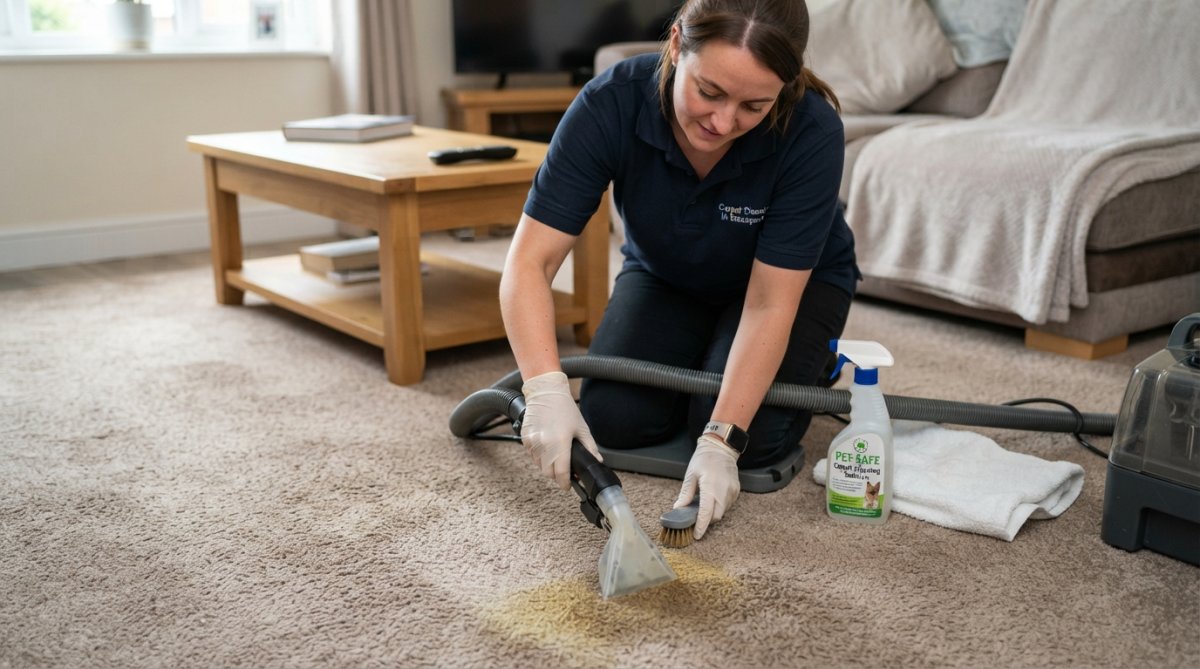
Many homeowners attempt to maintain their Persian rugs using rented carpet shampooers or consumer-grade spot cleaners. These machines are engineered for synthetic fibers like nylon and polyester, and they operate by forcing hot, soapy water into the pile and immediately vacuuming it out. When used on a dense, hand-knotted rug, these machines fail to extract all the moisture and detergent. The residual soap remains trapped in the dense foundation, creating a sticky residue that rapidly attracts new dirt.
Additionally, the powerful rotating brushes on consumer carpet cleaners can cause severe mechanical damage to delicate rug fringes. Fringes are the exposed ends of the warp threads that run the entire length of the rug; they are not merely decorative additions. If a rotating brush tears the fringe, the structural integrity of the entire rug is compromised, leading to unraveling knots and expensive repair costs. Professional care involves washing fringes entirely by hand using specialized, non-abrasive tools.
The Risk of Cellulosic Browning
When cotton foundation threads remain damp for extended periods—a common result of DIY cleaning—they are prone to a phenomenon known as cellulosic browning. As the cotton dries too slowly, lignin rises to the surface of the fibers, leaving unsightly brown or yellow stains across the rug. Furthermore, prolonged moisture in dense wool creates an ideal breeding ground for mold, mildew, and foul-smelling bacterial growth.
What Results Can You Expect from Professional Submersion Washing?
The professional submersion washing process is a multi-stage operation designed to clean the rug completely through to its foundation. The first active step is harmonic dusting. Instead of beating the rug, technicians use specialized equipment that sends rapid harmonic vibrations through the back of the textile. This safely dislodges impacted dry soil, sand, and allergens that vacuuming leaves behind. It is not uncommon for a single rug to yield several pounds of dry dirt during this stage.
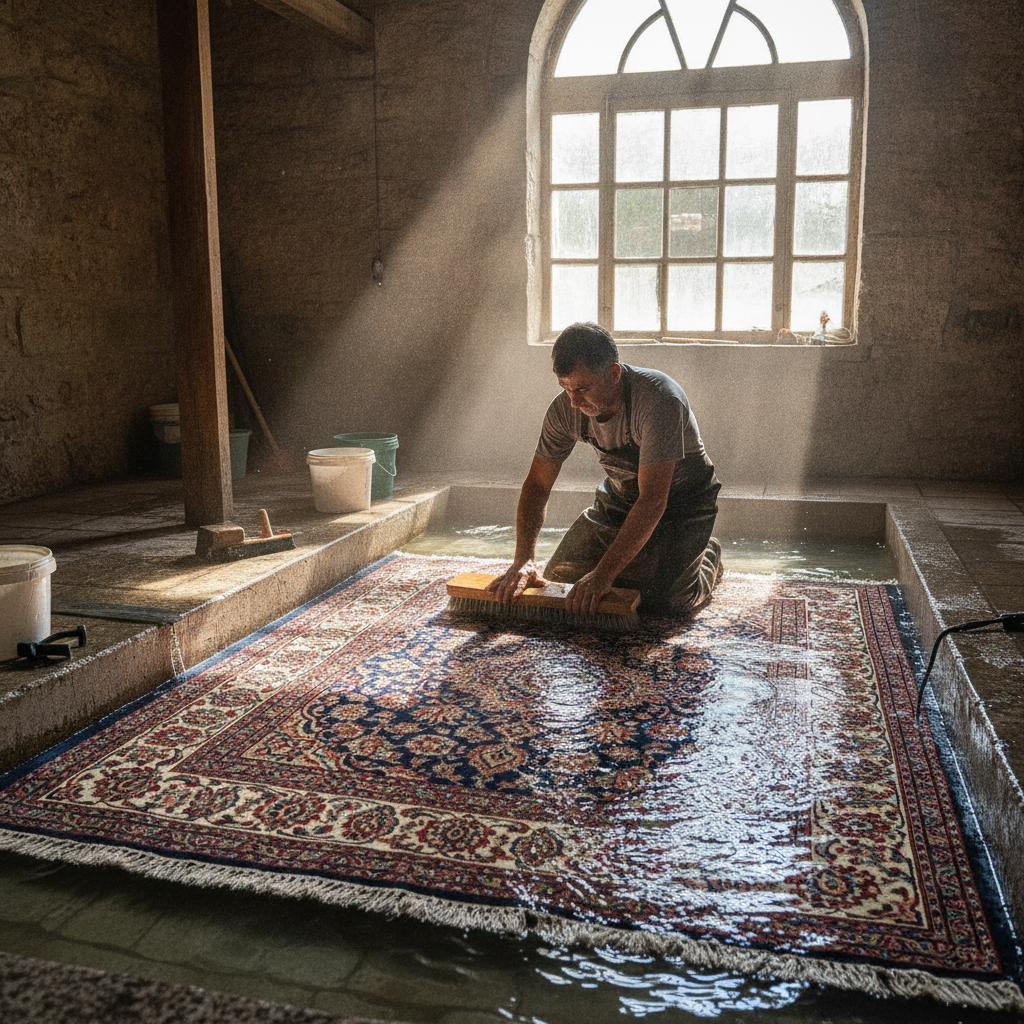
Once dusted, the rug is transferred to a wash pit for full submersion. Using a continuous flow of cool, softened water and neutral-pH shampoos, artisans gently agitate the pile using soft-bristled brushes or specialized rollers. This traditional method ensures that contaminants are flushed out entirely, rather than just pushed deeper into the pile. The continuous flow of clear water carries away dissolved soils, pet dander, and cooking oils, restoring the original clarity of the intricate patterns.
The Crucial Role of Rapid Moisture Extraction
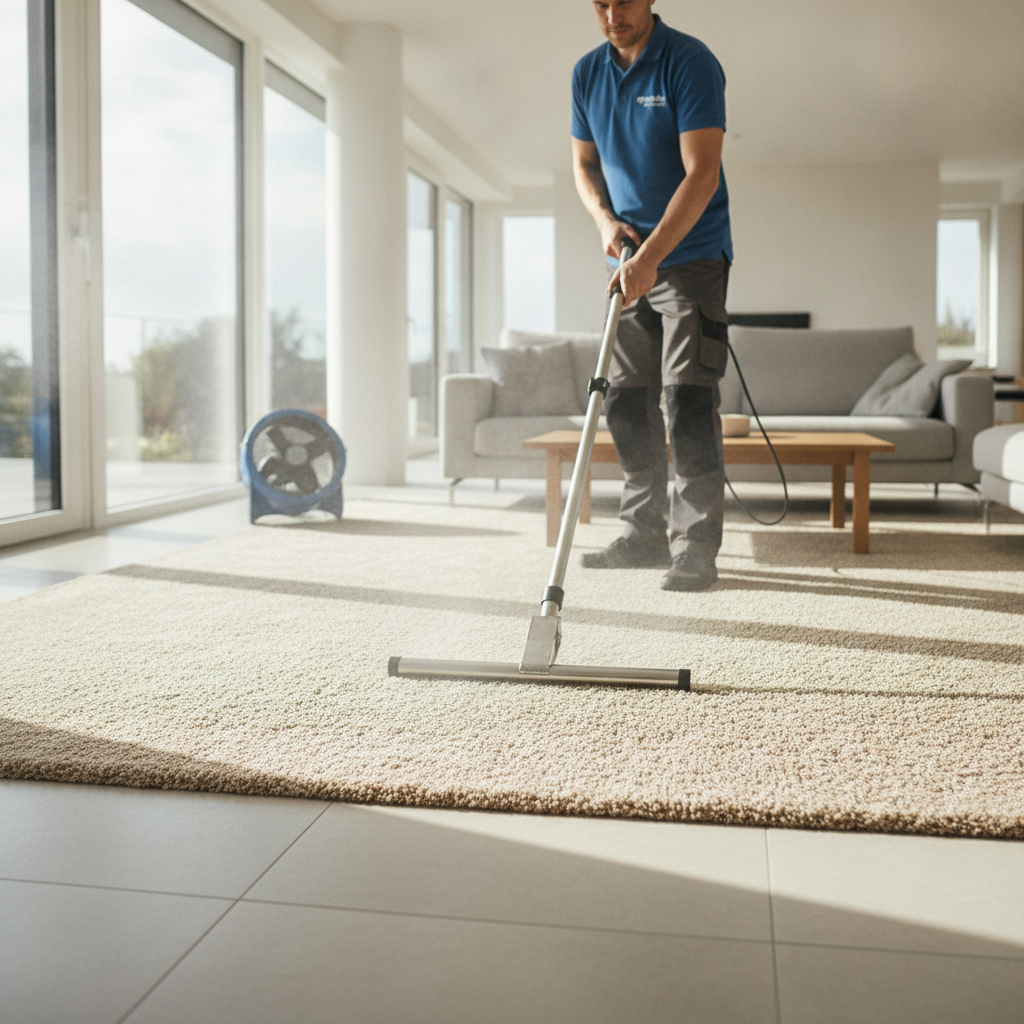
To prevent the aforementioned risks of browning and microbial growth, the rug must be dried rapidly. Professional facilities utilize massive rug centrifuges—similar to the spin cycle on a washing machine but scaled for large textiles. The rug is rolled, placed inside the centrifuge, and spun at high speeds, safely extracting up to 95% of the moisture in under three minutes. The rug is then hung in a climate-controlled drying room with industrial dehumidifiers and high-velocity air movers to complete the drying process overnight.
Which Stockport Neighborhoods Benefit from Specialized Collection Services?
Transporting a large, heavy Persian rug can be a logistical challenge for many homeowners. To provide seamless service, specialized rug cleaning facilities offer dedicated collection and delivery logistics across the entire region. Whether you reside in the leafy suburbs of Bramhall and Cheadle Hulme, or closer to the town center in Edgeley and Heaton Moor, professional teams are equipped to safely roll, wrap, and transport your textiles. This ensures that residents in all Stockport districts have access to premium, facility-based rug restoration without the hassle of heavy lifting.
The collection process also includes a preliminary on-site assessment. Technicians can identify areas of concern, such as moth damage, UV fading, or pet stains, right in your living room. From Hazel Grove to Marple and Romiley, this localized approach guarantees that your valuable heritage pieces are handled with the utmost care from the moment they leave your home until they are returned, freshly washed and fully restored.
How Do We Treat Severe Pet Stains and Odors in Dense Wool Piles?
Pet accidents present one of the most severe threats to hand-knotted rugs. When a pet urinates on a rug, the liquid is initially slightly acidic. However, as it dries and oxidizes, the chemical composition changes into a highly alkaline state, generating strong ammonia odors. This elevated alkalinity chemically burns the wool fibers and dissolves the mordants holding the vegetable dyes in place, leading to permanent color loss or dye bleeding. Standard deodorizers merely mask the smell temporarily without addressing the caustic chemical residue.
To effectively neutralize pet odors and halt fiber damage, professional rug cleaners employ targeted enzymatic treatments and specialized acidic rinses. During the submersion wash, these treatments break down the complex uric acid crystals trapped deep within the cotton foundation. By flushing the rug with massive volumes of water, the broken-down urine salts are completely removed from the textile. This meticulous process not only eliminates the odor at its source but also restores the proper pH balance to the wool.
Addressing Moth Infestations and Biological Contaminants
Beyond pet stains, heritage rugs are highly susceptible to moth damage, particularly in dark, undisturbed areas such as under heavy furniture. Clothes moths do not eat the wool; rather, they lay eggs, and the resulting larvae consume the keratin in the natural fibers. Professional washing removes the sticky moth eggs, larvae, and biological webbing. Following the wash, specialized moth retardants can be applied to make the wool unpalatable to future infestations, safeguarding your investment for years to come.
How Often Should You Schedule Deep Cleaning for High-Traffic Rugs?
Establishing a consistent maintenance schedule is vital for preserving the structural integrity and aesthetic value of Persian rugs. For textiles placed in high-traffic areas such as hallways, living rooms, and entryways, a professional submersion wash is recommended every 12 to 18 months. Rugs in formal dining rooms or bedrooms, which experience less footfall, can typically extend this interval to three to five years. Regular professional care prevents the accumulation of abrasive soils that cause premature wear patterns.
Visual and tactile cues can also indicate when a rug is overdue for professional attention. If the wool feels stiff or coarse to the touch, or if the vibrant colors appear muted and dull beneath a layer of atmospheric soil, it is time for a deep clean. Additionally, lifting a corner of the rug and vigorously kicking the back can reveal hidden dust. If a cloud of fine powder releases from the pile, the foundation is holding abrasive grit that requires immediate harmonic dusting and washing.
What Are the Immediate Next Steps to Restore Your Heritage Rug?
Protecting your heirloom pieces begins with recognizing when routine surface vacuuming is no longer sufficient to maintain their health. Once wool loses its natural luster or foundation threads become stiff with embedded particulate matter, the structural integrity of the rug is actively degrading. Addressing these issues promptly through specialized facility washing prevents irreversible mechanical wear and preserves both the financial and aesthetic value of your textile. Entrusting your rug to experts ensures it undergoes the rigorous dye testing, harmonic dusting, and pH-balanced submersion protocols required for authentic Persian weaves. Reach out today to discuss your rug’s specific construction, arrange a comprehensive evaluation, and secure professional collection to begin the restoration process.