Table of Contents
- What to Look for in the Best Natural Carpet Deodorizer for Homes
- DIY Carpet Deodoriser Recipe: Baking Soda and Essential Oils
- How to Remove Pet Odours from Carpet Naturally
- Natural vs Commercial Carpet Fresheners: What Works Better
- Material-Specific Safety: Which Carpets Can Handle Powder
- Vacuum Maintenance After Using Carpet Deodorizer Powder
- Professional Carpet Deep Cleaning Benefits for Stubborn Odours
- Frequently Asked Questions
Last Updated: September 11, 2026
What to Look for in the Best Natural Carpet Deodorizer for Homes
The best natural carpet deodorizer for homes neutralises odours at the source rather than masking them with synthetic fragrance. This guide from Carpet Cleaning In Stockport covers what actually works, what to avoid, and when to call in professional help.
A natural carpet deodorizer is a product or homemade blend that removes odours from carpet fibres using mineral or plant-based ingredients instead of synthetic chemicals. Most rely on baking soda for odor absorption, with essential oils added for scent.
Synthetic fresheners coat fibres with perfume. Natural options adsorb odour molecules, and the difference shows within hours on a damp carpet.
Ingredients That Actually Neutralise Odours
Baking soda is the workhorse. Its fine particles sit between carpet fibres and trap the acidic compounds behind pet accidents, cooking, and damp. Natural minerals like zeolite work the same way but cost more.
Look for short ingredient lists: sodium bicarbonate, plant-derived oils, and little else. A long chemical list usually means synthetic fragrance doing the work.
Pet-Safe and Child-Safe Formulations
Pet-safe and child-safe formulations avoid synthetic fragrance, which is the most common irritant in conventional carpet freshener. Fragrance-free options exist for households with allergies or asthma.
Check that any essential oil is heavily diluted. Cats in particular are sensitive to concentrated citrus and tea tree oils, so keep treated rooms ventilated and paws off the carpet until the powder is fully vacuumed away (aspca.org).
DIY Carpet Deodoriser Recipe: Baking Soda and Essential Oils
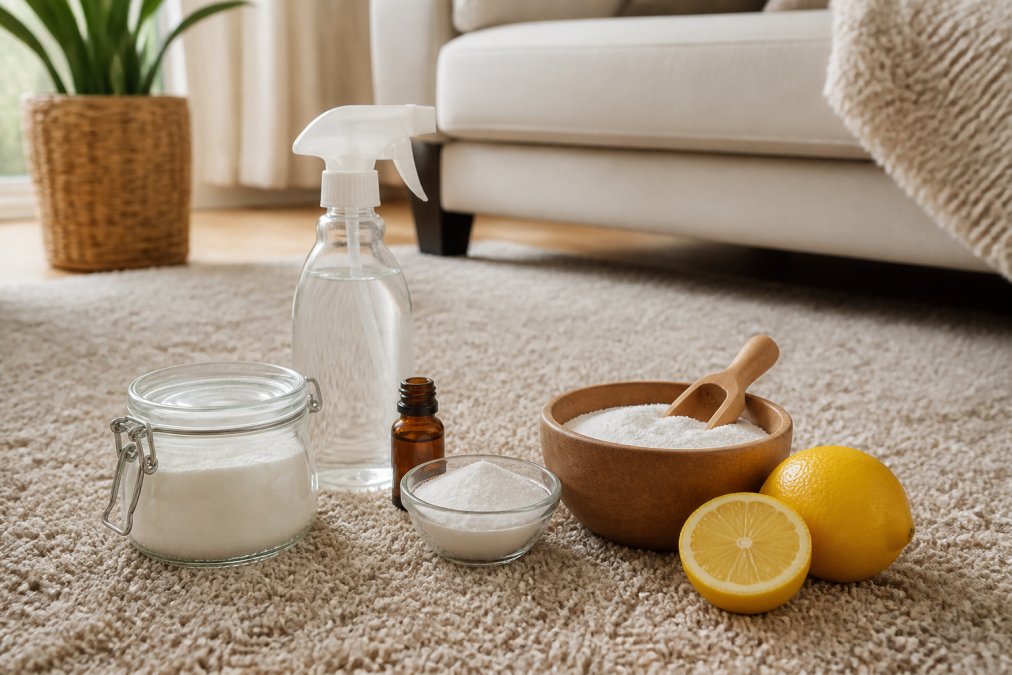
A basic DIY carpet deodoriser recipe costs almost nothing and takes five minutes to make. You need one cup of baking soda and 10 to 15 drops of essential oil per batch, enough to treat roughly one average-sized room (around 10 to 12 square metres of carpet).
Why Baking Soda Neutralises Odour (Not Just Masks It)
Most carpet odours are acidic, the compounds behind pet urine, sour milk, damp, and cooking grease all sit on the acid side of the pH scale (PubMed). Sodium bicarbonate is a mild alkali. When the two meet, they react and the odour molecule is converted into a neutral salt, water, and carbon dioxide. That is neutralisation, not masking.
Synthetic fresheners work the opposite way. They release volatile fragrance molecules that sit on top of the odour, so the nose detects perfume over the top of the original smell. Once the fragrance fades, usually within a day or two, the underlying odour returns unchanged. This is the same reason a plug-in air freshener in a room with a damp carpet never really fixes the problem.
Baking soda’s fine crystal structure also gives it a large surface area relative to its weight, which is why it adsorbs (binds to its surface) odour molecules rather than absorbing them into its bulk. Zeolite, a naturally occurring mineral, works on the same principle and is the active ingredient in many commercial pet-odour powders, but it costs considerably more per treatment.
Step-by-Step Mixing and Application
- Add one cup of baking soda to a mason jar or bowl.
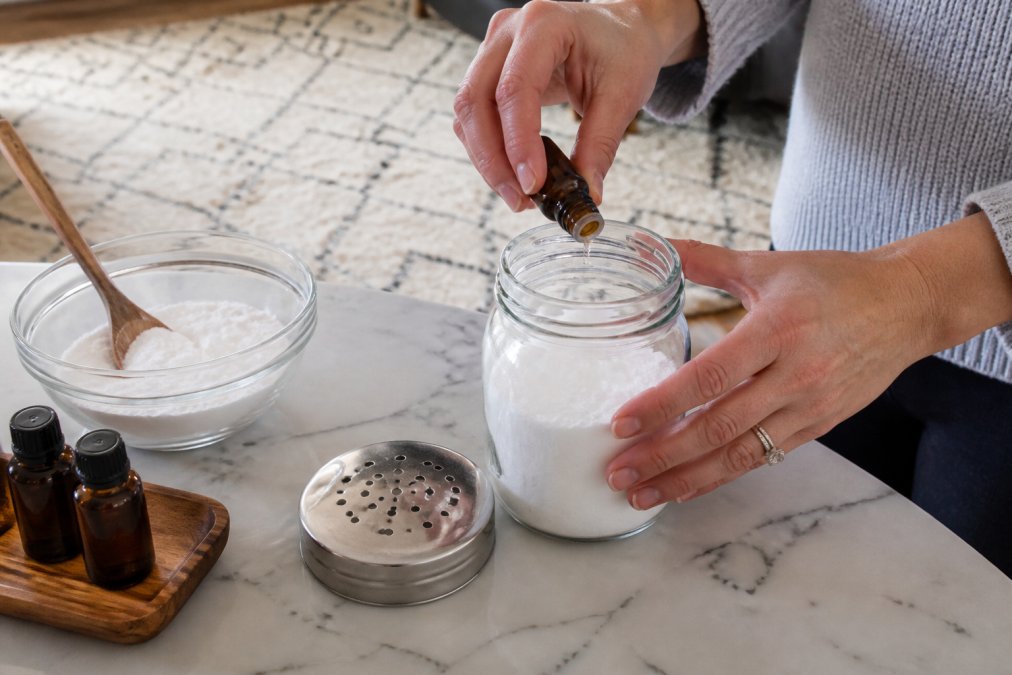
- Drop in 10 to 15 drops of essential oil, one drop at a time. Add the oil in stages rather than all at once, this stops the powder from clumping around a single soaked patch.
- Stir with a fork until no clumps remain, then leave the jar open for an hour so the oils absorb into the powder rather than sitting on the surface.
- Sprinkle a thin, even layer across dry carpet using a shaker lid. Aim for a light dusting, not a visible blanket, excess powder is the main cause of vacuum clogging and residue.
- Leave the powder for 15 to 30 minutes. Longer dwell time helps on set-in smells, but there is no benefit beyond about an hour.
- Vacuum slowly, passing over each area twice. A slow pass lifts more powder than a fast one, and the second pass catches what the first missed.
Expected result: A fresher room within the hour, with no residue if you vacuum thoroughly.
Common Mistakes That Ruin a Batch
- Too much oil. More than 15 drops per cup leaves an oily film that attracts dirt and can stain pale carpet. If the powder feels damp, you have overdone it.
- Clumped powder. Clumps sit on the surface instead of working into the pile, and the vacuum skips them. Break them up with a fork before sprinkling.
- Sprinkling onto damp carpet. Moisture makes the powder stick and clump. Always treat a dry carpet, or wait until a freshly cleaned one has fully dried.
- Skipping the dwell time. Vacuuming immediately after sprinkling removes the powder before it has had time to react with the odour compounds.
- Using the same jar for different oils. Residual oil from a strong scent like eucalyptus will contaminate a delicate lavender batch. Keep one jar per scent family, or wash and dry thoroughly between uses.
Recommended Essential Oils for Scent and Safety
Lavender is the safest all-rounder, gentle for bedrooms and children’s rooms. Eucalyptus cuts damp dog smell well. Lemon and sweet orange give a sharp, clean scent profile but should be avoided around cats.
Tea tree oil has mild antibacterial properties, though it is strong, so use five drops maximum per batch. Blend two oils at most, or the scent becomes muddy.
| Oil | Best for | Notes |
|---|---|---|
| Lavender | Bedrooms, general freshening | Gentlest option; safe around most pets |
| Eucalyptus | Damp, musty odours | Strong; use sparingly |
| Lemon / sweet orange | Kitchen and pet areas | Avoid around cats |
| Tea tree | Antibacterial support | Maximum five drops per batch |
| Cedarwood | Masculine, woody scent | Good for heavier pet odours |
Mix your powder in a jar with a shaker lid and store it with a silica packet. Clumped baking soda sprinkles unevenly and leaves patches that your vacuum misses. A batch stored this way keeps its scent for around two to three months.
Never use undiluted essential oils directly on carpet. Concentrated oils can strip colour from wool and synthetic fibres, and they are toxic to cats if ingested during grooming. Always dilute into the baking soda first.
How to Remove Pet Odours from Carpet Naturally
Learning how to remove pet odours from carpet naturally starts with understanding that urine soaks through the carpet into the underlay. Surface treatments only reach the top third of the problem, which is why a carpet can smell fresh for a day and then revert.
Why Pet Odour Keeps Coming Back
Pet urine contains urea, uric acid, and ammonia. When it dries, the water evaporates but the uric acid crystals remain. These crystals are not water-soluble at neutral pH, they need an alkaline environment to dissolve. This is why plain water or a mild detergent often fails: the crystals stay locked in the backing and underlay, and every time humidity rises, they release odour again. cat litter odor control.
The fix is a two-stage approach: an alkaline treatment to dissolve the crystals, followed by an acidic rinse to neutralise the residue and restore the carpet’s pH balance. Skipping either stage leaves the problem half-solved.
Treating Fresh Accidents
For fresh accidents, blot with a clean cloth, then apply a 50/50 white vinegar and water solution. Vinegar neutralises the ammonia compounds in urine rather than covering them. Leave it for ten minutes, blot again, then sprinkle baking soda once the area is dry.
For a stronger result on fresh urine, swap the vinegar for a diluted enzyme cleaner. Enzyme products contain bacteria that digest the uric acid crystals directly. They need dwell time, usually 15 to 30 minutes while still damp, to work, and they must not be rinsed away before they have finished.
Tackling Damp Dog Smell and Set-In Stains
Damp dog smell comes from bacteria trapped deep in the pile, not the surface. A powder sits on top of the fibres; it cannot reach what has soaked into the backing.
For set-in stains, work in stages: vinegar solution first, then a baking soda paste left for 20 minutes, then vacuum once fully dry. Repeat over several days rather than soaking the carpet in one go.
A common pattern with older stains is that the first treatment lifts the surface odour, then a day later the smell returns as residual moisture draws more uric acid to the surface. This is normal, it means the treatment is working. Two or three repeat cycles usually clear it. If the smell persists after a week of daily treatment, the contamination has reached the underlay and a powder routine will not fix it.
When Powder Is Not Enough
Powder deodorisers are a maintenance tool, not a cure. They are effective on surface odours from cooking, pets, and general household smells. They cannot reach the underlay, the backing, or the base of the pile where bacteria and uric acid crystals actually live.
Signs the problem has gone deeper than powder can reach:
- The smell returns within 24 hours of treatment
- The odour is stronger in humid weather or after rain
- You can smell it when standing over the carpet, not just when close to it
- The carpet feels damp in one area even when the rest is dry
- Dark staining is visible at the base of the pile
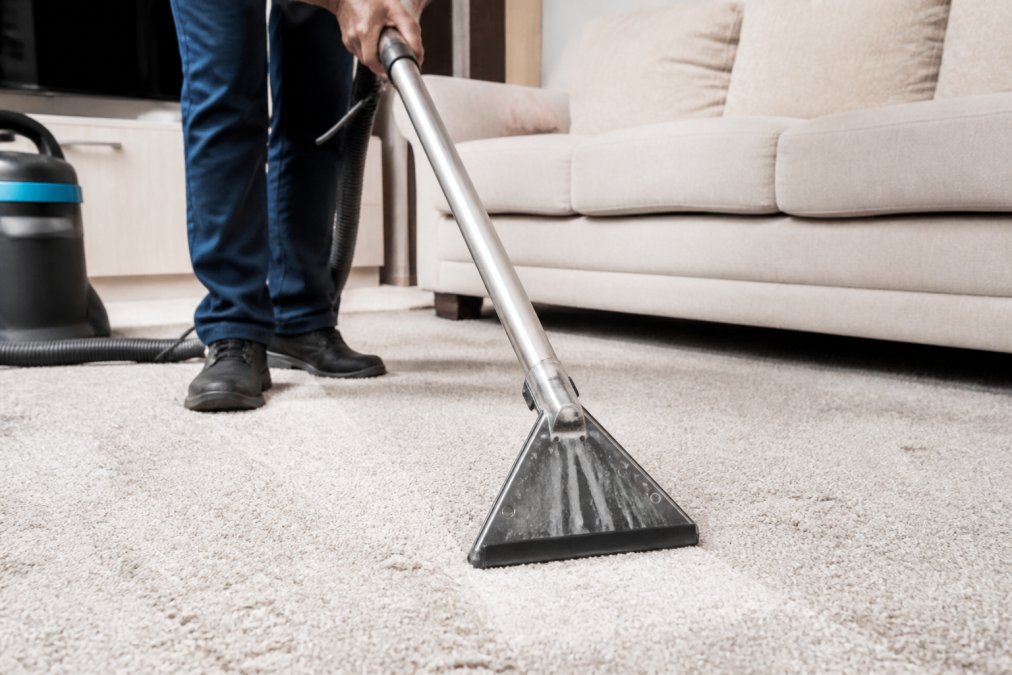
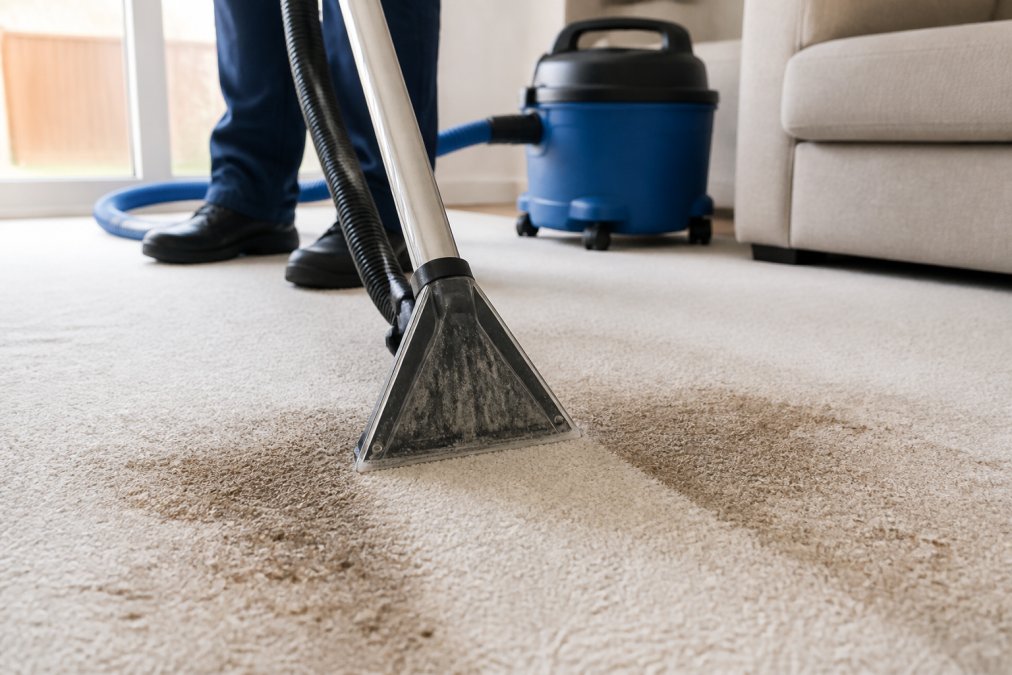
In these cases, the reliable fix is hot-water extraction, which flushes the underlay and lifts the residue that powders leave behind.
Never saturate a carpet with liquid to chase a smell. Over-wetting soaks the underlay, and trapped moisture creates the musty, damp dog smell you were trying to remove. If you can feel moisture through to the backing, you have used too much liquid.
For recurring pet odour, the sequence matters more than the product: alkaline treatment to dissolve uric acid crystals, acidic rinse to neutralise, then a powder to maintain. Skipping the first step is why most DIY fixes fail.
Natural vs Commercial Carpet Fresheners: What Works Better
Natural options win on safety and scent control, while commercial powders win on convenience and staying power. Neither beats a proper deep clean for odours that have soaked into the underlay.
| Factor | Natural (DIY or plant-based) | Commercial Freshener |
|---|---|---|
| Cost per use | Very low | Moderate |
| Odour neutralisation | Good on surface smells | Stronger, longer-lasting |
| Synthetic fragrance | None | Often present |
| Pet and child safety | High | Varies by product |
| Residue risk | Low if vacuumed well | Higher, can attract dirt |
| Best for | Regular maintenance | Quick fixes |
The catch with commercial powders is residue. Leftover particles cling to fibres and attract new dirt, which is why some carpets look grubby days after treatment.
Material-Specific Safety: Which Carpets Can Handle Powder
Powder is safe on most synthetic and wool carpets, but not all. Wool and silk are pH-sensitive, so avoid anything acidic or heavily oiled.
- Synthetic (polypropylene, nylon): Safe with any powder, including vinegar pre-treatment.
- Wool: Use plain baking soda only. Skip vinegar and citrus oils, which can dull the fibre.
- Silk and viscose: Spot-test first, or skip powder entirely and use a professional clean.
- Loop pile (Berber): Vacuum gently. Harsh brushing pulls loops and creates permanent snags.
- Deep shag: Powder works, but you will need several slow vacuum passes to clear it.
Test any new powder on a hidden corner first, then wait 24 hours before treating the whole room.
Vacuum Maintenance After Using Carpet Deodorizer Powder
Fine powder clogs vacuum filters faster than everyday dust, and a clogged filter loses suction within a few uses. Empty the canister after every powder treatment, not every few weeks.
If your vacuum has a washable filter, rinse it and let it dry fully for 24 hours before refitting. Bagged models should get a new bag once the powder is cleared. Skipping this step is the single most common reason a deodorised carpet starts smelling again.
Odour neutralisation is only as good as your vacuum. A clogged filter leaves powder and odour particles sitting in the pile, and the smell returns within days.
Professional Carpet Deep Cleaning Benefits for Stubborn Odours
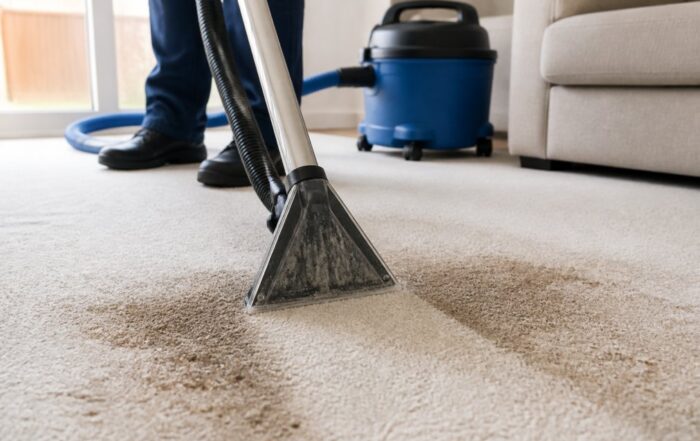
Professional carpet deep cleaning reaches what no powder can: the underlay, the backing, and the base of the pile where bacteria actually live. That is where persistent pet and damp odours hide.
At Carpet Cleaning In Stockport, our technicians use advanced equipment and family-friendly, pet-safe cleaning solutions to effectively remove dirt, stains, bacteria, and allergens. We are dedicated to restoring your flooring to its original quality while ensuring a healthier, fresher home environment for your family. Our services offer fast drying times and remove the residue that makes carpets re-soil quickly.
For homes with three dogs, a long-standing damp smell, or a tenancy inspection looming, a deep clean is the reliable fix. NHS guidance on indoor air quality and allergens explains why removing trapped allergens matters for household health.
Households with persistent pet odours, allergy sufferers, and tenants needing a documented deep clean before a move-out inspection.
Frequently Asked Questions
What is the most effective natural deodorizer for carpets?
Baking soda is the most effective natural deodorizer for carpets because it absorbs and neutralises odour molecules rather than masking them. For best results, mix baking soda with a few drops of pet-safe essential oils like lavender or lemon, sprinkle it over dry carpet, leave for 15-30 minutes, then vacuum thoroughly. This method works on most household odours including damp dog smell and cooking smells. For deep-set pet odours, a professional carpet deep clean may be needed.
How can I deodorize my carpet naturally without harming pets?
Choose a natural carpet deodorizer that is explicitly pet-safe and free from synthetic fragrances. Baking soda on its own is non-toxic to cats and dogs, but essential oils can be harmful if ingested. Avoid tea tree, eucalyptus, and citrus oils around pets. Instead, use a small amount of lavender or chamomile, or skip oils entirely. Always vacuum thoroughly after application and keep pets off the carpet until all residue is removed. If odours persist, consider a professional clean using pet-safe solutions.
Is baking soda safe for all carpet types?
Baking soda is safe for most synthetic and wool carpets when used dry and vacuumed properly. However, it can be difficult to remove completely from deep-pile or shag carpets, and residue may dull colours over time. On wool or delicate natural fibres, test a small hidden area first. For carpets with a stain-resistant coating, check the manufacturer’s guidelines. If you have a high-value rug or carpet, a professional clean is safer than repeated powder applications.
How often should I deodorise my carpets?
Deodorise carpets every two to four weeks in homes with pets or young children, and every one to two months in households without pets. High-traffic areas may need more frequent attention. Regular vacuuming between treatments helps maintain freshness. If odours return quickly, it often means the source (such as pet accidents or spills) has soaked into the underlay, which requires a professional deep clean to resolve properly.
Powder and DIY recipes handle surface smells well, but stubborn odours need extraction. Carpet Cleaning In Stockport offers same-day service, pet-safe solutions, and prices from only £29.00 per area, with fast drying times and a process that removes dirt, stains, bacteria, and allergens rather than masking them. Get started with Carpet Cleaning In Stockport and restore your carpets to their original quality.