Table of Contents
- Assess the Water Type and Damage Severity First
- Emergency Steps: How to Clean Carpet After Water Damage
- How to Dry Carpet Underlay and Carpet Backing
- Choosing the Best Disinfectant for Water Damaged Carpet
- Signs of Mould Under Carpet and When to Call a Professional
- Documenting Damage for Insurance Claims
- Frequently Asked Questions
Last Updated: September 13, 2026
Assess the Water Type and Damage Severity First
Before you touch a towel or plug in a wet-dry vacuum, you need to know what kind of water you’re dealing with. This single assessment determines whether you can safely clean carpet after water damage yourself or whether you need professional intervention. Homeowners sometimes make the mistake of treating contaminated water like a simple spill, only to face mould remediation costs weeks later.
Water damage falls into three categories, and the category changes everything about your approach.
Clean, Grey, and Black Water: Why the Category Changes Everything
Clean water comes from burst supply pipes, rainwater, or appliance feed lines. It’s relatively safe to handle yourself if you act quickly.
Grey water carries some contamination from washing machines, dishwashers, or toilet bowls (without solid waste). It requires disinfectant and careful handling.
Black water contains sewage or serious pathogens. This is where DIY ends. Sewage contamination poses genuine health risks, particularly for children and pets, and requires professional extraction and antimicrobial treatment.
| Water Type | Common Sources | DIY Safe? | Action Required |
|---|---|---|---|
| Clean | Supply pipes, rain | Yes, if fast | Extract and dry within 24 hours |
| Grey | Washing machines, sinks | Caution | Extract, disinfect, dry quickly |
| Black | Sewage, flooding | No | Call a professional immediately |
Timing matters as much as category. Carpet fibres begin absorbing water within minutes, and carpet backing and underlay act like sponges. Within 24 to 48 hours, mildew growth can start (gov.uk). Beyond that window, structural damage to the subfloor becomes a real possibility.
Emergency Steps: How to Clean Carpet After Water Damage
Speed defines the outcome when you need to clean carpet after water damage. The first hour matters more than everything that follows. Here’s the sequence professionals follow.
Remove Standing Water and Begin Extraction
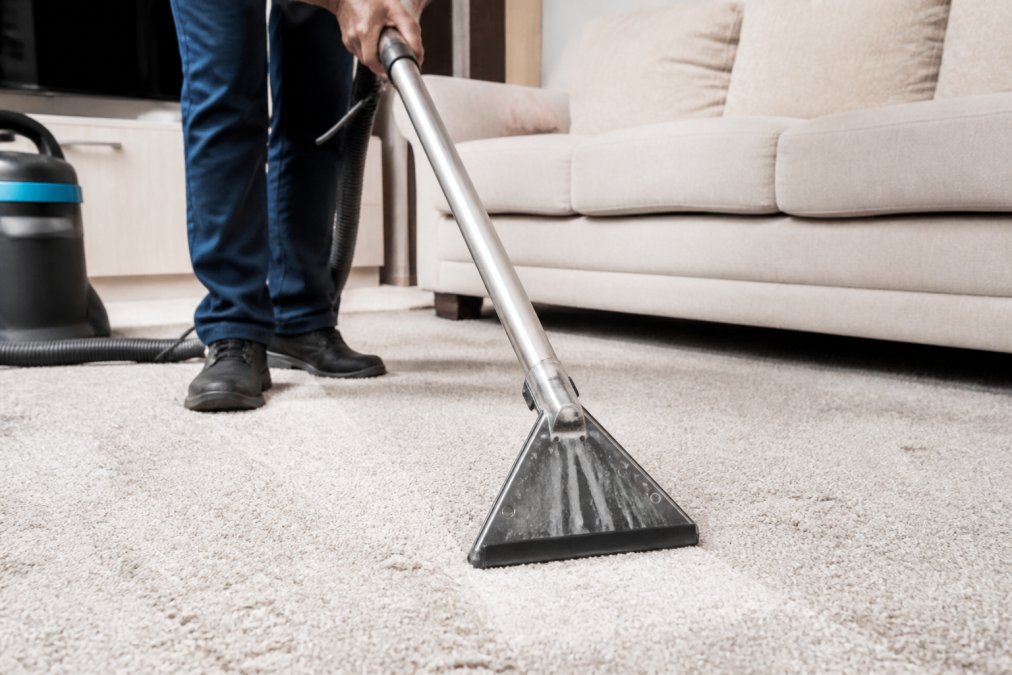
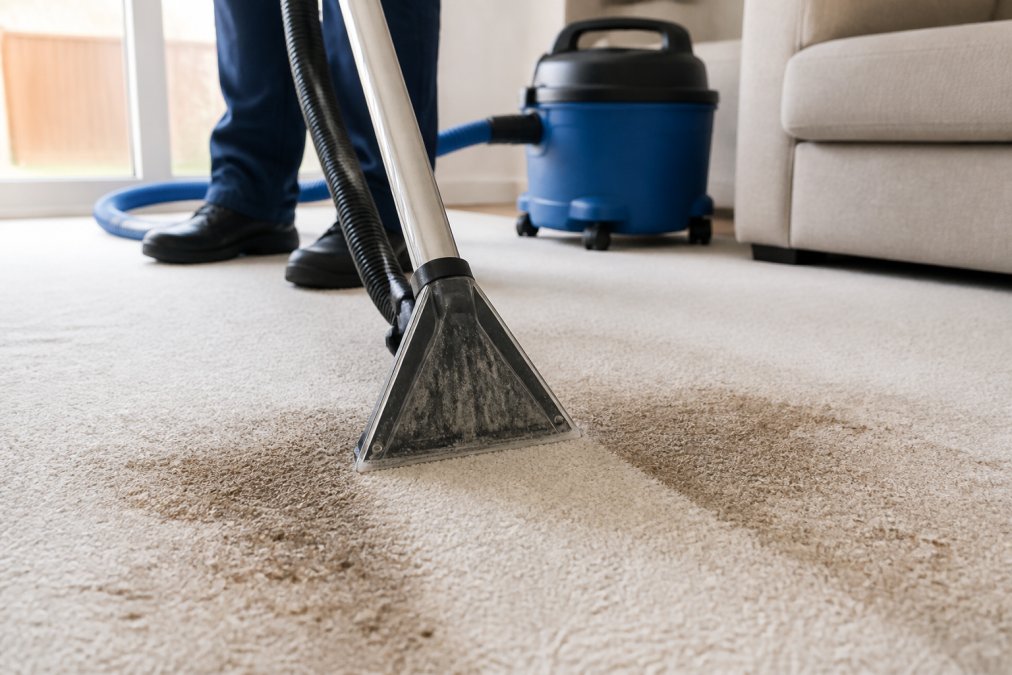
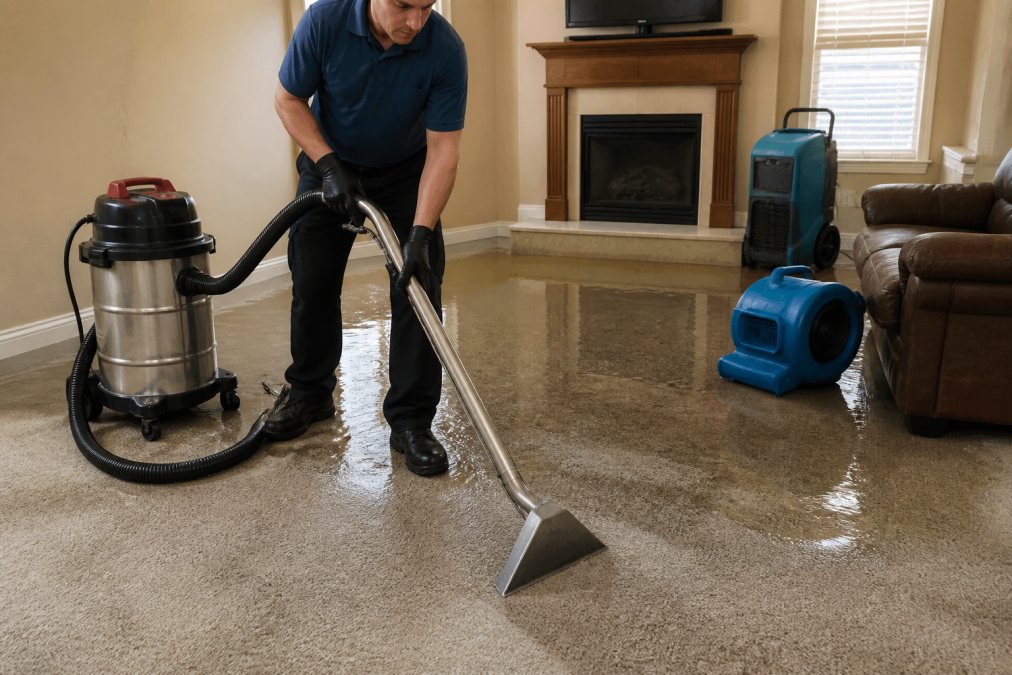
Start by removing standing water with a wet-dry vacuum. Work in overlapping passes, emptying the tank frequently so suction stays strong. For larger volumes, a pump or mop-and-bucket approach clears the bulk before extraction.
Safety comes first: if the water source is near electrical outlets, switch off the power at the consumer unit before you begin. Water and live electrics are a dangerous combination.
Lift Furniture and Separate Carpet from Underlay
Move furniture off the wet area immediately. Wooden legs and metal frames can stain or rust against damp carpet, and trapped moisture underneath furniture creates ideal conditions for mildew growth.
If the carpet is loose-laid or you can lift a corner, separate it from the underlay. Carpet padding holds water far longer than the carpet itself and often needs replacing. This step is what most guides skip, and it’s the difference between a carpet that dries in a day and one that smells musty for weeks.
How to Dry Carpet Underlay and Carpet Backing
Drying is where impatience costs you. Carpet backing and underlay trap moisture that surface drying never reaches, so you need air movement and humidity control working together, and you need to dry to a measurable target, not a feeling.
Match the Drying Method to the Carpet Fibre
Not all carpets tolerate the same treatment. Getting this wrong is how a salvageable carpet becomes a replacement job.
- Synthetic (polypropylene, polyester, nylon): The most forgiving. These fibres are largely hydrophobic, so they release surface water quickly and tolerate aggressive air movement. Most synthetic carpets with a separate underlay can be dried in situ if you lift and prop the carpet and dry the underlay independently.
- Wool: Wool is hygroscopic, it absorbs and holds moisture within the fibre itself, and it is far more prone to shrinkage, felting and backing delamination. Wool needs slower, cooler drying with steady airflow and strict humidity control. Never apply direct heat, and never leave a wool carpet folded or bunched while damp.
- Wool-blend and natural fibre (sisal, coir, jute): Plant fibres can stain, swell and distort permanently once wet. These are the carpets most likely to need professional assessment rather than a DIY attempt.
A common pattern is for a synthetic carpet that dries in a day to sit next to a wool rug that still smells musty a week later, because the same fan-and-dehumidifier routine was applied to both.
Set Up Air Movement and Humidity Control Properly
Set up air movers or industrial fans to push air across the surface, not straight down into it, and run a dehumidifier to pull moisture from the air. Open windows for ventilation if the weather allows, but keep the dehumidifier running regardless, on a damp day, open windows can add humidity faster than the dehumidifier removes it.
A hygrometer helps you track moisture levels rather than guessing. As a working target, aim to bring the room’s relative humidity down towards the 40-50% range and keep air circulating continuously (the NHS). Most carpets take 24 to 48 hours to dry fully; thicker underlay and wool can take considerably longer (hse.gov.uk).
Never use a household hairdryer or crank up the heating to speed drying. High heat can delaminate carpet backing and warp the subfloor, turning a manageable problem into a replacement job.
Post-Restoration Drying Checklist
Surface-dry is not dry. Hidden moisture in the backing and underlay is what feeds mould weeks later, so verify before you declare the job done.
- The moisture-meter test: A handheld moisture meter (available to hire from most tool-hire outlets) gives a reading rather than an opinion. Compare a reading from the affected area against an unaffected area of the same carpet, they should be close before you consider the carpet dry.
- The underlay squeeze test: Lift a corner and press the underlay. It should feel dry and spring back, not cool, clammy or spongy.
- The subfloor check: Press along the skirting and any seams. Soft, spongy or discoloured subfloor means moisture is still trapped below and needs attention.
- The smell test: Any lingering musty or earthy odour after 48 hours points to moisture you have not reached, usually in the underlay.
- The 48-hour recheck: Re-test a day after you think it is dry. Carpets that pass on day one sometimes fail on day two as residual moisture migrates to the surface.
If any check fails, keep drying and re-test rather than laying furniture back down. Replacing a section of underlay is far cheaper than remediating mould across a whole room.
Choosing the Best Disinfectant for Water Damaged Carpet
The best disinfectant for water damaged carpet depends on the water category, but the principle is consistent: kill what’s there, then remove the residue.
For grey water, a diluted disinfectant applied after extraction handles most contamination. For clean water, sanitisation is still wise, particularly in homes with pets or young children. Always test on a hidden patch first.
Baking soda earns its place here for odor neutralization. Sprinkle it over the damp area, let it sit, then vacuum once dry. It absorbs lingering smells without harsh chemicals.
Avoid over-wetting. Too much liquid soaks into the backing and undoes your drying work. Apply lightly, work it in, and extract again.
What most people miss: the smell often returns because bacteria sit in the underlay, not the carpet surface. If odour persists after surface treatment, the underlay is the culprit and usually needs replacing.
Signs of Mould Under Carpet and When to Call a Professional
Mould under carpet rarely announces itself. The early signs are subtle: a persistent musty smell, dark speckling near the skirting boards, or a carpet that feels damp days after you thought it was dry.
If you spot any of these, act quickly. Mould remediation is not a DIY task once growth has taken hold, because disturbing mould releases spores into the air. This is especially important in homes with asthma sufferers, young children, or pets.
Call a professional when:
- The water was grey or black
- Dampness persists beyond 48 hours
- You can smell mustiness after drying
- The affected area is larger than a small spill
- The subfloor feels soft or spongy
For complex or widespread cases, professional carpet cleaning with antimicrobial treatment addresses both the surface and the source. For complex or widespread cases, professional carpet cleaning with antimicrobial treatment addresses both the surface and the source. We provide professional, deep-cleaning services for domestic and commercial clients, specializing in carpets, rugs, upholstery, and mattresses, using family-friendly and pet-safe cleaning solutions.
Documenting Damage for Insurance Claims
Most guides skip this entirely, and it is the step that decides whether your claim is settled smoothly or disputed. Photograph everything before you start cleaning. Once you have extracted water and moved furniture, that evidence is gone.
What to Capture Before You Touch Anything
Insurers assess escape-of-water claims on evidence of cause, extent and mitigation. Build that record deliberately:
- Wide shots of each affected room showing the full spread of water, including doorways and where the water has travelled.
- Close-ups of the source, the burst pipe, failed appliance connection or entry point. This establishes cause.
- Water-line and tide-mark photos on walls, skirting and furniture legs. These show how high the water reached, which helps establish the extent of damage.
- Photos of damaged contents, furniture, rugs, electronics, before you move or dispose of anything.
- A timestamped note of when the damage occurred and when you discovered it. Delay in reporting is one of the most common reasons claims are queried.
Keep a Mitigation Log
Insurers expect you to take reasonable steps to limit further damage, and they expect you to be able to show it. Keep a simple written log of every action: when you switched off the water, when you called a plumber, when extraction began, what equipment you hired and when. This log works in your favour, because it demonstrates you acted promptly rather than leaving the damage to worsen.
Receipts, Hire Costs and Professional Quotes
Keep every receipt for equipment hire, replacement underlay, dehumidifier rental or emergency trades. If you bring in a professional restoration or cleaning service, retain the written quote and invoice, these are recoverable costs under most home insurance policies that include escape of water. If the insurer appoints its own loss adjuster, keep a record of who attended and when.
Check Your Policy Wording Early
Most home insurance policies cover escape of water, but the detail matters: excess levels, whether underlay and carpet are covered separately, and whether the policy requires you to use an approved supplier. Check your policy wording or speak to your insurer about what they need before you commit to a large spend, so you are not left funding work the policy will not reimburse.
A common pattern is for homeowners to clean up thoroughly, then discover the insurer wanted to inspect the damage first. If the loss is significant, photograph everything, log your actions, and contact your insurer before you start major work, prompt mitigation is expected, but so is giving them the chance to assess.
Frequently Asked Questions
Can carpet be saved after water damage?
Carpet can often be saved if you act within 24 to 48 hours, especially with clean water from a burst pipe or rain. Carpet soaked in grey or black water (from toilets, washing machines, or sewage) usually needs replacing because of bacteria and contamination. If the carpet backing has delaminated or mould has started growing, replacement is the safer option. Quick water extraction and drying are key to saving it.
How can I deodorize my carpet after it has been water damaged?
Start by removing all moisture with a wet-dry vacuum and air movers. Once dry, sprinkle baking soda over the carpet, leave it for several hours or overnight, then vacuum thoroughly. For stubborn odours, use an antimicrobial treatment or a diluted disinfectant safe for carpets. Avoid masking smells with perfumed powders, as they trap moisture and encourage mildew growth underneath.
What pulls water out of carpet?
A wet-dry vacuum is the most effective DIY tool for pulling water out of carpet. For larger volumes, a submersible pump or professional water extraction unit removes standing water faster. After extraction, use dehumidifiers and industrial fans to pull remaining moisture from the carpet fibres, backing, and subfloor. A hygrometer helps you confirm moisture levels have returned to normal before you replace furniture.
When should you replace carpet after water damage?
Replace carpet if it was soaked by black water (sewage or toilet overflow), if mould is visible on the backing or underlay, or if the carpet has been wet for more than 48 hours. Delaminated backing, a persistent musty smell after cleaning, and crumbling underlay are also signs replacement is necessary. For clean water damage caught early, most carpets can be restored with proper extraction and drying.