Table of Contents
- 1. Cleaner Indoor Air and Fewer Airborne Particles
- 2. Relief for Allergies and Asthma: Carpet Cleaning for Allergy Sufferers
- 3. Fewer Bacteria, Germs and Mould Spores in the Home
- 4. A Safer Home for Children and Pets
- 5. Better Mental Wellbeing and a Fresher Living Space
- How Often to Get Carpets Professionally Cleaned
- Professional Carpet Cleaning vs DIY: What Actually Removes Allergens
- Frequently Asked Questions
Last Updated: September 19, 2026
1. Cleaner Indoor Air and Fewer Airborne Particles
Professional carpet cleaning is the process of using hot water extraction and high-powered equipment to pull trapped contaminants out of carpet fibres rather than pushing them around the surface. This guide from Carpet Cleaning In Stockport covers the 5 benefits of professional carpet cleaning for health that matter most, and the maintenance habits that keep them.
Carpets act as filters. They trap dust, pollen, dander, and microscopic debris that would otherwise circulate through the room. That is useful until the carpet fills up, at which point every footstep releases those particles back into the air. Regular vacuuming removes some of it. Deep cleaning removes what vacuuming cannot reach.
The NHS advice on indoor air quality and allergies notes that reducing exposure to indoor allergens is a core part of managing symptoms at home. Carpets are one of the largest reservoirs of those allergens in a typical house.
A carpet that looks clean can still hold a significant load of fine dust and dander. The health benefit comes from what is extracted, not from how the surface looks afterwards.
2. Relief for Allergies and Asthma: Carpet Cleaning for Allergy Sufferers
Carpet cleaning for allergy sufferers focuses on removing the two allergens that trigger most reactions indoors: dust mites and pet dander. Hot water extraction lifts both from deep in the pile, along with the fine particles that keep them airborne.
Dust mites thrive in warm, humid conditions and feed on shed skin cells (House Dust Mite Allergy). Their waste is a common asthma trigger. Dander from cats and dogs behaves similarly, settling into carpet fibres and resurfacing with movement. A standard household vacuum tends to disturb these particles more than it captures them.
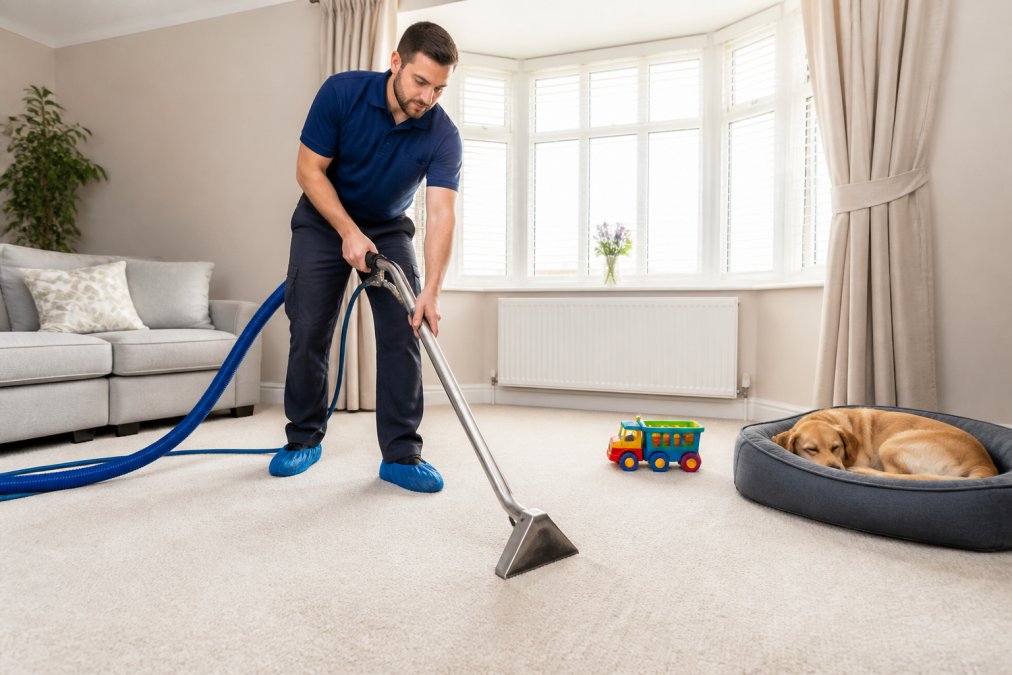
The difference between a surface clean and a deep clean comes down to water temperature and suction power. Professional equipment injects hot water deep into the pile and extracts it under high pressure, which is why the results last longer than a rental machine pass.
3. Fewer Bacteria, Germs and Mould Spores in the Home
Bacteria, germs, and mould spores settle into carpet fibres through everyday traffic, spills, and moisture. Professional extraction removes them along with the dirt they cling to, which is why hygiene standards in care homes and clinics depend on scheduled deep cleaning.
Mould is the one to watch. It needs moisture to grow, and a carpet that stays damp after a spill or a DIY clean gives it exactly that. Once mould spores take hold in the backing, surface cleaning will not shift them. This is one of the strongest arguments for professional extraction over a rental machine: fast drying times matter as much as cleaning power.
| Problem | What Causes It | Professional Fix | Health Impact |
|---|---|---|---|
| Dust mites | Warm, humid rooms; shed skin cells | Hot water extraction, deep in pile | Reduces asthma triggers |
| Pet dander | Pets settling into fibres | High-pressure extraction plus deodorising | Fewer allergic reactions |
| Mould spores | Damp carpet after spills or DIY cleaning | Fast-drying extraction, full moisture removal | Removes a respiratory irritant |
| Bacteria | Spills, foot traffic, pets | Hot water sanitisation | Cleaner indoor environment |
4. A Safer Home for Children and Pets
Children and pets live at carpet level. They crawl, sit, and play directly on the surface where allergens, bacteria, and chemical residue accumulate, which makes the cleaning method itself part of the health question. Most guides treat this as a footnote. It deserves more.
This is where chemical sensitivity matters, and most guides skip it entirely. Harsh cleaning agents can leave residue that irritates skin and airways, particularly for young children and anyone with a diagnosed respiratory condition. The residue is not always obvious. It can sit in the pile for weeks, attracting new dirt and re-releasing fine particles with every footstep.
Three ingredient groups are worth knowing about before you book:
- Volatile organic compounds (VOCs), solvents and fragrances that off-gas from some cleaning solutions. They are a common trigger for headaches, eye irritation and airway sensitivity in enclosed rooms.
- Alkaline builders and surfactants, effective at lifting grease and soil, but if they are not fully rinsed out, they leave a sticky film that traps dust and can irritate skin.
- Optical brighteners and synthetic perfumes, added for appearance and smell rather than cleaning performance, and a frequent cause of contact reactions in young children.
Family-friendly and pet-safe solutions avoid that trade-off, and a proper extraction rinse removes the cleaning product along with the dirt. The rinse step is the part that matters most. A technician can use the gentlest solution available and still leave residue behind if the extraction pass is rushed.
A common mistake is assuming a strong chemical smell means a thorough clean.
If anyone in the house has sensitive skin or a known respiratory condition, ask three questions before booking: what solution will be used, whether it carries any recognised low-emission or eco certification, and how many extraction passes are included. A reputable technician will answer all three without hesitation, and many will send the product safety data sheet on request.
For households managing eczema, asthma or a diagnosed chemical sensitivity, the practical approach is to request a fragrance-free solution, book the clean for a day when windows can be opened, and keep children and pets off the carpet until it is fully dry. Drying time is usually measured in hours rather than days with professional equipment, but it is still worth planning around.
5. Better Mental Wellbeing and a Fresher Living Space
The 5 benefits of professional carpet cleaning for health include how you feel, not just how you breathe. The psychological benefit of professional carpet cleaning is real but rarely mentioned: removing odours, stains, and the low-level background mess that builds up over years changes how a room feels to live in.
How Often to Get Carpets Professionally Cleaned
Most homes benefit from professional cleaning every 12 months, with high-traffic households moving to every 6 to 9 months. Frequency should follow use, not the calendar. That is the standard advice, and it is a reasonable starting point. It is not a health-based schedule, though, and the difference matters if anyone in the house has a respiratory condition, a pet, or a young child.
- Standard household, no pets, no allergies: every 12 months. This keeps the reservoir from building up to the point where vacuuming can no longer manage it.
- Homes with pets or young children: every 6 to 9 months. Dander and shed skin cells accumulate faster than most people expect, and children transfer far more soil to the carpet than adults do.
- Allergy or asthma sufferers: every 6 months as a baseline, and sooner if symptoms flare. If a household member is waking with congestion or noticing more inhaler use, that is a signal to bring the interval forward rather than wait for the next scheduled visit.
- High-traffic areas and hallways: spot-clean as needed between visits. These zones reach saturation long before the rest of the house, so a full-room clean every time is not always necessary.
- Commercial offices and care settings: set a schedule based on footfall and hygiene compliance requirements. Care environments in particular tend to work to a documented cleaning regime rather than a fixed calendar.
Treat the schedule as a ceiling, not a target. If symptoms, odours or visible soiling return before the next booked visit, the interval is too long for your household.
Professional Carpet Cleaning vs DIY: What Actually Removes Allergens
Professional carpet cleaning outperforms DIY on allergen removal because of water temperature, suction power, and drying speed, not because of the cleaning solution. Rental machines typically inject less heat and extract less water, leaving more moisture and more residue behind.
Frequently Asked Questions
What are the main health benefits of professional carpet cleaning?
Professional carpet cleaning improves indoor air quality by removing dust mites, pet dander, pollen and other airborne particles trapped in carpet fibres. It also reduces bacteria, mould spores and VOCs that build up over time. For households with allergies, asthma or pets, the result is fewer respiratory irritants circulating in the home and a fresher indoor environment overall.
How often should I get my carpets professionally cleaned for health reasons?
Most homes benefit from professional cleaning every 12 months. If you have pets, young children, or someone with asthma or allergies, every 6 to 9 months is more suitable. High-traffic commercial spaces may need quarterly visits. Frequency depends on footfall, pets and whether anyone in the home has a respiratory condition.
Can dirty carpets really trigger allergies and asthma?
Yes. Carpets act as a reservoir for dust mites, dander, pollen and mould spores. Every time someone walks across the carpet, these particles become airborne and can be inhaled. For allergy sufferers, this can cause sneezing, itchy eyes and wheezing. Regular professional extraction removes the source rather than just disturbing it, which is why it helps manage symptoms.
Is professional carpet cleaning better than using a rental machine?
Rental machines typically clean the surface and leave excess moisture behind, which can encourage mould. Professional hot water extraction reaches deeper into carpet fibres, removes more allergens and uses controlled drying to prevent dampness. For allergy sufferers or homes with pets, the difference in air quality is noticeable within days.
Do professional cleaners remove bacteria and dust mites completely?
Professional hot water extraction removes the vast majority of dust mites, bacteria and their allergens from carpet fibres. It will not sterilise the room permanently, but it significantly reduces the load. Combined with regular vacuuming and good ventilation, this keeps levels low enough to reduce allergic reactions and respiratory irritation.
The gap between a carpet that looks clean and one that is genuinely clean is where most health benefits live. Carpet Cleaning In Stockport provides deep cleaning for carpets, rugs, upholstery, and mattresses using family-friendly and pet-safe solutions, with fast drying times and same-day service available. Prices start from only £29.00 per area, and the team is highly rated on Google Reviews. Get started with Carpet Cleaning In Stockport and give your home a healthier indoor environment.