Table of Contents
- What Causes Sticky Residue on Rug Backing
- How to Remove Rug Pad Residue from Carpet
- How to Remove Dried Adhesive from Carpet
- Safe Carpet Adhesive Remover Methods
- Material-Specific Cleaning for Latex, Rubber and Felt Backing
- Preventing Residue Transfer to Carpet Fibres and Hardwood Floors
- When to Call a Professional Carpet Cleaner
- Frequently Asked Questions
Last Updated: October 15, 2026
What Causes Sticky Residue on Rug Backing
Learning how to clean sticky residue from rug backing starts with understanding that it typically comes from rug pads, carpet tape, or deteriorating adhesive.
Moving a rug makes it worse: residue transfers to hardwood floors or presses deeper into carpet fibres. Knowing the cause helps you choose the right removal method.
Sticky residue that spreads to hardwood floors can damage the finish. Act quickly to prevent permanent staining or discoloration of the wood surface.
How to Remove Rug Pad Residue from Carpet
Rug pad residue sits on top of carpet fibres and is easier to remove than dried adhesive stuck to backing. Always test any cleaning solution on a hidden area first.
Here’s the basic process:
- Identify the sticky area by hand
- Test a gentle method on a hidden section first
- Apply carefully to avoid oversaturation, then blot with a soft cloth rather than rubbing
Be patient, rushing spreads residue to clean fibres or leaves stains. Most rug pad residue comes off within 15 to 30 minutes.
Work from the outside edges of the sticky area toward the centre. This prevents pushing residue outward onto clean carpet.
How to Remove Dried Adhesive from Carpet
Dried adhesive stuck to rug backing has cured, lost its tack, and bonded to the backing fibres or floor beneath. Work in an ordered sequence that starts mild and escalates only when necessary.
Work in the Right Order
Work through this sequence and stop as soon as the residue lifts.
- Mechanical lift first. Flex the backing gently and pick at a lifted edge with a plastic scraper or an old credit card. If the adhesive flakes away, you may not need any liquid at all.
- Warm, dry heat. A hairdryer on a low setting softens many pressure-sensitive adhesives enough to peel them. Hold it 10-15 cm from the backing, keep it moving, and test the edge every 30 seconds.
- Mild soap and water. Warm water with a few drops of washing-up liquid lifts light films and is safe on every backing type.
- Rubbing alcohol (isopropyl). Effective on latex and rubber backing and on most synthetic adhesives. Evaporates cleanly.
- Oil or citrus-based remover. Best for waxy or hardened residue on rubber and synthetic backing. Avoid on latex and felt.
- Specialist adhesive remover. Only if steps 1-5 have failed, and only after a patch test. Follow the manufacturer’s instructions exactly.
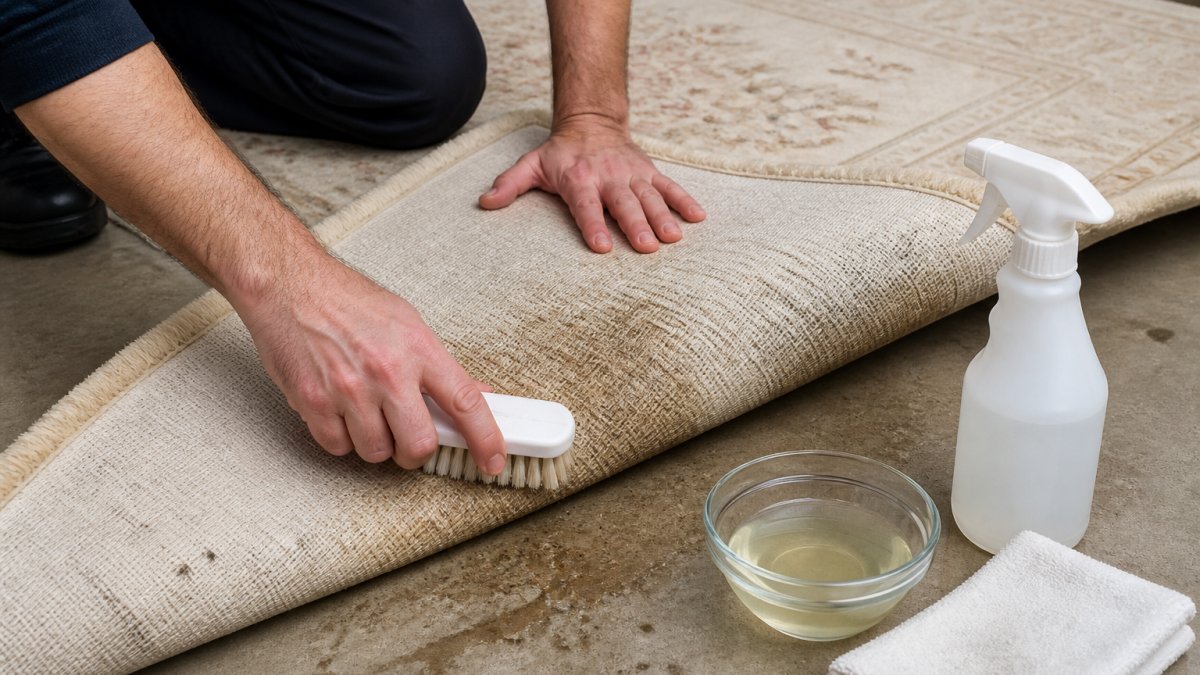
Isolate the Backing Before You Start
Residue that transfers to the rug pile or floor creates a second cleaning job. Before you apply anything:
- Lay the rug backing-up on polythene or a tarpaulin, not directly on carpet or wood.
- Slide an absorbent pad or cardboard under the working area to catch drips.
- Keep a clean, dry cloth and a waste bag handy.
Testing Your Chosen Method First
Never apply a full treatment without testing first, backing materials react differently to solvents and oils, and some dyes bleed on contact with alcohol.
Your testing process:
- Choose a hidden corner or an area under furniture
- Apply a small amount of remover to a cotton bud or cloth and wait 5 to 10 minutes
- Check for discolouration, fibre damage, or softening of the backing
A patch test takes about 10 minutes and is non-negotiable with alcohol, oils, citrus solvents, or specialist removers.
Scraping Without Damaging the Backing
A plastic scraper, old loyalty card, or silicone spatula edge lifts softened adhesive without cutting the backing. Hold it at roughly 30 degrees and push away in short strokes. Metal blades, knives, and wire brushes tear felt and gouge rubber, leave them out. Wipe the blade every few strokes, since a loaded tool spreads residue back across the backing.
Solvent Safety
Alcohol and specialist removers are flammable and give off fumes. Keep them away from pilot lights, heaters, and sockets, and work with a window open. Wear nitrile gloves, and if you feel light-headed, stop and get fresh air.
Never mix alcohol, citrus solvents, or specialist removers. Combining them can produce fumes or reactions that are more hazardous than either product alone.
When Dried Adhesive Will Not Shift
If the adhesive has bonded at a molecular level, common with old rubber-backed mats that melted onto a floor, no solvent will restore it cleanly. Stop if the backing crumbles, the residue re-forms within hours, or the surface beneath is damaged; those cases need a replacement backing or professional assessment, not more scrubbing.
Safe Carpet Adhesive Remover Methods
Several safe options work when learning how to clean sticky residue from rug backing, each suited to different situations and materials.

Rubbing Alcohol and Denatured Alcohol
Rubbing alcohol works quickly on many adhesives, evaporates fast, and leaves no oily residue. Denatured alcohol is stronger but needs better ventilation.
How to use alcohol safely:
- Open windows or doors and wear gloves
- Apply alcohol to a soft cloth, not directly to the carpet
- Dab gently from edges inward and let it soak for 2 to 3 minutes
Alcohol works best on latex backing and rubber pads. Test on a hidden area first because some dyes may run or fade.
Denatured alcohol is flammable. Keep it away from heat sources, open flames, and electrical outlets. Ensure good air circulation while working.
Oil-Based and Citrus Solutions
Baby oil, vegetable oil, and citrus-based removers dissolve adhesive without harsh chemicals, and work well on deteriorating backing where adhesive has become waxy or hardened. Apply oil sparingly, too much takes longer to dry and attracts dirt.
Steps for using oils:
- Pour a small amount onto a cloth and press it onto the sticky area
- Let it sit for 10 to 15 minutes
- Gently rub with a plastic scraper or your fingernail
Citrus-based removers smell better and work faster on some adhesives. Check labels to confirm they are safe for carpet.
Mild Soap and Water
For light residue or as a final rinse after stronger removers, mild soap and water is safest and won’t damage carpet fibres or backing when used correctly.
Mix warm water with a few drops of dishwashing liquid. Dip a soft cloth into the soapy water, apply to the sticky area, and blot repeatedly.
This works best on fresh rug pad residue rather than old, hardened adhesive, and is ideal for final cleanup after alcohol or oils.
Material-Specific Cleaning for Latex, Rubber and Felt Backing
Most guides treat rug backing as one material. In practice, latex, rubber, felt, and synthetic each respond differently to alcohol, oils, and water, the wrong choice can dissolve the backing, bleed dye, or leave a permanent tack. Match the method to the material.
How to Identify Your Backing
Turn the rug over and inspect the underside in good light. If unsure, check the care label, product page, or original packaging.
- Latex: Usually a creamy or greyish coating with a faint rubbery smell. Often found on tufted rugs and older bath mats. Feels slightly tacky even when new.
- Rubber: Denser and darker than latex, often with a textured or ribbed pattern. Common on outdoor mats and non-slip rug pads.
- Felt: A soft, fibrous, fabric-like layer, sometimes glued to a woven backing. Common on cheaper flatweave rugs and some children’s rugs.
Compatibility Guide
| Backing | Safest first choice | Works but test first | Avoid |
|---|---|---|---|
| Latex | Warm water and mild soap | Rubbing alcohol (short contact only) | Oils, citrus solvents, heat |
| Rubber | Rubbing alcohol | Citrus-based remover, mild soap | Sharp scrapers, prolonged oil soaking |
| Felt | Warm water and mild soap | Very dilute alcohol on a cloth | Oils, solvents, aggressive scraping |
| Synthetic | Rubbing alcohol or citrus remover | Mild soap, specialist remover | Acetone, nail varnish remover |
Latex Backing
Latex is the most fragile common backing. It responds well to rubbing alcohol and mild soap, but oils and citrus removers soften the latex itself, turning a small sticky patch into a large gummy one. Keep alcohol contact short, dab, blot, move on. Heat is also a problem: a hairdryer that helps on rubber can melt latex into the pile.
Rubber Backing
Rubber is more forgiving: it tolerates alcohol, citrus removers, and mild soap, and stands up to gentle scraping better than latex. The main risks are over-soaking, which lifts the bond between rubber and pile, and sharp tools, which tear the surface and create new spots for residue to collect.
Work in short bursts, blot rather than flood, and let the backing dry fully before the rug goes back down.
Felt Backing
Felt is delicate: it tears, pills, stretches, and soaks up liquid like a sponge. Use only warm water with a few drops of washing-up liquid on a barely damp cloth. If you must use alcohol, dilute it and keep it on the surface for seconds, not minutes. Never use oils or specialist solvents on felt, they leave an irremovable stain.
Synthetic Backing
Synthetic backings are the most tolerant: rubbing alcohol and citrus removers both work well, and mild soap handles light residue. Avoid acetone or nail varnish remover, which can melt PVC and polypropylene on contact. If in doubt, test a hidden corner.
When the Backing Cannot Be Saved
Some backing damage is permanent. Stop cleaning and consider replacement if:
- The backing crumbles or sheds when you touch it
- It stays tacky after cleaning and re-sticks within days
- The rubber or latex has hardened into a brittle sheet
A replacement rug pad or a professional re-backing is usually cheaper than repeated cleaning attempts, and it protects the floor from further transfer.
Match the method to the material before you start. Latex and felt need the gentlest approach; rubber and synthetic tolerate more. If the backing is already failing, cleaning will not bring it back, replacement is the honest answer.
Preventing Residue Transfer to Carpet Fibres and Hardwood Floors
The stickiest part of residue removal is keeping it off surrounding surfaces, transfer to carpet fibres or hardwood finish creates new problems.
Prevention steps:
- Work slowly and blot rather than wipe or rub
- Use minimal liquid and place absorbent cloth beneath the work area
- Wipe your tools frequently on a clean cloth
If residue transfers to hardwood floors, clean it immediately with a damp cloth, dried residue on wood is much harder to remove and can damage the finish. For carpet fibres, use a gentle brush or comb to lift the fibres away from the sticky material, then treat the residue separately using one of the methods above.
When to Call a Professional Carpet Cleaner
Some sticky residue situations exceed DIY methods. Professional cleaners have industrial equipment and stronger solvents that work faster and more effectively.
Consider calling a professional if:
- The residue covers a large area (more than one square metre)
- The backing is severely deteriorated or damaged
- Your rug is antique, expensive, or made from delicate materials
Professional cleaners can also assess whether the backing needs replacement. Our technicians identify the backing material and choose the safest method.
Sticky residue on rug backing doesn’t have to ruin your flooring. For difficult cases or fast professional results, Carpet Cleaning In Stockport offers deep cleaning services that remove adhesive, rug pad residue, and embedded dirt.
Frequently Asked Questions
How do you remove sticky residue from the back of a rug?
Start by identifying the type of backing (latex, rubber, felt, or synthetic). Test your chosen remover on a hidden area first. For latex or rubber backing, rubbing alcohol works well; apply it to a soft cloth, blot the residue gently, and wipe with a damp cloth. For felt backing, use milder methods like soapy water or baby oil. Always work from the edge inward to avoid spreading residue across the rug pile. Blot rather than scrub to prevent damage to fibres.
Can vinegar remove sticky residue from a rug?
White vinegar can help, but it works best as a final rinse rather than a primary remover. Mix equal parts white vinegar and water, apply to a cloth, and blot the residue after using a stronger method like rubbing alcohol or oil. Vinegar helps dissolve remaining adhesive and neutralises odours. However, for dried adhesive, start with alcohol or oils first, then follow with vinegar as a secondary step.
Will rubbing alcohol damage carpet or rug fibres?
Rubbing alcohol is generally safe for most synthetic and natural carpet fibres when used correctly. Always test on a hidden area first, as some natural fibres or dyes may be sensitive. Apply alcohol sparingly to a cloth rather than pouring it directly onto the carpet, and blot gently. Avoid oversaturating the backing, as excess moisture can cause mould or mildew. For delicate natural fibres like wool, use lower-strength alcohol or switch to oil-based methods.
When should you call a professional carpet cleaner for sticky residue?
Contact a professional if the residue covers a large area, the backing is severely deteriorated, DIY methods haven’t worked after multiple attempts, or you’re concerned about damaging valuable or antique rugs. Professional cleaners can extract residue from deep within the backing without harming carpet fibres. They can also assess whether backing replacement is needed and prevent residue from transferring to hardwood floors during removal.