Table of Contents
- Why Carpets Turn Sticky and What You’re Dealing With
- Step 1: Identify the Adhesive Before You Start
- Step 2: Test for Colourfastness on a Hidden Area
- Step 3: Household Solutions That Break Down Sticky Residue
- Step 4: How to Remove Chewing Gum from Carpet
- Is WD-40 Safe for Carpets? A Word of Caution
- Choosing a Carpet Adhesive Remover for Tough Jobs
- Step 5: Rinse, Blot and Restore the Carpet Pile
- Frequently Asked Questions
Last Updated: September 4, 2026
Why Carpets Turn Sticky and What You’re Dealing With
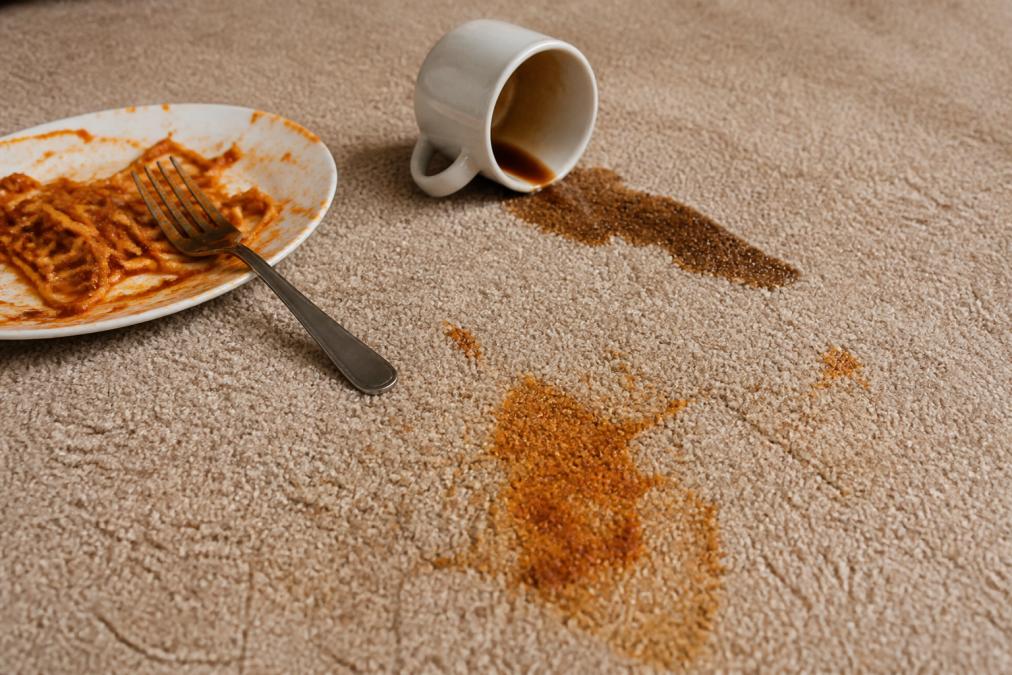
Sticky residue is the leftover film from adhesives, spills, or everyday wear that attracts dirt and makes carpets look permanently stained. When a substance dries on carpet fibres, it traps dust and grime, turning a small spill into a patch that feels tacky underfoot and darkens over time.
The most common culprits are carpet tape, duct tape, stickers, chewing gum, and spilt sugary drinks. Each leaves a different type of bond between the residue and the fibre, which is why a single cleaning method rarely works for everything.
Step 1: Identify the Adhesive Before You Start
The type of adhesive determines which removal method will work, so identifying it first saves you time and prevents fibre damage. Water-based adhesives respond well to warm water and dish soap; solvent-based adhesives need a solvent like rubbing alcohol.
Here is a quick way to tell them apart:
- Water-based residue feels tacky and may soften when you press a damp cloth against it
- Solvent-based residue stays hard or rubbery and does not react to water
- Gum and wax are thermoplastic, meaning they harden when cold and soften when warm
A common mistake is scrubbing the residue immediately, as this pushes the adhesive deeper into the pile and spreads it wider. Instead, scrape away excess with a dull knife or plastic scraper, working gently to avoid cutting the fibres.
Step 2: Test for Colourfastness on a Hidden Area
Before applying any cleaning solution, test it on a hidden section of carpet to confirm the dye will not run or fade. Apply a small amount of your chosen solution to an inconspicuous spot, blot it with a white cloth, and check for colour transfer after a few minutes.
Synthetic Fibres: Nylon and Polyester
Nylon is the most common carpet fibre in UK homes because it is durable and resilient (carpet-rug.org). It tolerates mild solvents well, including isopropyl alcohol and white vinegar, but it is sensitive to high heat and strong oxidising agents like bleach. When testing, use a 1:1 dilution of isopropyl alcohol with water rather than full-strength solvent, as prolonged exposure can cause yellowing in some nylon formulations. Polyester is similarly resilient but can be prone to oil-based staining, so if you use a solvent like WD-40, the test patch must also confirm that the oily carrier rinses out cleanly without leaving a dark ring.
Natural Fibres: Wool and Sisal
Wool is the most delicate common carpet fibre and requires the most cautious approach. It is protein-based, meaning alkaline solutions like baking soda pastes can damage the fibre structure, and alcohol can strip the natural lanolin oils that keep wool supple. For wool carpets, the safest test solution is plain warm water with a single drop of pH-neutral dish soap. If the residue requires a solvent, dilute isopropyl alcohol to a 1:3 ratio with water and test on a patch that is at least 5 cm from the edge of the carpet. Sisal and other plant-based fibres are even more absorbent and should never be treated with water-based solutions in quantity, as moisture causes the fibres to swell and distort. For sisal, dry methods such as freezing gum or scraping are the only safe options.
How to Read the Test Results
After applying the test solution, wait five minutes rather than blotting immediately. This dwell time reveals slow-reacting dyes that only bleed after prolonged contact. Press a white paper towel against the test patch and check for three things: colour transfer onto the towel, a change in the carpet’s shade, and any stiffening or curling of the fibres. If the paper towel shows any dye, dilute the solution further or switch to plain warm water with a tiny amount of dish soap. If the fibres stiffen, the solvent is stripping a protective coating, and you should stop using that product entirely.
The Manufacturer’s Label Is Your First Reference
Most UK carpets carry a manufacturer’s care code printed on the backing or underlay. The Carpet and Rug Institute’s cleaning guide advises always checking this label before using any solvent-based product. The code typically uses letters: ‘W’ for wool-safe, ‘S’ for solvent-safe, ‘WS’ for both, and ‘X’ for professional cleaning only. If your carpet carries an ‘X’ code, do not attempt DIY solvent removal, call a professional cleaner who has the equipment to flush the adhesive without saturating the backing.
Never test on a section that is visible after furniture is returned to its position. The test patch should be in a location that remains permanently hidden, such as inside a wardrobe footprint or under a sofa leg.
Step 3: Household Solutions That Break Down Sticky Residue
Most sticky residue can be removed with everyday household items. White vinegar, rubbing alcohol, and a baking soda paste cover the majority of situations without harsh chemicals.
White Vinegar and Warm Water
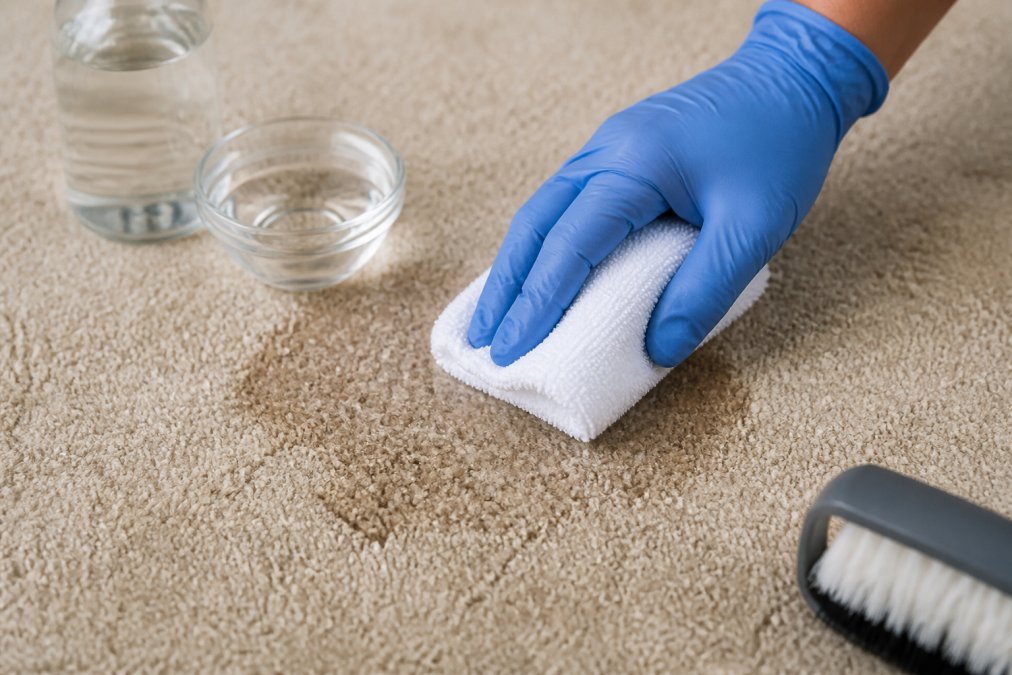
White vinegar is a mild acid that breaks down water-based adhesives and emulsifies the residue so it lifts from the fibres. Mix one part white vinegar with two parts warm water in a spray bottle, then spray the affected area lightly. Let the solution sit for two to three minutes to soften the bond, then blot with a clean microfiber cloth.
Do not saturate the carpet, as excess moisture seeps into the backing and can cause mould or a musty smell. Work in small sections, blotting rather than rubbing, and repeat until the cloth comes away clean.
Rubbing Alcohol or Isopropyl Alcohol
Rubbing alcohol dissolves solvent-based adhesives and is particularly effective on duct tape residue and sticker glue. Isopropyl alcohol evaporates quickly, which means less moisture reaches the carpet backing. Dampen a cloth with the alcohol and press it against the residue for about thirty seconds, then gently lift the softened adhesive with a plastic scraper.
This method works well on synthetic carpet but should be used sparingly on wool, as alcohol can strip its natural oils. Always follow the colourfastness test from Step 2 before using alcohol on an unknown carpet type.
Dish Soap and Baking Soda Paste
For sticky residue that has attracted dirt and turned dark, a paste of dish soap and baking soda provides gentle abrasion to lift both the adhesive and the grime. Mix three parts baking soda with one part dish soap and enough warm water to form a thick paste. Apply the paste to the residue, work it in with your fingertips or a soft brush, and let it dry completely.
Once dry, vacuum the area to remove the paste. The baking soda absorbs the adhesive as it dries, and the dish soap breaks down the oily component of the residue. This method is safe for most carpet types and doubles as a deodoriser.
Step 4: How to Remove Chewing Gum from Carpet
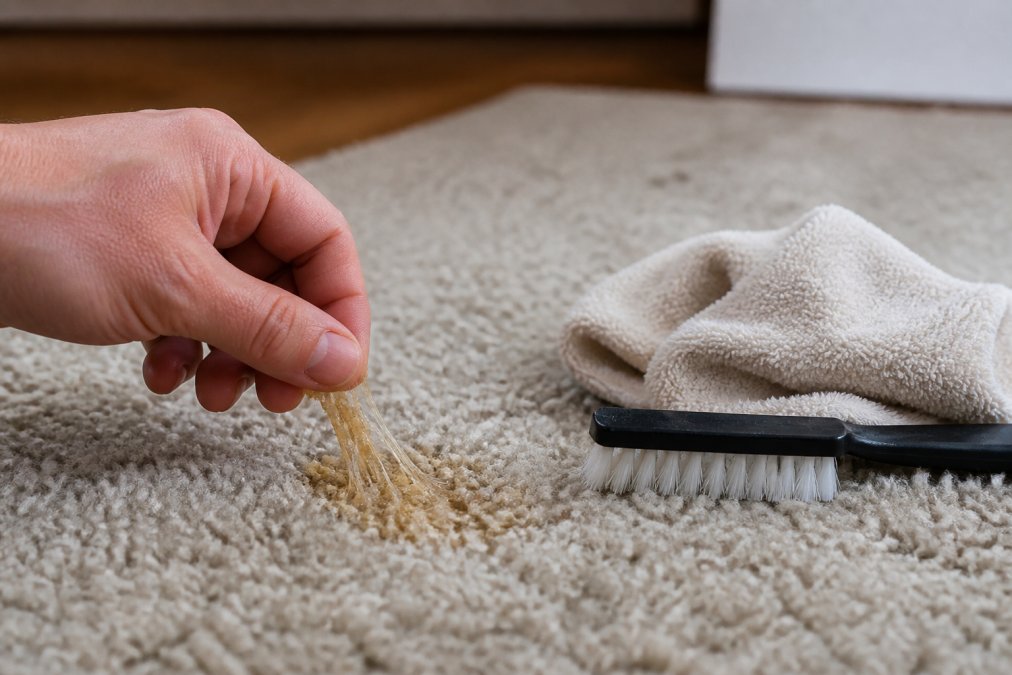
Chewing gum is one of the most common sticky residue problems. Instead of attacking the gum with solvents, freeze it to harden the gum so it shatters and releases from the fibres. Place a few ice cubes in a resealable plastic bag and hold it against the gum until it becomes brittle.
Once hardened, the gum should crack and lift away when you scrape it with a dull knife. Break the gum into smaller pieces rather than trying to remove it whole, as this puts less strain on the carpet pile. Any remaining residue can be treated with rubbing alcohol using the method described in Step 3.
For stubborn cases where the gum has been pressed deep into the pile, a commercial freezing spray designed for gum removal can reach lower temperatures than ice. These sprays are available from most hardware stores and are safe for use on synthetic carpets.
Is WD-40 Safe for Carpets? A Word of Caution
WD-40 can remove sticky residue from carpets, but it carries significant risks that make it a last resort rather than a first choice. The product is a solvent-based penetrant that breaks down adhesives effectively, yet it leaves an oily film on carpet fibres that attracts dirt and can be extremely difficult to rinse out completely. remove deep odors.
If the carpet is synthetic, the oil residue may require a degreaser to remove, which adds another cleaning step and more chemical exposure to your home. On wool or natural fibres, WD-40 can cause discolouration that is not always reversible. The UK Carpet cleaning industry guidance on solvents recommends avoiding petroleum-based products on carpets unless no alternative exists.
If you do use WD-40, apply it sparingly to a cloth rather than spraying the carpet directly, work it into the residue, then blot thoroughly. Follow immediately with a dish soap and warm water rinse to break down the oily film, then blot dry. If the carpet remains greasy after treatment, professional extraction cleaning is the safest way to remove the residue completely.
Choosing a Carpet Adhesive Remover for Tough Jobs
When household solutions fail, a commercial carpet adhesive remover may be necessary, but choosing the right one requires reading the label carefully. Look for a product explicitly marked as safe for carpets and suitable for your fibre type. Solvent-based removers are effective on strong adhesives but carry stronger fumes and a higher risk of fibre damage, while water-based removers are gentler and better suited to homes with children or pets.
Solvent-based cleaners release volatile organic compounds that can irritate airways, so they should only be used in well-ventilated areas. Many families prefer water-based options for this reason, particularly in nurseries or rooms where pets sleep. Always follow the manufacturer’s instructions and test the product on a hidden area before full application.
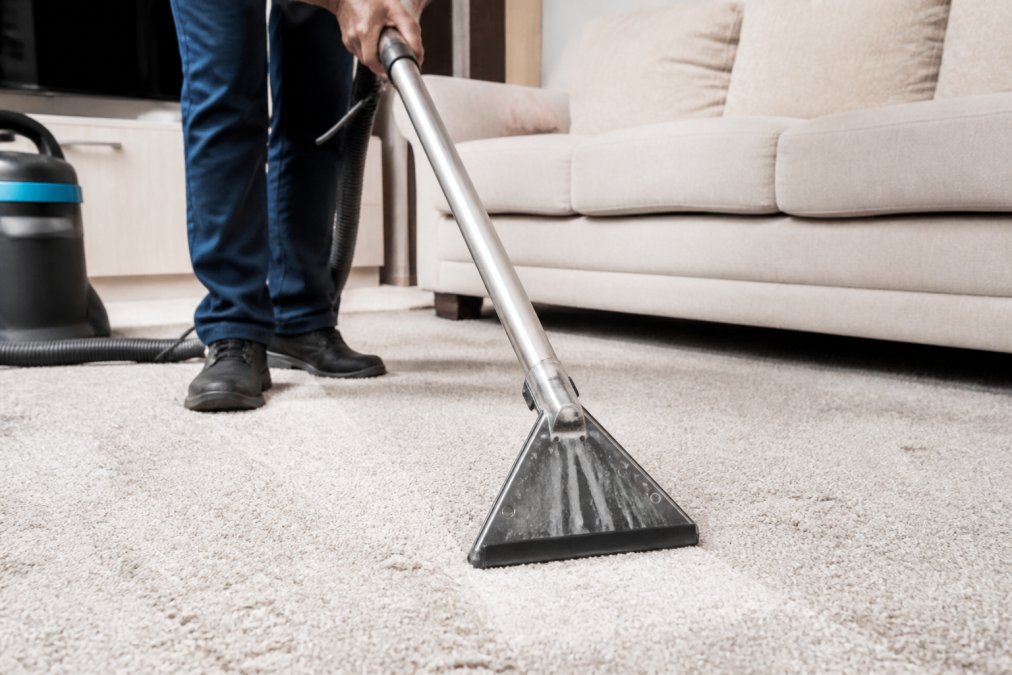
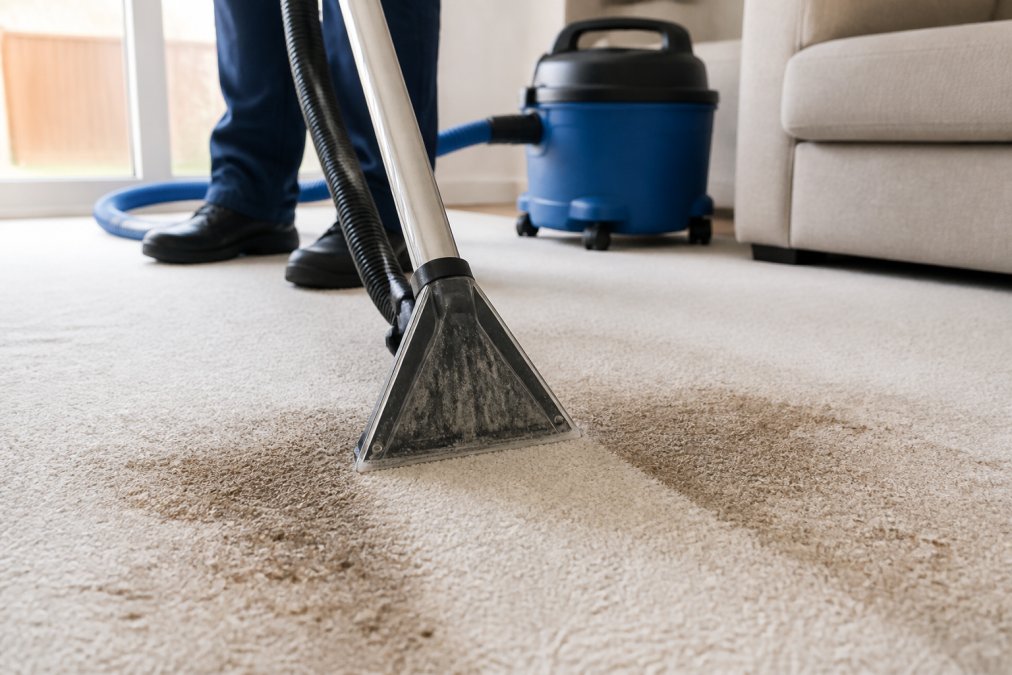
For residue that has penetrated deep into the carpet backing, or when multiple attempts have left the area stained or matted, professional cleaning is often the more reliable route. Technicians use extraction equipment that flushes the adhesive out of the pile rather than just dissolving it on the surface.
Step 5: Rinse, Blot and Restore the Carpet Pile
The final step determines whether your carpet looks clean or develops a fresh sticky patch within days. Rinse the treated area with plain warm water to remove any cleaning solution residue, because soap left in the fibres attracts dirt and recreates the sticky problem. Blot with a clean, dry microfiber cloth, pressing down firmly to absorb moisture rather than rubbing.
After rinsing, restore the carpet pile by running your fingers or a soft brush over the fibres in one direction, as wet fibres often clump together. Once the area is dry, vacuum it to lift the pile and remove any loosened debris.
Proper drying is essential to prevent musty smells and mould growth. Open windows or use a fan to speed up the process, and avoid walking on the area until it is completely dry. For deep-set residue or large sticky patches, the safest option is professional extraction cleaning, which removes both the adhesive and the cleaning chemicals in one pass. At Carpet Cleaning In Stockport, our technicians use family-friendly, pet-safe solutions to remove sticky residue and restore carpets to their original quality, so the problem does not return.
Why Pile Restoration Matters More Than Most Guides Admit
Most removal guides stop at ‘rinse and blot’, leaving homeowners with a clean but flattened patch that stands out. The solvents and moisture used to break down the adhesive also collapse the individual fibre tufts, which lose their spring once saturated. Restoring the pile is not cosmetic, it also prevents dirt from packing into the flattened area, which would darken the patch within weeks.
How to Re-Texturise Different Pile Types
The restoration technique depends on the carpet’s construction. For cut-pile carpets (the most common type in UK living rooms), use a stiff-bristled brush and work in a circular motion, starting from the outside of the treated area and moving inward. This lifts the individual tufts so they dry standing upright rather than clumped together.
For loop-pile carpets, such as Berber, never use a brush with stiff bristles, as this can snag and pull the loops, causing runs. Instead, use your fingertips to gently separate the loops back into their original alignment, working slowly and avoiding any upward pulling motion.
For wool carpets, the fibres have a natural scale structure that can mat when wet. After rinsing, use a wide-toothed comb designed for pet grooming to gently lift the fibres, then finish with a soft brush. The comb separates the scales without breaking them, preserving the wool’s natural lustre.
The Freeze-and-Fluff Technique for Stubborn Matted Areas
If the pile remains flattened after drying, lightly mist the matted area with cold water and immediately run a vacuum cleaner with a brush roll over the damp fibres. The combination of moisture and mechanical agitation encourages the fibres to spring back to their original orientation. Repeat once if needed, then allow the area to dry completely.
Drying Times and Moisture Management
Drying time varies by carpet type and room conditions. Synthetic carpets typically dry within two to four hours with good airflow, while wool carpets can take up to twelve hours. To speed up drying, place a fan at floor level directed across the treated area, and if the room has underfloor heating, turn it on at a low setting. Avoid using a hairdryer on a hot setting, as concentrated heat can melt synthetic fibres or shrink wool.
When Restoration Requires Professional Equipment
If the sticky residue has penetrated through to the carpet backing, or if the pile remains matted after multiple restoration attempts, the issue is likely deeper than surface fibres. Professional extraction cleaning uses a powered wand that injects cleaning solution into the pile and immediately extracts it, along with the dissolved adhesive and any remaining solvent. This process also flushes the backing, preventing residue from wicking back up to the surface. At Carpet Cleaning In Stockport, our technicians combine extraction with a pile-raking pass that re-texturises the carpet as it dries.
After any solvent-based removal, rinse twice rather than once. The first rinse removes the dissolved adhesive, and the second removes the solvent itself. Skipping the second rinse is the most common cause of a recurring sticky patch that reappears days later.
Frequently Asked Questions
What is the best household item to remove sticky residue from carpet?
Rubbing alcohol (isopropyl alcohol) is the most effective household item for sticky residue on synthetic carpets. Apply it sparingly with a microfiber cloth and blot gently. White vinegar mixed with warm water also works well on water-based adhesives. Always test on a hidden area first to check colourfastness. For chewing gum, freeze it with ice cubes first, then scrape it off with a dull knife.
Will WD-40 remove adhesive from carpet without damaging it?
WD-40 can break down adhesive, but it is an oil-based solvent. On synthetic carpets it often works, yet it leaves an oily residue that attracts dirt and may require repeated cleaning with dish soap to remove fully. Avoid WD-40 on natural fibre carpets such as wool or sisal, as the oil can cause permanent staining. For these fibres, use white vinegar or a dedicated water-based carpet adhesive remover instead.
Why does my carpet feel sticky even after I’ve cleaned it?
Sticky carpet after cleaning usually means cleaning solution residue was left behind. Shampoo or detergent that is not fully rinsed out attracts dirt and leaves a tacky film. To fix this, mix one part white vinegar with three parts warm water, blot the affected area, then rinse with plain water and blot dry. Extract the moisture thoroughly to prevent the residue from re-setting into the carpet fibres.
How do I remove carpet tape residue off a rug?
Start by peeling away as much tape as possible. Apply rubbing alcohol to a microfiber cloth and blot the remaining adhesive until it softens. Gently lift the residue with a plastic scraper or dull knife, working in the direction of the carpet pile. Finish with a warm water rinse and blot dry. Always patch test first, especially on natural fibre rugs that can react poorly to solvents.
This article was written using GrandRanker