Table of Contents
- Why Stubborn Carpet Stains Return and How to Stop It
- What You’ll Need: Tools and Cleaning Solutions
- Step-by-Step Process to Remove Stubborn Carpet Stains
- How to Rinse Carpet After Spot Cleaning
- Carpet Cleaning Residue Removal and Neutralisation
- Preventing Carpet Re-soiling After Cleaning
- Stain-Specific Approaches for Different Carpet Types
- Common Mistakes That Lead to Re-soiling
- Frequently Asked Questions
Last Updated: August 31, 2026
Why Stubborn Carpet Stains Return and How to Stop It
Most people think a carpet stain is gone once it looks clean. It isn’t. What you’re seeing is surface-level cleanliness masking a deeper problem: residue left behind in the carpet fibres. This residue causes stubborn carpet stains to reappear within days or weeks.
The culprit is a process called wicking. When moisture moves back up through the carpet pile and evaporates, it carries dissolved soil particles with it. These particles resettle on the surface, making the stain look like it’s returned. Preventing re-soiling requires three things: the right cleaning solution, proper extraction technique, and thorough rinsing to neutralise any remaining residue.
Stubborn carpet stains reappear due to wicking, residue left in carpet fibres that travels upward as moisture evaporates. Complete removal requires solution application, extraction, and residue neutralisation, not just surface cleaning.
What You’ll Need: Tools and Cleaning Solutions
Before you tackle a stain, gather the right equipment. Using the wrong tools or solutions will either fail to remove the stain or leave behind residue that causes re-soiling.
Essential tools:
- Absorbent white towels or cloths (avoid coloured towels, dyes can transfer)
- A spray bottle for applying cleaning solutions
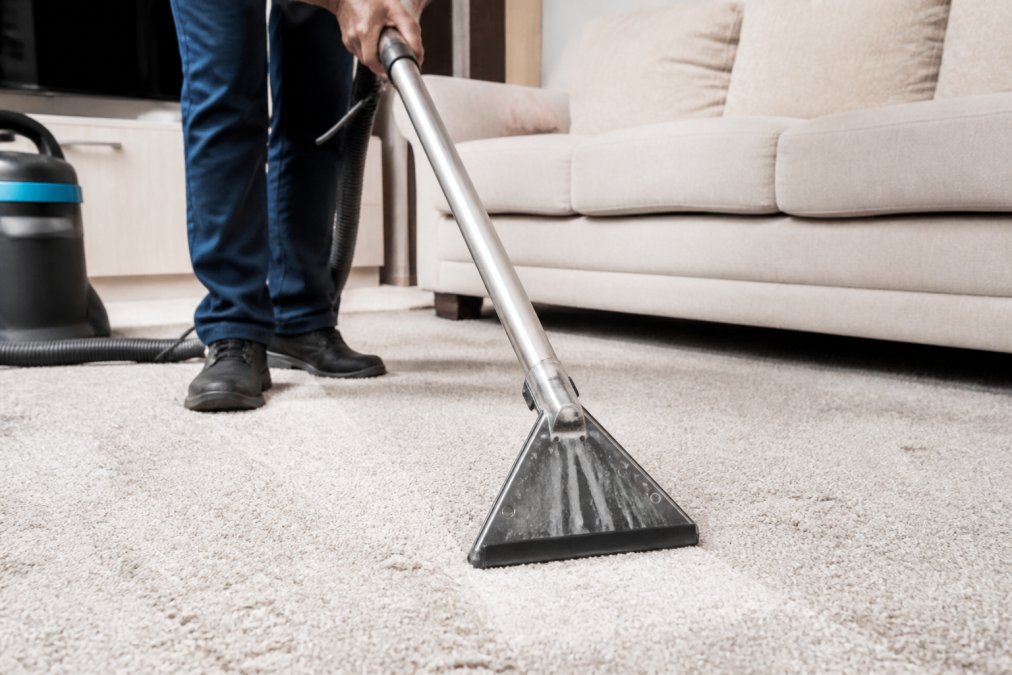
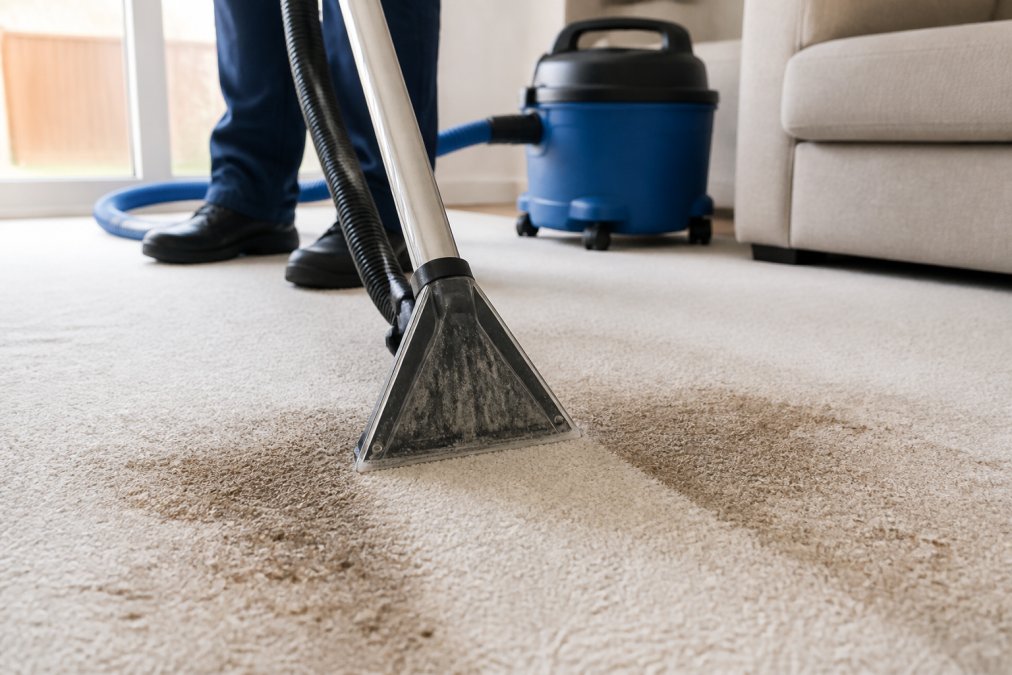
- A wet extraction machine or carpet cleaning machine (a rental from a hardware shop works, though professional equipment extracts more moisture)
- A soft-bristled brush for agitation
- A clean cloth for blotting
Cleaning solutions you’ll need:
- White vinegar and water solution (1 part vinegar to 3 parts water)
- Baking soda
- Neutral pH carpet cleaner (pH between 6 and 8)
- Soda water (carbonated water without additives)
Avoid bleach, ammonia-based cleaners, or harsh chemicals. These can damage carpet fibres and leave chemical residue that attracts dirt. A rental extraction machine removes perhaps 60-70% of moisture, while professional equipment removes 85-90%, which is why professional cleaning prevents re-soiling more effectively (Institute of Inspection, Cleaning and Restoration Certification).
Always test any cleaning solution on a hidden area of carpet first. Apply it to a corner under furniture or in a closet, wait 10 minutes, then check for colour bleeding or fibre damage. This prevents costly mistakes on visible stains.
Step-by-Step Process to Remove Stubborn Carpet Stains
Removing stubborn carpet stains requires a structured approach. Each step serves a specific purpose in breaking down the stain and preventing residue from settling back into the fibres.
Step 1: Test for Colorfastness
Before applying any liquid to your carpet, determine whether the dyes are stable. Apply a small amount of your chosen cleaning solution to a white cloth and press it against a hidden area of carpet for 30 seconds. If colour transfers to the cloth, your carpet isn’t colourfast to that solution, switch to a gentler option like plain soda water or a dilute vinegar solution.
Step 2: Prepare and Rehydrate the Stain
Dried stains are harder to remove because the stain particles have bonded more firmly to the carpet fibres. Spray the stained area lightly with plain water or soda water. Don’t soak it, you want the stain moist, not soaking wet. Let it sit for 5-10 minutes.
Step 3: Apply the Right Cleaning Solution
The solution you choose depends on the stain type. For general stains, start with a neutral pH cleaner diluted according to instructions. For protein-based stains (blood, food, pet accidents), a white vinegar solution works well. For oil-based stains, a small amount of dish soap diluted in water is more effective.
Apply the solution by spraying it onto the stain, not pouring it. Use a soft-bristled brush to gently agitate the stain in circular motions. Work from the outside edges of the stain toward the centre to prevent spreading. Let the solution sit for 5-10 minutes.
Step 4: Blot and Extract Moisture
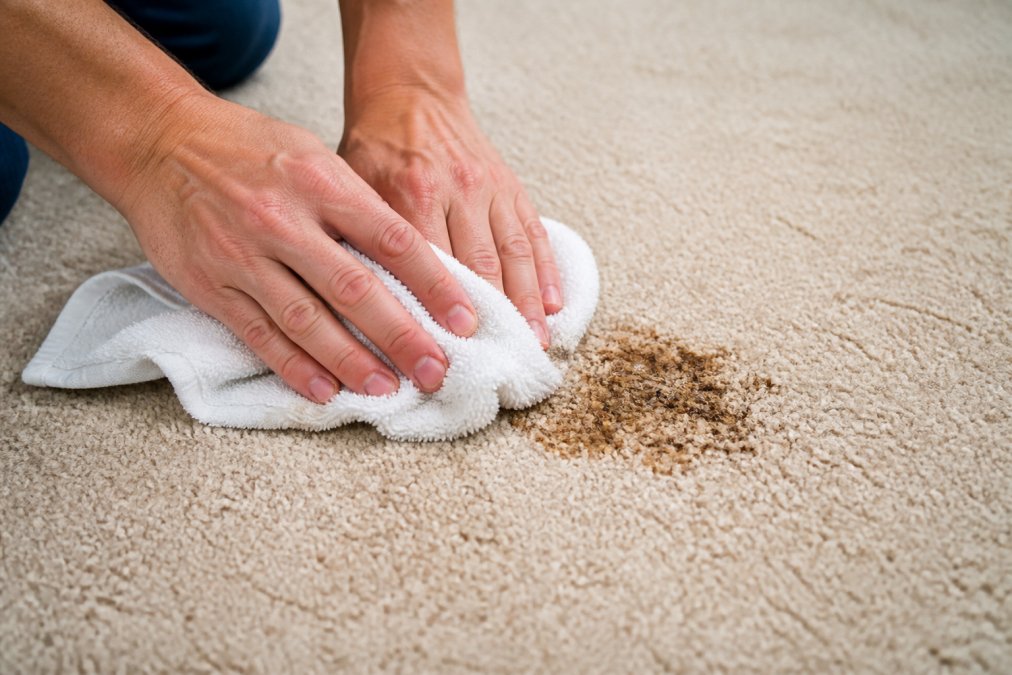
This is where most DIY stain removal fails. People rub the stain instead of blotting it, which pushes the stain deeper into the carpet backing and damages fibres.
Blotting means pressing a clean, absorbent cloth onto the stain and holding it there for 10-15 seconds, allowing the cloth to absorb the moisture and dissolved stain particles. Lift the cloth, move to a clean section, and repeat. If you have access to a carpet extraction machine, use it now. Continue blotting with clean cloths until no more stain transfers to the cloth and the carpet feels only slightly damp.
Step 5: Rinse Thoroughly to Prevent Residue
This is the critical step most people skip, and it’s why stubborn carpet stains return.
After you’ve removed the visible stain, residue from the cleaning solution remains in the carpet fibres. This residue attracts dirt and causes the stain to reappear as it dries. Spray the area with plain water or soda water using a spray bottle. Blot again with clean cloths. Repeat this process 2-3 times until the cloth comes away clean and no soapy smell remains. If you have an extraction machine, extract after each rinse cycle.
How to Rinse Carpet After Spot Cleaning
Rinsing is where carpet cleaning residue removal happens. Incomplete rinsing is the primary reason why stubborn carpet stains return.
After you’ve applied your cleaning solution and extracted the stain, the carpet fibres still contain cleaning solution residue. When the carpet dries, this residue pulls moisture upward through capillary action. As that moisture evaporates, it carries soil particles with it, resettling them on the surface. Tips for removing stubborn stains.
Proper rinsing breaks this cycle. Use plain water or soda water, no cleaning agents. Spray the area lightly, let it sit for 2 minutes, then extract or blot. You’ll typically need 2-3 rinse cycles. After each rinse, check the blotted cloth. When it comes away clean with no colour or smell, you’ve rinsed enough.
The final rinse should leave the carpet slightly damp, not soaking wet. Use your extraction machine for the final extraction, or place clean, dry towels over the area and weight them down to absorb remaining moisture. Open windows, use fans, or run air conditioning to encourage evaporation. The faster the carpet dries, the less time wicking has to pull residue back to the surface.
Carpet Cleaning Residue Removal and Neutralisation
Residue neutralisation is the final barrier against re-soiling. After you’ve rinsed with plain water, you can add an extra step that professional cleaners use: a mild acid rinse.
A dilute white vinegar solution (1 part vinegar to 10 parts water) neutralises any remaining alkaline residue from cleaning solutions. Spray this lightly over the rinsed area, let it sit for 2 minutes, then extract or blot. This step is particularly important if you used a commercial carpet cleaner, which often contains alkaline surfactants.
For preventing carpet re-soiling after cleaning, also consider the carpet type. Synthetic fibres like polypropylene and polyester are less prone to residue issues than natural fibres like wool. If you have wool carpet, be especially diligent about extraction and drying.
Never leave a cleaned carpet damp overnight. Moisture trapped in the carpet backing can cause mildew, musty odours, and even mould growth. If the carpet still feels damp after 4-6 hours, use fans or open windows to accelerate drying.
Preventing Carpet Re-soiling After Cleaning
Once you’ve successfully removed a stain, the goal is keeping it gone. Several practices prevent re-soiling and extend the time before your carpet needs professional cleaning again.
Maintain low moisture levels. Use extraction or towel blotting immediately after any cleaning. Vacuum regularly. Regular vacuuming removes surface soils before they bond to fibres. Use carpet protectant. Professional-grade carpet protectants create a barrier on fibres that repels liquids and prevents stains from setting. These products last 6-12 months and significantly reduce staining risk (IICRC standards for carpet cleaning). Address spills immediately. Fresh spills are exponentially easier to remove than set stains. Avoid over-wetting. More water doesn’t mean better cleaning; it leaves excess moisture that extends drying time and increases wicking risk. Control foot traffic. Use rugs or runners in hallways and entryways to reduce direct carpet contact.
For homes with pets, professional cleaning with enzyme-based solutions followed by thorough rinsing is more effective than household methods.
Stain-Specific Approaches for Different Carpet Types
Not all stains respond to the same treatment. The stain composition and your carpet fibre type both determine the best removal approach.
Pet Stains and Odour Control
Pet stains are protein-based and contain urine compounds that create lasting odours even after the visible stain is gone.
For fresh pet stains, blot immediately to remove as much liquid as possible. Then apply a white vinegar solution (1 part vinegar to 3 parts water). Let it sit for 10 minutes, then extract and rinse thoroughly.
For set-in pet stains, an enzyme-based cleaner is more effective than vinegar alone. Enzymes break down the organic proteins in urine. Spray the stain with water, apply the enzyme cleaner, let it sit for the time recommended on the product, then extract. If DIY methods don’t eliminate the odour, professional service is necessary.
Food and Tannin Stains
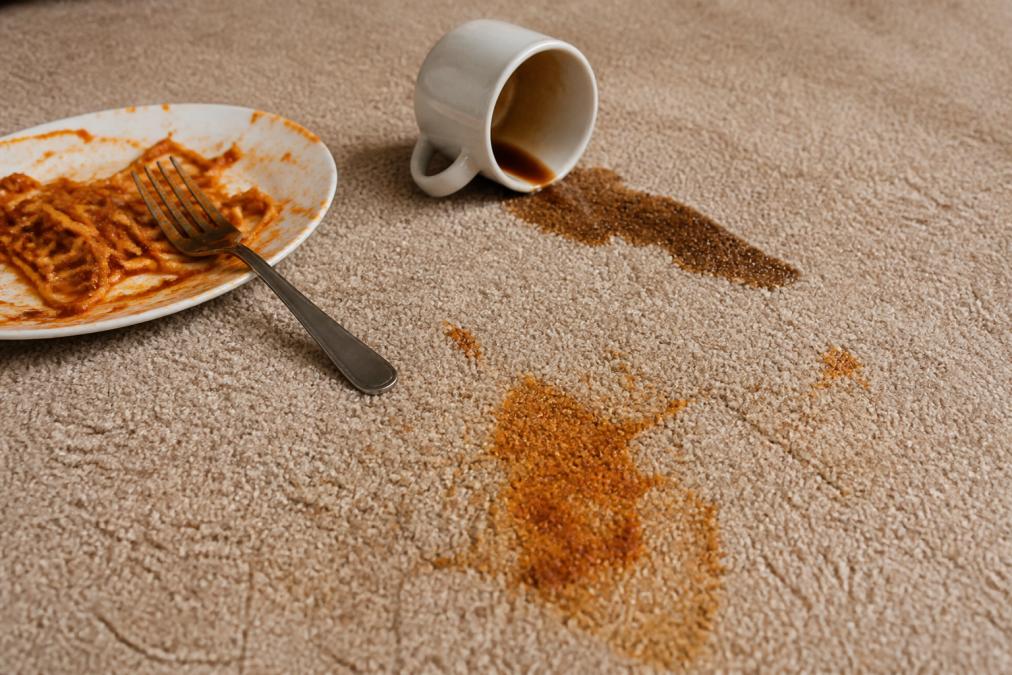
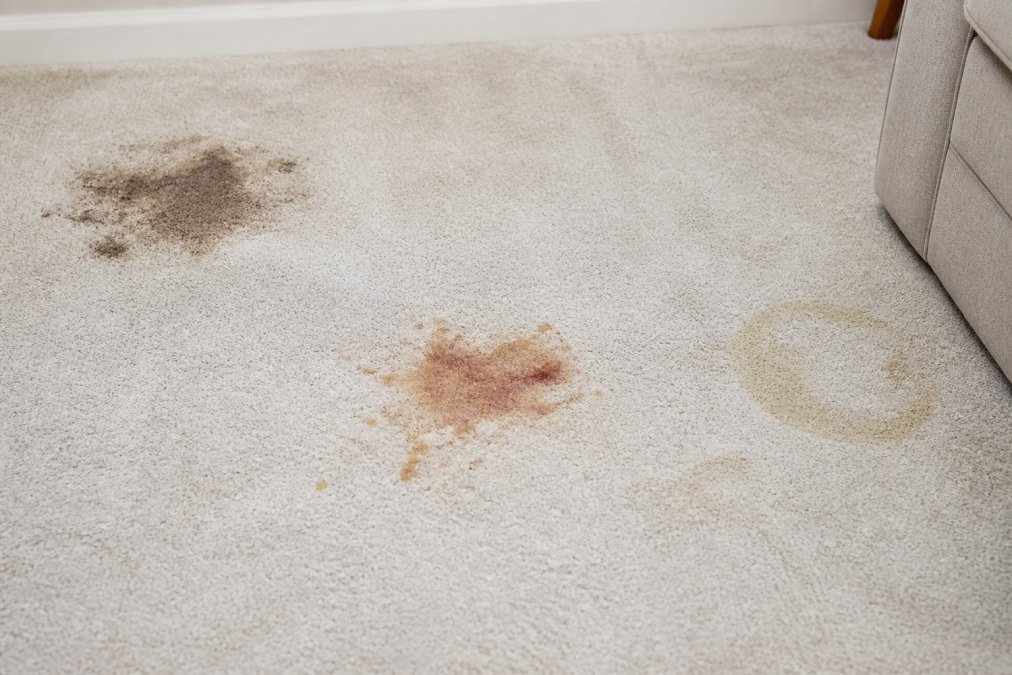
Food stains often contain tannins (from coffee, tea, wine, or fruit) that bond tightly to carpet fibres. For fresh food stains, blot immediately and apply a neutral pH carpet cleaner or a mild vinegar solution. For tannin-specific stains, a solution of 1 part white vinegar to 1 part water is more effective. Apply the solution, let it sit for 15 minutes, then extract and rinse. You may need to repeat this process 2-3 times for deeply set tannin stains.
Avoid using hot water on tannin stains, heat can set the stain further. Use room-temperature or cool water instead.
Oil-Based Stains
Oil stains repel water, which makes water-based solutions ineffective. First, blot away excess oil with paper towels or absorbent cloth. Then apply a small amount of dish soap diluted in cool water. The soap acts as a surfactant, breaking down the oil so water can penetrate. Let it sit for 10 minutes, then extract and rinse thoroughly.
For very stubborn oil stains, baking soda can help. Sprinkle baking soda over the stain after the initial blotting, let it sit for 30 minutes to absorb remaining oil, then vacuum it up.
Common Mistakes That Lead to Re-soiling
Understanding what causes re-soiling helps you avoid these pitfalls.
Rubbing instead of blotting. Rubbing pushes the stain deeper into the carpet pile and damages fibres. Blotting lifts the stain out. Skipping the rinse step. Cleaning solution residue left in the carpet attracts dirt and causes re-soiling. Using too much water. Over-wetting leaves excess moisture that extends drying time. Not extracting thoroughly. If you don’t have an extraction machine, blot with towels more times than you think necessary. Allowing the carpet to dry slowly. Slow drying increases wicking time. Open windows, use fans, or run air conditioning to speed drying. Using the wrong cleaning solution. Alkaline solutions leave residue that attracts dirt. Neutral pH or slightly acidic solutions rinse more cleanly. Not testing for colorfastness. Applying a solution to carpet without testing can cause permanent colour damage. Treating old stains like fresh ones. Old, set-in stains require longer dwell time and possibly enzyme-based solutions.
Removing stubborn carpet stains without re-soiling comes down to three principles: use the right solution for the stain type, extract moisture thoroughly, and rinse completely to remove residue. These steps prevent the wicking that causes stains to reappear.
If you’ve tried these methods and stains persist, or if you’re dealing with deep-set stains in high-traffic areas, professional cleaning is worth considering. Carpet Cleaning In Stockport uses advanced extraction equipment and professional-grade solutions that remove more moisture and residue than household methods, significantly reducing re-soiling risk. With our family-friendly, pet-safe cleaning solutions and fast drying times, we restore carpets to their original quality whilst ensuring your home remains fresh and clean. Get in touch to discuss your specific stain challenges and discover how professional cleaning can prevent the frustration of stains returning.
Frequently Asked Questions
Why does my carpet look dirtier after I clean a stubborn stain myself?
This happens due to wicking and residue. When cleaning solutions aren’t fully rinsed out, they leave behind sticky residue that attracts dirt and moisture. As the carpet pile dries unevenly, the stain wicks back up from the carpet backing and padding beneath. Professional extraction and proper rinsing prevent both problems. Testing pH-neutral solutions and using absorbent towels to remove all moisture helps avoid this common issue.
How do I prevent carpet re-soiling after spot cleaning?
Preventing carpet re-soiling after cleaning requires three steps: first, rinse thoroughly with clean water to remove all cleaning solution residue; second, extract as much moisture as possible using absorbent towels or a wet-vac; third, allow the carpet to dry completely before walking on it. Avoid over-saturating the area, as excess moisture can reactivate the stain and cause wicking. Using pH-neutral solutions and proper rinsing techniques stops residue from attracting new dirt.
What’s the best way to rinse carpet after spot cleaning without damaging the fibres?
Use cool or lukewarm water with a spray bottle or damp cloth to rinse the area gently. Apply water in small amounts, then blot immediately with clean, absorbent towels. Repeat until the water runs clear and no soap residue remains. Never scrub or agitate the fibres during rinsing, as this can cause fibre damage. For synthetic fibres, ensure water temperature stays below 50°C. Thorough rinsing removes surfactant residue that would otherwise attract dirt and cause re-soiling.
Can household items like vinegar and baking soda safely remove old stains without leaving residue?
White vinegar and baking soda can work on fresh stains, but old, ingrained stains require stronger treatment. Vinegar is pH-neutral and helps break down residue, while baking soda absorbs odours. However, baking soda can leave powder residue if not vacuumed thoroughly, and vinegar alone may not penetrate deep stains. For stubborn, set-in stains on natural or delicate fibres, professional-grade solutions and extraction equipment remove the stain completely without damaging carpet pile or leaving chemical residue behind.
This article was written using GrandRanker