Table of Contents
- Why Proper Carpet Drying Matters After Cleaning
- Factors Affecting Carpet Drying Time After Cleaning
- How to Speed Up Carpet Drying: 7 Effective Techniques
- Step 1: Blot Excess Water with Towels
- Step 2: Deploy Fans and Air Movers
- Step 3: Increase Airflow with Open Windows and Doors
- Step 4: Use a Dehumidifier to Remove Moisture
- Step 5: Adjust Room Temperature and Use Heat
- Step 6: Elevate Furniture and Protect the Subfloor
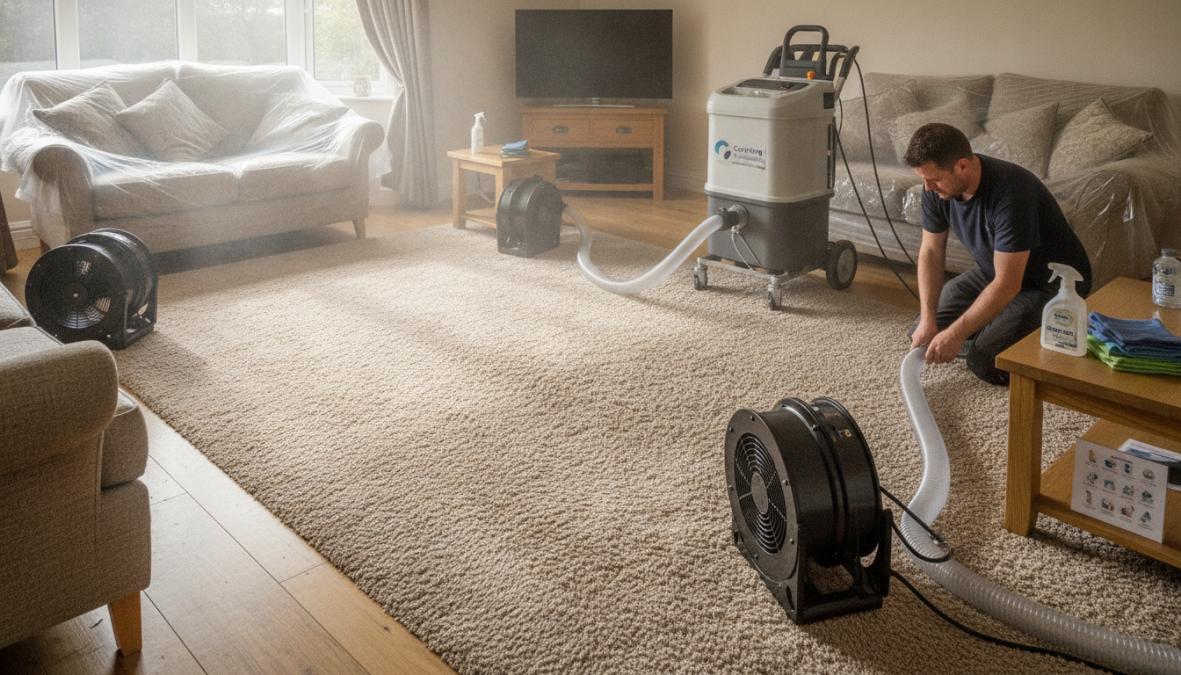
- Step 7: Consider a Wet/Dry Vacuum for Deep Extraction
- Carpet Drying Equipment: DIY vs. Professional Options
- Prevent Mold After Carpet Cleaning: Essential Steps
- Common Mistakes to Avoid When Drying Carpets
- Conclusion: Achieve Faster, Healthier Carpet Drying
Last Updated: July 17, 2026
Why Proper Carpet Drying Matters After Cleaning
Knowing how to dry carpets quickly after cleaning is essential for protecting your investment and your home’s health. When carpets stay damp too long, mold and mildew develop within 24 to 48 hours, creating musty odors and potential health hazards. Wet carpets are vulnerable to fiber damage, color bleeding, permanent odors, and bacterial growth.
The good news is that drying carpets quickly is entirely manageable with the right techniques and equipment. This guide covers seven proven methods to accelerate drying, along with practical strategies to prevent mold and eliminate stubborn dampness.
The first 24 hours after cleaning are critical. Every hour of moisture exposure increases the risk of mold growth and fiber degradation. Start your drying process immediately after cleaning finishes.
Factors Affecting Carpet Drying Time After Cleaning
Multiple variables influence how quickly your carpet dries.
Carpet Type and Fiber Composition
Different carpet fibers absorb and release moisture at different rates. Synthetic fibers like polyester and polypropylene dry faster than natural fibers such as wool, which can absorb up to 30% of their weight in water before feeling wet.
Carpet pile height and density also matter significantly. Low-pile carpets like Berber dry more quickly because water doesn’t penetrate as deeply. High-pile and plush carpets trap more moisture within the fiber structure, extending drying time considerably.
The carpet backing and padding underneath are equally important. Thick, dense padding holds substantial moisture and requires aggressive extraction and airflow to dry completely.
Cleaning Method Impact on Drying Speed
Hot water extraction, commonly called steam cleaning, leaves carpets significantly wetter than dry compound cleaning methods. Expect 6-12 hours of drying time with proper equipment after hot water extraction.
Dry cleaning methods like encapsulation leave much less residual moisture and typically dry within 1-2 hours, though they may not penetrate as deeply as wet methods.
Hot water extraction cleans deeper but requires longer drying. Dry cleaning dries faster but may not remove all contaminants. Choose your cleaning method based on your priorities and available drying equipment.
How to Speed Up Carpet Drying: 7 Effective Techniques
These seven methods work together to reduce drying time significantly.
Step 1: Blot Excess Water with Towels
Begin immediately after cleaning by removing as much standing water as possible. Use clean, absorbent towels to blot the carpet surface, walking across the carpet with towels underfoot and pressing down firmly. Focus on high-traffic areas and sections where water pools, changing towels frequently as they become saturated.
Removing excess water reduces the total moisture your drying equipment must evaporate. Even 15-20 minutes of thorough blotting can reduce overall drying time by several hours.
Step 2: Deploy Fans and Air Movers
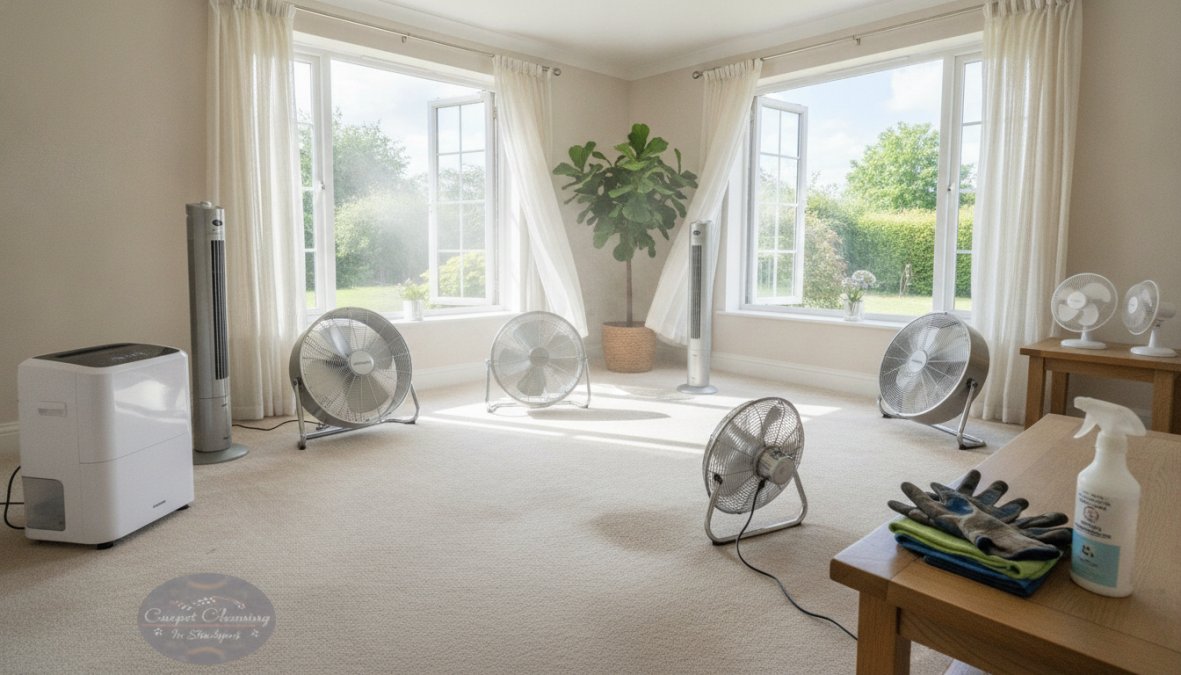
Position standard household fans or commercial air movers across the carpeted area. Air movers are more effective because they move significantly more air volume at lower heights, pushing air directly across the carpet surface.
Place fans in a staggered pattern to create cross-airflow that prevents dead zones. Aim for at least one fan per 200 square feet of carpet. Run fans continuously for the first 24 hours, positioning them to push air across the carpet rather than directly into walls.
Step 3: Increase Airflow with Open Windows and Doors
Open all windows and doors to create natural cross-ventilation, allowing moist air to escape and be replaced with drier outside air. If outdoor humidity is high, keep windows closed and rely on mechanical drying methods instead.
Create pathways for air to move through the space by opening windows on opposite sides of the room to establish cross-ventilation.
Never seal a damp carpet in an enclosed space. Without adequate ventilation, moisture becomes trapped and promotes mold growth.
Step 4: Use a Dehumidifier to Remove Moisture
Dehumidifiers extract moisture directly from the air, accelerating evaporation from carpet fibers. They’re particularly valuable in humid climates or when outdoor humidity is high.
Position the dehumidifier in the center of the carpeted area with its intake facing the wet carpet. Keep doors closed to contain the humid air and maximize effectiveness. Rental dehumidifiers are more powerful than household units and can remove several gallons of water per day.
Step 5: Adjust Room Temperature and Use Heat
Warm air holds more moisture than cool air, which accelerates evaporation. Increase room temperature to 75-80°F if possible. Use space heaters in combination with fans and dehumidifiers, but maintain good ventilation to prevent moisture from accumulating.
Avoid extreme heat, which can damage some carpet fibers. Stick to moderate temperature increases rather than blasting carpets with intense heat.
Step 6: Elevate Furniture and Protect the Subfloor
Remove all furniture from the carpeted area immediately. Furniture blocks airflow and prevents moisture from evaporating underneath. If furniture must remain, place wooden blocks or aluminum foil under legs to elevate it above the carpet.
Check the subfloor for moisture absorption. If water has penetrated through the carpet and padding into the subfloor, drying becomes much more complex and may require professional water damage equipment.
Step 7: Consider a Wet/Dry Vacuum for Deep Extraction
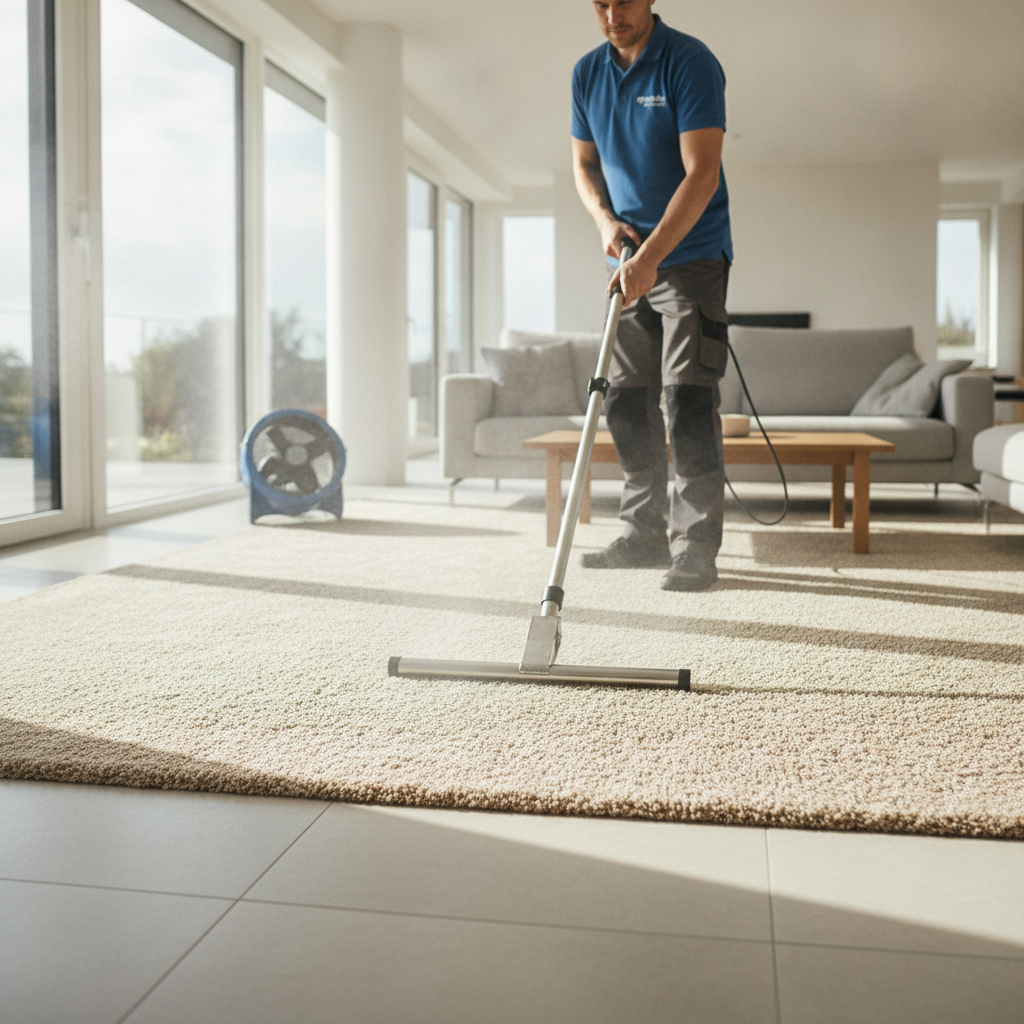
A wet/dry vacuum removes water more effectively than towel blotting alone. Rent commercial-grade wet/dry vacuums for best results. Run the vacuum multiple passes over the carpet, working slowly to allow maximum water extraction.
Use the wet/dry vacuum in combination with other methods rather than as a standalone solution.
| Drying Method | Best For | Time to Dry | Equipment Cost |
|---|---|---|---|
| Towel blotting | Initial water removal | 30-60 minutes | Free (towels) |
| Fans and air movers | General drying acceleration | 12-24 hours | $20-100 to rent |
| Open windows/ventilation | Dry conditions with breeze | 12-36 hours | Free |
| Dehumidifier | Humid environments | 24-48 hours | $50-150 to rent |
| Heat adjustment | Temperature acceleration | 12-24 hours | Included in utilities |
| Furniture elevation | Subfloor protection | Ongoing | Free (blocks/foil) |
| Wet/dry vacuum | Deep moisture extraction | 6-12 hours | $40-80 to rent |
Carpet Drying Equipment: DIY vs. Professional Options
Understanding your equipment choices helps you make cost-effective decisions about how to dry carpets quickly.
Household Tools You Already Have
Standard household fans, open windows, and towels can dry carpet effectively when used consistently. Your home’s HVAC system also contributes to drying by increasing air circulation and temperature control.
Household dehumidifiers help but work slowly. For serious water situations, household dehumidifiers are inadequate. This approach works best when carpet is only lightly damp and drying time isn’t critical.
Rental Equipment for Faster Results
Commercial fans and air movers are dramatically more powerful than household versions, typically costing $20-50 per day. Commercial dehumidifiers remove 10-20 gallons of water daily compared to 2-3 gallons for household units, at $40-100 per day.
Wet/dry vacuums for rent provide professional-grade extraction that household shop vacuums can’t match, typically costing $40-80 per day. Combining rented equipment accelerates drying to 12-24 hours for most residential carpets.
Rent equipment for the full 24-48 hours rather than returning it after a few hours. Continuous operation is what drives results.
Professional Drying Equipment and Services
Professional cleaning companies use specialized drying equipment that goes far beyond what homeowners can rent. Technicians deploy industrial-grade air movers, commercial dehumidifiers, and advanced moisture detection tools to ensure complete drying.
Professional drying services include moisture mapping to identify problem areas and moisture meters to verify that carpet, padding, and subfloor have reached safe dryness levels. For commercial installations or large homes, professional drying services save time and eliminate risk.
Prevent Mold After Carpet Cleaning: Essential Steps
Mold prevention is the critical reason why drying speed matters.
Recognizing Signs of Mold and Mildew
Musty odors are often the first sign of mold growth. If your carpet smells earthy or unpleasant 24-48 hours after cleaning, moisture is likely trapped in the padding or subfloor.
Visible mold appears as dark spots or discoloration, typically starting in corners or under furniture. Allergic reactions, sneezing, itching eyes, or respiratory irritation can indicate mold presence even before you see it. Soft or spongy carpet texture indicates trapped moisture and potential mold colonization.
Troubleshooting Persistent Dampness and Odors
If carpet remains damp beyond 48 hours despite aggressive drying, water has likely penetrated the padding and subfloor. Lift the carpet edge to inspect the padding underneath. If the padding feels wet or smells musty, it must be replaced.
Check for water damage to the subfloor. If the subfloor is wet, it must dry completely before carpet is reinstalled. Persistent odors after drying often indicate mold growth has already begun.
Never ignore musty smells or dampness that extends beyond 48 hours. Mold can cause serious health problems and structural damage. If DIY drying methods aren’t working, call a professional water damage restoration company immediately.
Common Mistakes to Avoid When Drying Carpets
Closing windows and doors to "trap the heat" actually traps moisture and slows evaporation. Air must circulate for drying to work effectively.
Placing carpet over plastic sheeting prevents air circulation from underneath. Waiting too long before starting drying equipment increases mold risk and extends total drying time. Using only one drying method rarely achieves optimal results, combine multiple methods for exponential acceleration.
Assuming small wet spots will dry on their own leads to localized mold growth. Treat the entire carpeted area with drying equipment. Neglecting furniture removal allows moisture to accumulate underneath, creating perfect conditions for mold. Skipping moisture verification after drying creates false confidence, carpet may feel dry while padding remains damp.
Conclusion: Achieve Faster, Healthier Carpet Drying
Wet carpets after professional cleaning are inevitable, but prolonged dampness is preventable. The difference between a quick-drying carpet and one that develops mold comes down to acting immediately with the right combination of techniques.
Most homeowners underestimate how critical the first 24 hours are. Starting your drying process right after cleaning finishes, with towel blotting, fans, ventilation, and ideally a dehumidifier, prevents the vast majority of drying-related problems.
Carpet Cleaning In Stockport combines professional-grade cleaning with comprehensive drying support to ensure your carpets are completely dry and safe within 24 hours. Our experienced technicians use industrial air movers, commercial dehumidifiers, and moisture verification equipment. Contact Carpet Cleaning In Stockport today to schedule your cleaning and get expert drying support that protects your investment and your family’s health.
Frequently Asked Questions
How long does it take for carpet to dry after cleaning?
Drying time varies based on carpet type, humidity, and airflow. Typically, carpets dry within 4-24 hours using standard methods. Hot water extraction and steam cleaning may take longer than dry compound cleaning. Professional drying equipment and dehumidifiers can significantly reduce this timeframe. Factors like carpet padding thickness and room temperature also affect the drying process.
What is the fastest way to dry carpet after cleaning?
Combine multiple methods for optimal speed: blot excess water with towels first, then deploy fans and air movers for air circulation. Use a dehumidifier to remove moisture from the air, increase room temperature, and ensure cross-ventilation by opening windows and doors. For the fastest results, consider renting professional air movers or hiring a service with commercial drying equipment.
How can I prevent mold after carpet cleaning?
Prevent mold by ensuring rapid evaporation and proper moisture control. Use fans, dehumidifiers, and ventilation to reduce humidity levels. Avoid walking on wet carpet, and elevate furniture to allow airflow beneath. If carpets remain damp for more than 24 hours, they're at risk for mold and mildew growth. Address musty smells immediately, they indicate moisture problems requiring faster drying or professional intervention.
Should I open windows or use AC to dry carpets faster?
Both methods work, but the best approach depends on outdoor conditions. Opening windows provides natural cross-ventilation and fresh air, which aids evaporation. If humidity outside is high, using AC is more effective, it cools the air and reduces indoor humidity levels, accelerating the drying process. Ideally, combine both: open windows when outdoor humidity is low, and rely on AC during humid conditions.
This article was written using GrandRanker