Most household carpets take 4 to 8 hours to dry after cleaning. If you’re wondering how long carpet takes to dry after cleaning, the answer depends on how much moisture the method leaves behind, as well as the carpet and room conditions. Lightly cleaned carpets may dry in 2 to 4 hours, while heavily soiled areas can take up to 12 hours.
It’s understandable to want your rooms back to normal quickly, especially when damp carpet affects where you can walk or place furniture. The surface may feel dry before moisture deeper in the pile has evaporated, so allow time for the whole carpet to dry and protect your furnishings in the meantime.
This guide explains what affects drying time and how airflow, temperature and humidity influence it. You’ll also learn how to manage dampness with practical room adjustments and careful furniture placement, so you can plan the return to everyday use with more confidence.
Key Takeaways
- Drying time depends on the cleaning method, carpet material and pile, how soiled the carpet is, and whether spots received extra treatment.
- Improve natural drying by encouraging airflow and keeping the room comfortably warm; colder, humid conditions can slow evaporation.
- Fans or a dehumidifier can help manage dampness, but use them in a way that supports steady airflow through the room.
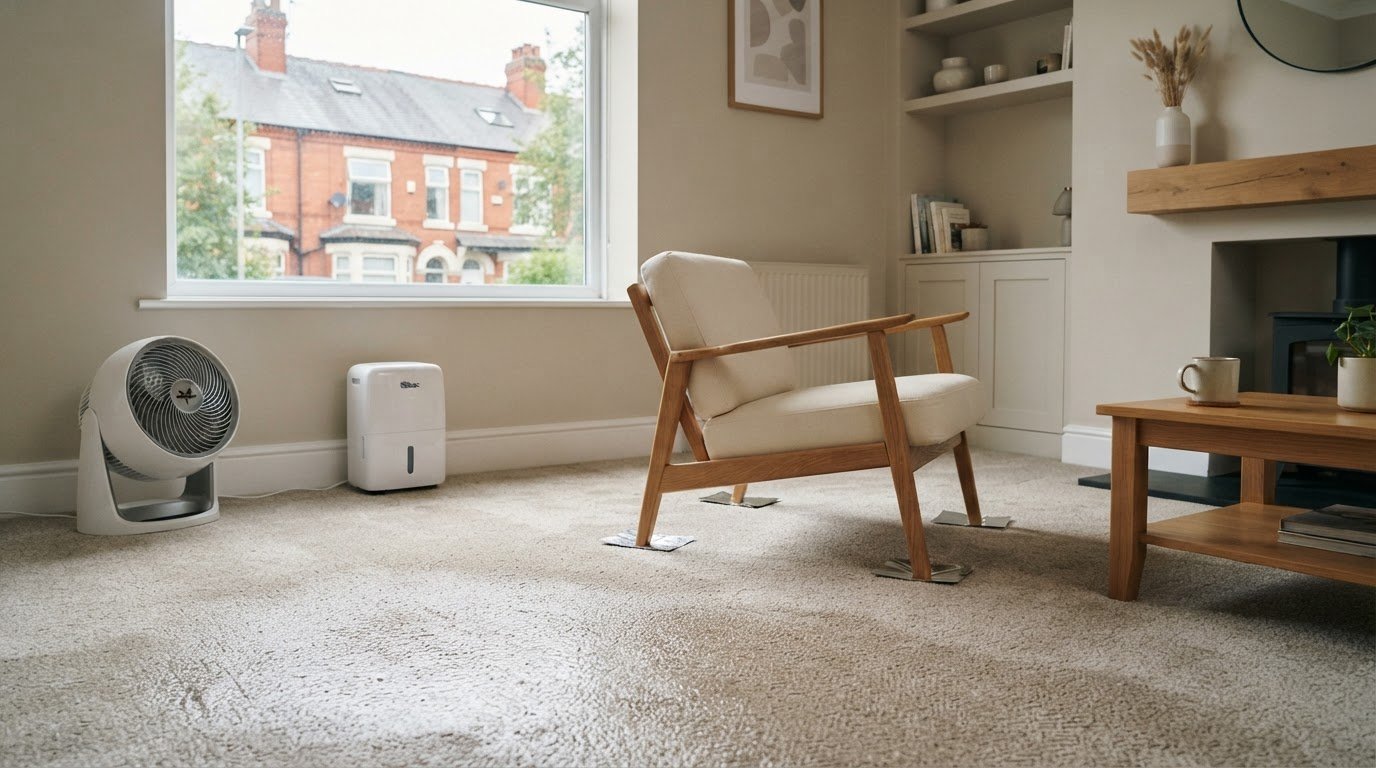
- If furniture needs to go back before the carpet is fully dry, place plastic or aluminium foil under its legs to help protect it.
- For professionally cleaned carpets, Commercial Carpet Cleaners Stockport provides domestic carpet cleaning, with rug and fabric sofa cleaning also available.
How Long Do Carpets Take to Dry After Cleaning?
Most household carpets take 4 to 8 hours to dry after professional cleaning. The method, carpet construction, soiling and room conditions can shift that window.
Typical Professional Cleaning Drying Times
A standard household clean usually dries in 4 to 8 hours, while light cleaning may take 2 to 4 hours. Heavily soiled carpet can take up to 12 hours, giving you a practical window for planning room use and furniture placement.
Treated stains or high-traffic areas may stay damp longer than the surrounding carpet, so check those patches rather than judging the room by its driest area. Wool and thick-pile carpets can also retain more moisture than man-made fibres or thinner pile.
Drying Times by Cleaning Method
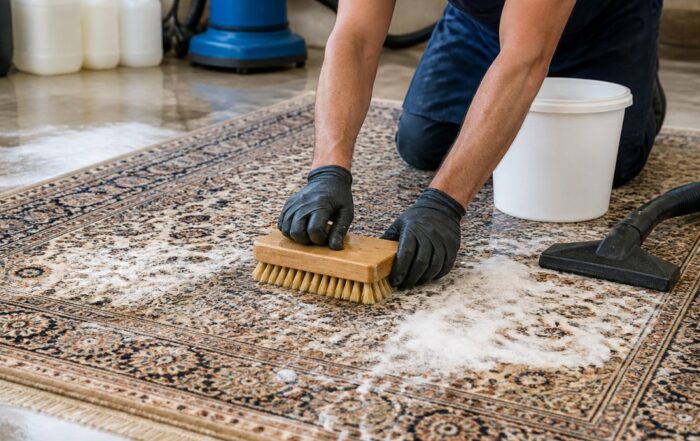
Cleaning method affects how much moisture remains in the carpet. Hot water extraction typically takes 6 to 12 hours to dry completely, while low-moisture or dry-cleaning systems typically take 2 to 4 hours.
Drying time can help you plan when to use a room, but the cleaning method matters too. Some carpet manufacturers recommend or require hot-water extraction for warranty coverage. Check the carpet’s care guidance to understand which methods suit its construction and maintenance requirements.
Mould Risks from Slow Drying
Carpets and furnishings are less likely to develop mould when they dry within 48 hours. This makes prompt drying useful after cleaning, especially where dampness is trapped beneath furniture or in less ventilated parts of a room.
Support drying by keeping the room accessible to air. Pay particular attention to carpet near furniture and areas that received extra treatment. If a patch remains wet, move nearby obstructions and improve airflow so moisture can escape from the fibres and surrounding furnishings. Where persistent dampness points to wider water intrusion or property issues rather than standard cleaning, property inspection and emergency mitigation specialists like foxclaimsconsultants.com help evaluate damage and support recovery.
Technician Skill and Drying
Suitable techniques and equipment can reduce the moisture left behind after cleaning. A well-trained cleaner may leave carpet ready to use in around half an hour, while specialist air-moving equipment can leave most carpets virtually dry in 20 minutes.
Drying time depends on the cleaning and drying process, not simply the clock. The carpet type, amount of soiling and any treated areas can affect how long it takes to dry fully. Thorough extraction also helps limit moisture left in the carpet after cleaning, a principle followed by professional residential and commercial cleaners like tyjcleaningservices.com.
A dry-feeling surface isn’t proof that the entire carpet is dry. Moisture can remain deeper in the pile or padding, so a carpet may feel dry underfoot while lower layers are still damp. Check sheltered areas and treated patches, and allow time for deeper moisture to evaporate before moving furniture back.
UK carpet-cleaning companies can provide practical drying advice based on the method and carpet. There isn’t one drying-time guarantee that applies to every carpet; advice should reflect the cleaning method and the carpet’s material, pile and room conditions.
Humidity, temperature and airflow
In a Manchester home, room conditions affect how quickly moisture leaves carpet. Humid air, low temperatures and limited airflow can all slow drying.
Carpet normally contains around 3 to 4 percent moisture from natural moisture and humidity. After cleaning, added water must evaporate into the room before the carpet feels dry throughout. When indoor air already holds moisture, evaporation slows. A closed room can therefore stay damp longer than a room with fresh air moving through it. The carpet’s location matters too: a space with little ventilation may dry more slowly than an open room.
Temperature also plays a part. Carpets generally take longer to dry in colder conditions, when evaporation slows. Heating adds warmth, while ventilation helps moisture escape. Combine comfortable warmth with fresh airflow rather than relying on heat alone. A warm room with its door closed and no air movement may retain more moisture than a ventilated room.
Air movement carries moisture away from the carpet. Open a window slightly to ventilate the room while the carpet dries, and open an internal door to let air circulate between rooms. Keep large items off the carpet so they don’t restrict airflow. Even a small window opening can give humid air a route out.
Manchester weather can make outdoor ventilation less appealing in cold or damp periods. Use the room’s available ventilation thoughtfully: a brief window opening can refresh the air, while indoor heating maintains warmth. The aim is to balance warmth and airflow, not simply make the room hot. If outside air is wet or cold, keep the room comfortably warm and use indoor airflow rather than leaving the window wide open.
Room layout affects how air reaches different parts of the carpet. Corners behind doors, spaces beneath furniture and narrow hallways may have less circulation. Keep doors open where practical, and move lightweight items away from damp patches. Opening the doorway to a warmer, ventilated space can help air circulate. Check sheltered edges too, since the centre of a room may dry first.
Good airflow and warmth support drying, but they don’t remove moisture instantly. A Manchester room can feel warm while still holding humid air, particularly with windows and doors shut. Combine gentle heating with ventilation, and let air reach the carpet instead of relying on temperature alone. This helps moisture escape and the carpet dry more evenly.
Protecting furniture from damp carpet
Furniture can mark the carpet or absorb moisture if returned too soon. A surface that feels dry may still conceal moisture in deeper fibres or padding, so furniture placement is part of the drying process. A sofa leg resting directly on recently cleaned carpet creates a contact point where moisture can transfer. Protecting it helps reduce the risk of marks while the carpet dries.
If furniture must return before the carpet is fully dry, place plastic or aluminium foil beneath each leg. The barrier separates the furniture foot from damp fibres. Use a piece that sits securely beneath the leg, and check it hasn’t shifted when you move the item. This applies to sofa, table and chair legs. Keep the barrier flat so it doesn’t crease into the pile.
For furniture with several contact points, protect each one. A dining chair may have narrow feet that press into the pile, while a sofa may have hidden supports beneath its front edge. Inspect the underside before moving it back, then place a barrier beneath every foot or support. Any unprotected contact point can still touch damp carpet.
Move furniture carefully rather than dragging it over freshly cleaned fibres. Dragging can disturb the pile and shift foil or plastic from beneath a leg. Lift items with help if needed, or use a clear route that avoids damp areas. Once furniture is in place, check each support again in case a barrier slipped.
Don’t assume the carpet is fully dry because the centre feels dry underfoot. Edges beneath furniture and areas with less airflow can stay damp longer. Check exposed and sheltered sections separately before removing barriers. If a patch still feels damp, keep its furniture supports protected and leave the area accessible to air. A surface check alone can miss moisture deeper in the pile.
Keep barriers beneath furniture until the carpet has dried through, rather than removing them after a brief touch test. Plastic or aluminium foil is a temporary separator, not a drying aid. It prevents direct contact at the covered point but won’t dry the carpet beneath it faster. Leave space around furniture where practical so air can reach nearby fibres.
Plan the room around essential items first. Return a table or sofa only when needed, and keep lighter chairs elsewhere until the carpet is dry. This leaves more carpet exposed to air and reduces the number of contact points to protect. Before normal use resumes, remove each barrier and check the carpet and furniture feet for dampness or transfer marks.

Using fans, air conditioning, or a dehumidifier
Fans, air conditioning and dehumidifiers can help manage damp carpet by supporting airflow or reducing room humidity. Choose an approach that suits the room. If the space feels stuffy, open windows and doors or use a fan or air conditioning to move air across the carpet. Keep routes through the room clear so air can reach more than one small patch.
A fan circulates room air across the carpet. Position it to move air through the room rather than towards a blocked corner or piece of furniture. For example, aim it across an open stretch of carpet. Move lightweight items that obstruct the airflow, and leave the doorway open if you’re ventilating the room. Aim for steady circulation, not a strong blast in one spot.
Air conditioning can also increase airflow and help dry freshly cleaned carpet. Keep interior doors open when practical, and avoid blocking the main airflow path with furniture. If you have a fan too, use whichever arrangement moves air across the carpet effectively. Neither device dries deeper layers instantly, so allow the carpet to keep drying even when its surface feels less damp.
A dehumidifier suits a different setup. A dehumidifier may help reduce moisture in the room when used according to its instructions. This differs from using open windows or doors for natural ventilation, so choose one approach rather than leaving windows open while expecting a dehumidifier to work in a closed space. Follow the unit’s instructions and keep its air openings clear.
In colder months, a dehumidifier or fan heater can help manage dampness. A fan heater adds warmth and air movement, while a dehumidifier reduces moisture in the room. Use equipment as directed, keep the carpet accessible to air, and avoid covering damp areas with furniture or rugs.
Match your approach to the room. In a mild, ventilated Manchester home, opening a window and door can help air move naturally. On a cold day, indoor heating combined with a fan or dehumidifier may be more practical. If using a dehumidifier, close the windows and doors; if relying on natural ventilation, use openings and fans instead. Check both exposed and sheltered carpet as it dries.
Whichever equipment you choose, room setup and airflow matter. Keep the carpet clear, use devices according to their instructions, and let air reach damp sections. A fan or air conditioner supports circulation; a dehumidifier works with the room closed. These choices help manage dampness without relying on one appliance alone.
Avoiding over-wetting
The more water left in the carpet, the more moisture must evaporate before the fibres and deeper layers dry. Over-wetting can happen when a machine sprays heavily, makes too many cleaning passes or repeatedly treats the same area. The aim is to remove soil without leaving unnecessary moisture. This matters in Manchester homes, where cooler conditions can slow natural drying.
Machine output can vary considerably. Some carpet-cleaning machines can spray as much as 15 gallons of water every 10 minutes. That figure applies to some machines, not every model, but it shows why the amount of water used matters. If a machine releases water faster than it extracts it, dampness can remain below the visible pile.
Heavily soiled patches may tempt repeated scrubbing, but avoid cleaning the same area with a machine more than twice in one session. Repeated wet passes can leave extra moisture without improving the result. Treat a dirty patch carefully rather than going over it again and again. If a stain remains, the treated area may take longer to dry than the surrounding carpet.
When using a home machine, follow its operating instructions and avoid lingering over one patch. Keep it moving steadily and use its extraction function as directed. If the carpet looks soaked or water remains visible after a pass, stop adding solution. Let the machine remove moisture before deciding whether another pass is needed.
Cleaning solution also affects drying. Cheap detergents may take longer to dry than high-quality carpet-cleaning solutions. Use a product designed for the machine and carpet, and follow its dilution instructions. Adding extra detergent doesn’t mean a deeper clean; residue can remain in fibres and may attract soil. Rinsing or extraction should follow the machine’s directions, not guesswork.
Professional equipment and technique help control moisture during cleaning. Thorough extraction removes soil while limiting excess water left in the pile. Carpet type matters too: wool holds more moisture than man-made fibres, while thick pile retains more than thin pile. Careful water use is especially important for wool or deep-pile carpet.
If a section stays unusually damp, stop re-wetting it and support drying with airflow. Avoid covering the patch with furniture or a rug while it dries. For help with a measured clean, arrange professional carpet cleaning for your home.
Commercial Carpet Cleaners Stockport: Domestic Carpet Cleaning
Commercial Carpet Cleaners Stockport provides Domestic Carpet Cleaning for homes with stained, soiled or regularly used carpets. A professional clean can help when household equipment hasn’t lifted embedded dirt, or when several rooms need attention. The cleaning method and carpet type both affect how much drying time to allow, so planning ventilation and furniture placement remains useful after the visit.
If other soft furnishings need attention, Upholstery Cleaning and Rug Cleaning are also available. For businesses, Carpet Cleaning covers commercial spaces. These services let you focus on the surfaces that need care without treating every material as though it needs the same approach.
For help with carpet cleaning at home, contact Commercial Carpet Cleaners Stockport to discuss your cleaning needs.
Plan your next step with confidence
Knowing how long carpet takes to dry after cleaning helps you plan, but the next step is deciding which areas need attention and how the work fits around home life. Note persistent marks, heavily used walkways and rugs that need separate care. This gives you a clear starting point for discussing the rooms and surfaces that matter most.
Commercial Carpet Cleaners Stockport provides carpet cleaning for household carpets and business spaces, as well as rug cleaning for individual floor coverings. Matching the service to the surfaces you want cleaned can make it easier to plan your home or workplace routine in Stockport and surrounding areas.
If you’re ready to discuss carpet or rug cleaning, contact Commercial Carpet Cleaners Stockport. A clean, comfortable space can start with a simple conversation about what needs attention.
Frequently Asked Questions
How long does carpet take to dry after professional cleaning in the UK?
A standard household clean usually takes 4 to 8 hours to dry, while lightly cleaned carpet may dry sooner and heavily soiled areas can take longer. If you’re asking how long carpet takes to dry after cleaning, check the carpet itself rather than relying only on the clock. Treated stains or thick-pile sections may remain damp after the main walkway feels dry, so inspect different areas before replacing furniture.
How long do carpets take to dry after steam cleaning versus low-moisture cleaning?
Hot water extraction, often called steam cleaning, typically takes 6 to 12 hours to dry completely. Low-moisture or dry-cleaning methods typically take 2 to 4 hours. The quicker method isn’t automatically suitable for every carpet: some manufacturers recommend or require hot water extraction for warranty coverage. If you have the carpet’s care guidance, use it to understand which method fits its construction and maintenance requirements.
What factors affect carpet drying time, such as pile, backing and humidity?
Fibre, pile depth and room humidity all influence drying. Wool holds more moisture than man-made fibres, and thick pile retains more than thin pile. Moisture can also remain beneath the visible fibres, including in the carpet padding, even when the surface feels dry. For example, a dense wool carpet in a humid, poorly ventilated room may stay damp longer than a thin synthetic carpet in a warm, airy space.
How can you make carpet dry faster after cleaning?
Encourage air movement and help remove moisture from the room. Open a window and an internal door, or use a fan or air conditioning to circulate air across the carpet. In colder weather, indoor warmth alongside ventilation can help. If using a dehumidifier, shut doors and windows so it can reduce moisture in the enclosed room. Keep rugs and furniture off damp sections so they don’t block airflow.
How can you tell when a cleaned carpet is fully dry?
Check more than the surface: gently press a clean, dry hand or cloth against several areas, including corners and treated spots. Compare sheltered edges with open walkways, since they may dry at different rates. A carpet that feels dry on top can still hold moisture deeper in its pile or padding. If a cloth picks up dampness or a patch feels cool and clammy, allow more drying time.
Is it safe to walk on carpet before it is completely dry?
Light walking is usually fine after a few hours if you wear clean socks or indoor footwear. Keep outdoor shoes off the carpet, and avoid running or dragging objects across damp fibres. Take a clear route between rooms rather than repeatedly crossing a treated patch. Limit foot traffic until the carpet is dry, especially in busy hallways where damp fibres can be pressed down.
How long should furniture stay off carpet after cleaning?
Keep furniture off the carpet until it has dried, especially heavy pieces that cover large areas. If an item must return sooner, put plastic or aluminium foil beneath each leg to separate it from damp fibres. Check every support point, including hidden sofa feet, and make sure the barriers haven’t shifted. Leave as much carpet exposed as possible so air can reach it while it dries.
What risks come from carpet staying wet for too long, including mould and odours?
Prolonged dampness can encourage mould and leave persistent musty odours, particularly where air cannot circulate. Carpets and furnishings are less likely to develop mould if they dry within 48 hours. This makes prompt ventilation useful after cleaning or spills. Check concealed areas beneath furniture and along edges, since lingering moisture there may go unnoticed while exposed carpet feels dry.