Quick Summary
The most common DIY carpet cleaning mistakes are skipping the fibre check, using too much solution, scrubbing instead of blotting, and rushing the drying. Each one can leave residue, trap moisture, or set a stain permanently. Identify your fibre first, use less liquid, and dry within 6 to 12 hours.
- Identify your carpet fibre before cleaning, since wool needs a pH-neutral cleaner.
- Use less solution than you think you need, because excess moisture soaks into the backing and underlay.
- Blot stains from the outside inward instead of scrubbing, which pushes stains deeper into the fibres.
- Dry carpets within 6 to 12 hours using fans, open windows and a dehumidifier to prevent mildew.
Table of Contents
- Why DIY Carpet Cleaning Goes Wrong
- Identifying Your Carpet Fibre Before You Clean
- Using Too Much Water and Over-Applying Solutions
- Scrubbing Versus Blotting: How to Remove Carpet Stains Safely
- Skipping Pre-Spray, Dwell Time and Product Testing
- Residue, Drying Time and Choosing the Right Equipment
- When to Call a Professional Instead of DIY
- Frequently Asked Questions
Why DIY Carpet Cleaning Goes Wrong
Last Updated: November 2, 2026
Most people who clean their own carpets mean well. They hire a rental machine, grab a bottle of stain remover, and get to work.
Carpet cleaning mistakes to avoid start long before the first drop of solution hits the pile. Most DIY jobs go wrong in the planning stage. People skip the fibre check, use too much product, and rush the drying.
The good news is that these problems are easy to fix once you know what to look for.
Identifying Your Carpet Fibre Before You Clean
Not all carpets respond the same way to water and cleaning products. Before you start, check the label or ask whoever fitted the carpet what the fibre is made of.
The fibre type dictates which chemicals are safe, how much water the carpet can tolerate, and how much heat or agitation it will take. Getting this wrong is one of the most common reasons a DIY clean causes permanent damage.
Why Fibre Chemistry Matters
Carpet fibres fall into two broad families: natural (mainly wool) and synthetic (nylon, polyester, polypropylene). Each has a different tolerance for pH, heat and mechanical action.
- Wool is a protein fibre. It is sensitive to alkaline products (pH above about 8) and to heat, which can cause shrinkage, felting and colour loss. Wool also has a natural protective lanolin coating that harsh detergents strip away. Use a pH-neutral wool-safe cleaner and keep water cool.
- Nylon is durable and handles most cleaners, but it has dye sites that can be attacked by strong oxidisers or high-pH products, leading to yellowing or colour bleed. Nylon also attracts oil-based soil, so a pre-spray with a suitable surfactant helps.
- Polyester resists water-based stains well but is oleophilic (attracts oil), so oily soil can be stubborn. It is sensitive to heat and can crush or pill if scrubbed aggressively.
- Polypropylene (olefin) is common in cheaper carpets and is highly resistant to water-based stains, but it has a low melting point and can deform under hot water extraction or high-heat drying. It also has poor resilience, so heavy scrubbing can leave permanent crushing.
How to Identify an Unknown Fibre
If the label is missing, you can narrow it down:
- Burn test (on a spare tuft or hidden area): A small sample of wool smells like burning hair and leaves a crushable ash; synthetics melt and form a hard bead. Only do this on a loose fibre, never on the fitted carpet.
- Water absorbency: Wool and nylon absorb water readily; polypropylene tends to bead water on the surface.
- Pile appearance: Wool has a natural lustre and soft hand; polypropylene often looks slightly shinier and feels coarser.
If you are unsure, do a spot test in a hidden corner, such as inside a wardrobe. Apply a small amount of solution, wait, and check for colour change or fibre damage before going further. Watch out: a spot test that looks fine wet can still show colour loss or shrinkage once dry, so check again after 24 hours.
pH and Product Selection
Most general-purpose carpet cleaners are alkaline (pH 9-10) because alkalinity helps break down oily soil. That is fine for most synthetics but risky for wool. For wool and wool-blend carpets, choose a pH-neutral or mildly acidic cleaner. Never mix products, combining an alkaline cleaner with an acidic one can neutralise both and leave a sticky residue.
If you are cleaning a mixed-fibre carpet (for example, a wool face with a synthetic backing), always clean to the most delicate fibre’s tolerance.
Using Too Much Water and Over-Applying Solutions
The most frequent mistake is using far too much liquid. People assume more solution means a cleaner carpet. In reality, it does the opposite.
A common mistake is spraying the carpet until it looks soaked. The carpet backing and underlay act like a sponge, and excess moisture soaks down into them. Water that stays trapped there takes a long time to evaporate.
Why Over-Wetting Causes Damage
When carpet stays wet for too long, several problems start:
- Mildew and mould begin to grow in the underlay
- Carpet backing can loosen or delaminate
- Musty odours develop that are hard to remove
- Soap residue builds up and attracts fresh dirt
Use less solution than you think you need. Apply it in light passes, then extract as much moisture as you can before moving on.
Scrubbing Versus Blotting: How to Remove Carpet Stains Safely
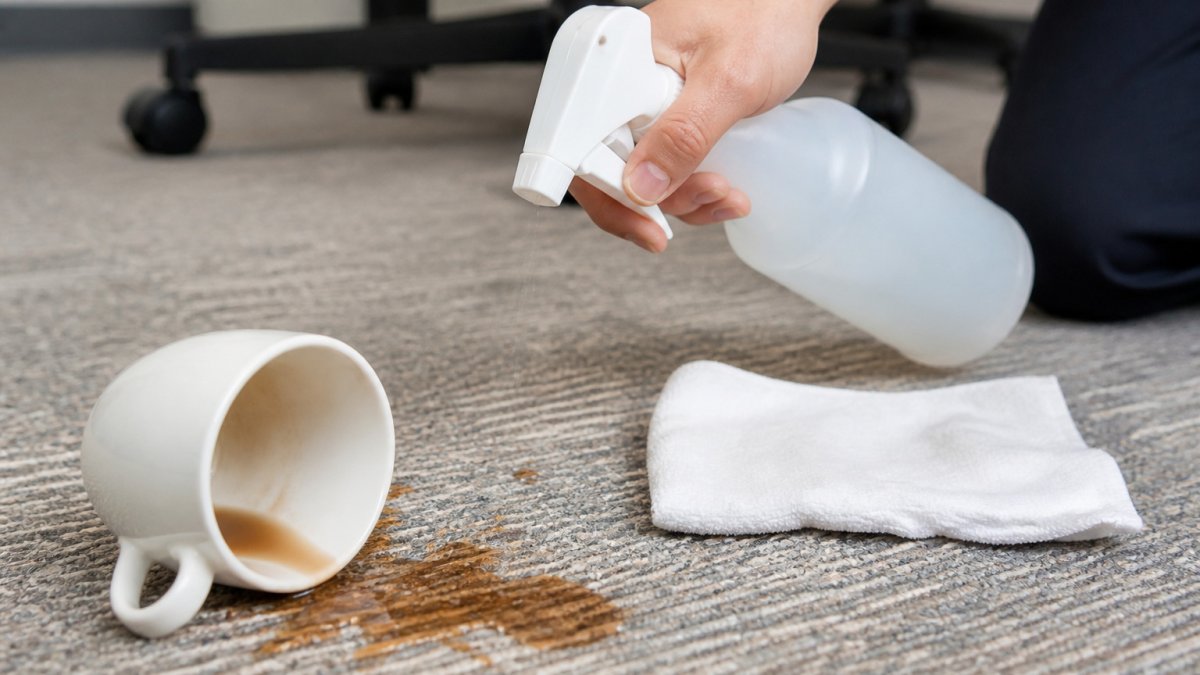
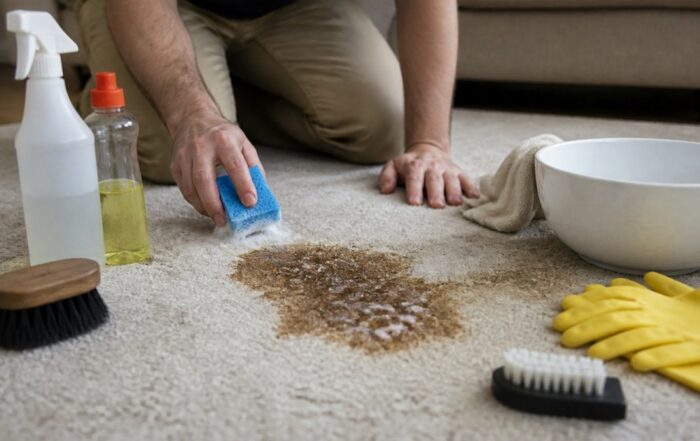
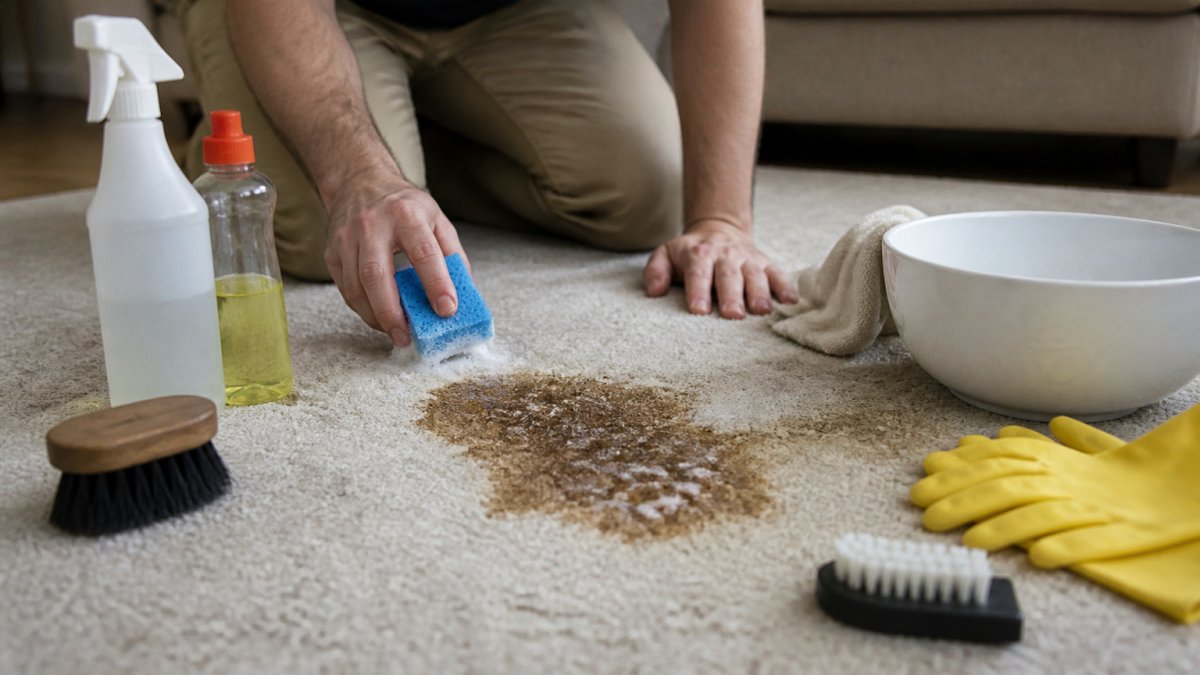
Scrubbing feels like the right move when a stain is stubborn. It is usually the wrong one. Scrubbing pushes the stain deeper into the fibres and roughens the pile, which can leave a permanent fuzzy patch.
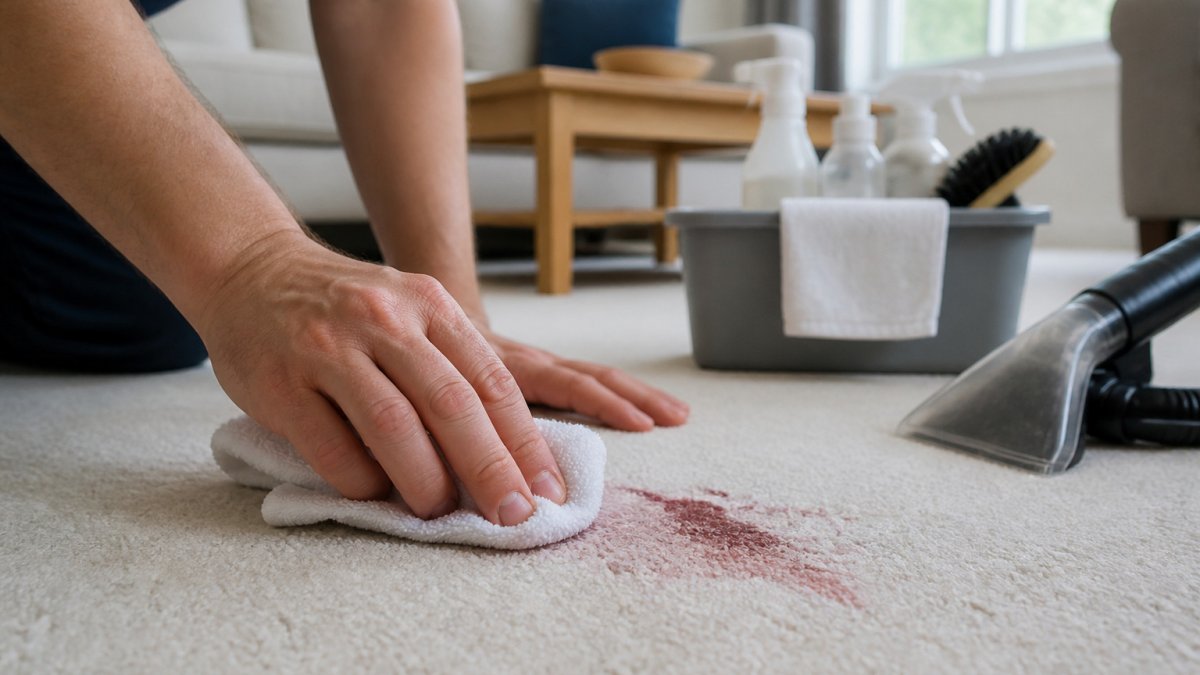
Blotting works better. Here is a simple method for most stains:
- Blot up any liquid with a clean white cloth or paper towel
- Work from the outside of the stain towards the centre to avoid spreading it
- Apply a small amount of cleaner to the cloth, not directly to the carpet
- Press gently and lift, then repeat with a fresh section of cloth
- Rinse lightly with clean water and blot dry
For more guidance, see our guide on how to remove carpet stains safely. It covers the right technique for specific stain types.
Skipping Pre-Spray, Dwell Time and Product Testing
Many people spray a cleaner, wipe it straight away, and move on. That is a mistake. Products need time to break down a stain.
Pre-spraying helps too. A light mist of pre-treatment before you apply the main cleaner loosens dirt so it lifts more easily.
Always test a new product first. Some cleaners bleach dyes, change the colour of wool, or react with certain backings.
Read the manufacturer’s instructions before you open the bottle. Many mistakes come from ignoring them entirely.
Residue, Drying Time and Choosing the Right Equipment
Residue is the hidden cause of many carpets that look clean on the day but turn grey within weeks. Soap left in the pile acts like a magnet for dirt. This is sometimes called the “sticky carpet” effect: surfactant molecules remain in the fibre after the water evaporates, and their charged ends attract airborne soil particles, which then bind to the pile. The result is a carpet that soils faster after cleaning than it did before.
Managing Residue
To avoid residue:
- Use only the amount of product the label recommends, more is not better.
- Rinse the area with clean water after cleaning, using a separate clean tank or a fresh cloth.
- Extract as much moisture as possible with a wet vacuum or dry towels.
- Use a cleaner made for your carpet type, and avoid products that leave a visible foam or film.
- If you have already left residue, a dilute rinse with clean water and thorough extraction is usually the fix; repeated over-application makes the problem worse.
Watch out: fabric softeners and some “carpet freshener” sprays add their own residue and can worsen the sticky-carpet effect.
Drying Time and Humidity Control
Drying time matters just as much as cleaning. Aim for carpets to dry within 6 to 12 hours. Open windows, run a fan, and keep foot traffic off the area.
The mechanism is straightforward: moisture trapped in the backing and underlay creates a humid microclimate. If relative humidity stays high and airflow is poor, mould spores, which are present in most indoor environments, can germinate within 24 to 48 hours.
Practical steps:
- Increase airflow with fans and open windows or doors (weather permitting).
- Use a dehumidifier in the room if humidity is high; aim to bring indoor relative humidity down towards the 40-50% range during drying.
- Avoid sealing the room or turning off ventilation overnight.
- Lift furniture legs onto foil or plastic spacers to allow air under them.
Equipment Maintenance
Equipment is another weak point. Rental machines are often underpowered, and their tanks and hoses can carry old dirt from one job to the next. Clean your machine after every use.
Specific maintenance points that are often missed:
- Intake nozzle and brushes: Hair, fibre and dried detergent build up here and reduce suction. Remove the nozzle and clear it after each use.
- Solution and recovery tanks: Rinse both tanks with clean water and let them dry fully before storage; residual solution can grow bacteria and cause odours.
- Filters and screens: Check and clean any inline filter or screen; a clogged filter is a common cause of weak suction.
- Hoses and seals: Inspect for cracks or loose connections that let air in and reduce lift.
- Storage: Store the machine dry and upright, with the tank lids off, to prevent mildew.
A machine that is maintained properly will extract more water, which shortens drying time and reduces the risk of over-wetting.
Several of the most common DIY errors come down to residue, drying and equipment, which the article summarises below.
| Issue | Cause | Fix |
|---|---|---|
| Carpet turns grey within weeks | Soap residue left in the pile attracts dirt | Use only the label amount and rinse with clean water |
| Mildew or musty smell | Moisture trapped in backing and underlay | Dry within 6 to 12 hours using fans and airflow |
| Mould growth | Humid microclimate in the padding for 24 to 48 hours | Run a dehumidifier towards 40 to 50% humidity |
| Weak suction, damp carpet | Blocked nozzle, dirty tanks or clogged filter | Clean nozzle, tanks and filters after every use |
| Carpet stays damp after two passes | Underpowered or overdue machine | Service the machine or use a better tool |
When to Call a Professional Instead of DIY
Some jobs are beyond a home clean. Call a professional if you notice any of the following:
- Stains that have stayed after several careful attempts
- Carpets that smell musty even after drying
- Pet urine that keeps returning
- Delicate or antique rugs
- Carpets that have been soaked by a flood or leak
A professional typically has access to stronger extraction equipment and can match the method to the fibre. You can read about what a professional carpet cleaning service in Stockport involves and what it covers. For a domestic job, you can book professional carpet cleaning in Stockport.
It is also worth comparing methods before you decide. Our article on professional vs DIY carpet cleaning and which lasts longer sets out how the two approaches compare on results.
Frequently Asked Questions
Is it better to hire a professional or clean carpets yourself?
For routine upkeep and small spills, DIY cleaning is practical and affordable. For deep cleaning, heavily soiled areas, pet odours or end-of-tenancy requirements, a professional carpet cleaning service usually gives better results. Professionals generally use specialist extraction equipment that removes more soil and moisture than a domestic machine, and they know which solutions suit each fibre type. Pricing depends on the size of the area and the level of soiling, so request a quote for an accurate figure.
What is the most common mistake when cleaning carpets?
The most common mistake is using too much water and too much cleaning solution. Excess moisture soaks through to the carpet backing and underlay, where it can cause browning, mildew and a musty smell. Soap left in the pile attracts dirt faster, so the carpet looks dirty again within days. Use only the amount the product label recommends, extract as much water as possible, and rinse thoroughly.
Can over-wetting a carpet cause permanent damage?
Yes. Over-wetting can loosen glue at the seams, cause shrinkage, distort the backing and encourage mould growth in the underlay. Wet carpet that stays damp for more than 24 hours is at real risk. Aim for fast drying by ventilating the room, running a fan or dehumidifier, and lifting the pile by hand once the carpet is nearly dry.
How do I remove carpet stains without damaging the fibres?
Blot rather than scrub. Work from the outside of the stain towards the centre, using a clean white cloth and gentle pressure. Test any cleaning product on a hidden corner first, and let it dwell for the time stated on the label before blotting it away. Harsh scrubbing frays synthetic fibres and can permanently disturb natural fibres such as wool. Avoid bleach and strong alkaline products unless you have confirmed your carpet can tolerate them.