Last Updated: November 3, 2026
Quick Summary
To fix flattened carpet in front of a sofa, lift the sofa rather than dragging it, vacuum the strip in slow overlapping passes, then brush or rake the pile upright. Mist lightly only where needed, dry fully with a fan, and repeat over about a week. Permanently crushed fibres may not fully recover.
- Lift the sofa rather than dragging it, using a board under the legs if you must slide it.
- Vacuum the strip in two or three slow, overlapping passes before brushing.
- Brush or rake against the lie of the pile, using short strokes from the base.
- Mist until damp, not wet, because over-wetting causes backing damage and odour.
- Repeat brushing over a week, since traffic matting improves over two or three rounds.
Table of Contents
- Why the Carpet in Front of Your Sofa Flattens
- What You’ll Need Before You Start
- Step-by-Step: How to Lift Carpet Pile in the Sofa Area
- Best Tools for Reviving Matted Carpet
- Troubleshooting: When the Pile Won’t Come Back
- How to Prevent Carpet Flattening Under Your Sofa
- Booking a Professional Lift Before the Damage Sets In
- Frequently Asked Questions
Flattened carpet in front of a sofa is one of the most common carpet problems in UK homes. The pile gets crushed where people sit, stand and walk, and over time it looks thin, matted and worn.
Flattened carpet is the result of pressure and friction, mostly from furniture and foot traffic. Carpet pile is made of tiny fibres that stand upright when they are left alone.
Why the Carpet in Front of Your Sofa Flattens
Carpet pile is the upright part of the carpet made of fibres. When weight sits on it for long periods, the fibres lose their spring and lie down. The area in front of a sofa is hit from two directions: the sofa legs press down, and people walk in and out of the same spot every day.
Several things make this worse:
- Heavy furniture left in the same place for years
- Constant foot traffic between the sofa and the door
- Dragging the sofa across the carpet, which crushes the fibres sideways
Furniture indentations versus traffic matting
It helps to know what you are dealing with before you start. Furniture indentations are the sharp dents left by the legs, castors or base of a sofa.
Indentations often respond well to lifting. Traffic matting usually needs a combination of vacuuming, brushing and gentle moisture. Some very deep crushing may not recover fully, and that is covered later in the troubleshooting section.
What You’ll Need Before You Start
Gather these items before you begin:
- A vacuum cleaner with a suction setting you can adjust
- A stiff-bristled brush or carpet rake
- Protective gloves if you use any cleaning solution With these tools ready, you can lift the carpet pile carefully and, while refreshing the living room, restore sagging cushions so the sofa and floor feel comfortable together.
Avoid strong chemicals unless you have checked the carpet manufacturer’s care label first. Test any product on a hidden corner before using it in the sofa area.
Step-by-Step: How to Lift Carpet Pile in the Sofa Area
This sequence is written for the broad, traffic-worn strip in front of a sofa rather than a single furniture dent. Work through it in order and do not rush the drying stage. Before you start, check the carpet manufacturer’s care label and test any method on a hidden offcut or corner.
- Clear and lift the sofa safely. Lift the furniture rather than dragging it. If you must slide it, place a board or cardboard under the legs so the base does not crush the pile sideways. Ask for help with a heavy two- or three-seater; dragging is one of the most common causes of fresh matting.
- Vacuum the strip in slow, overlapping passes. Remove loose grit first so it does not grind into the fibres during brushing. Use an adjustable suction head and work in two or three passes over the same line.
- Diagnose before you treat. Run your fingers across the strip. Sharp, localised dents are furniture indentations; a broad, dull band is traffic matting. The two respond differently, and the diagnosis decides which of the methods below you use.
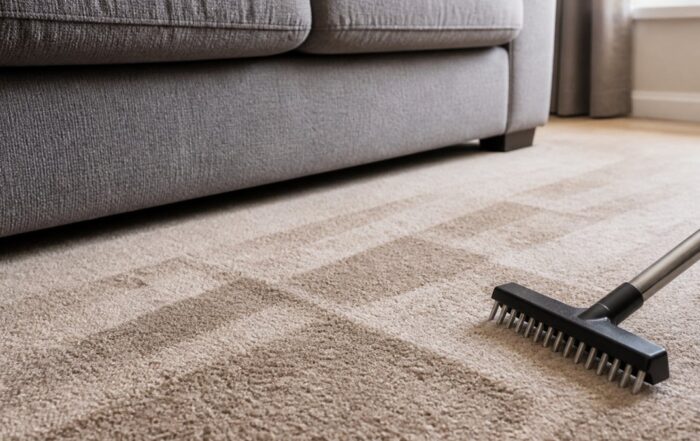
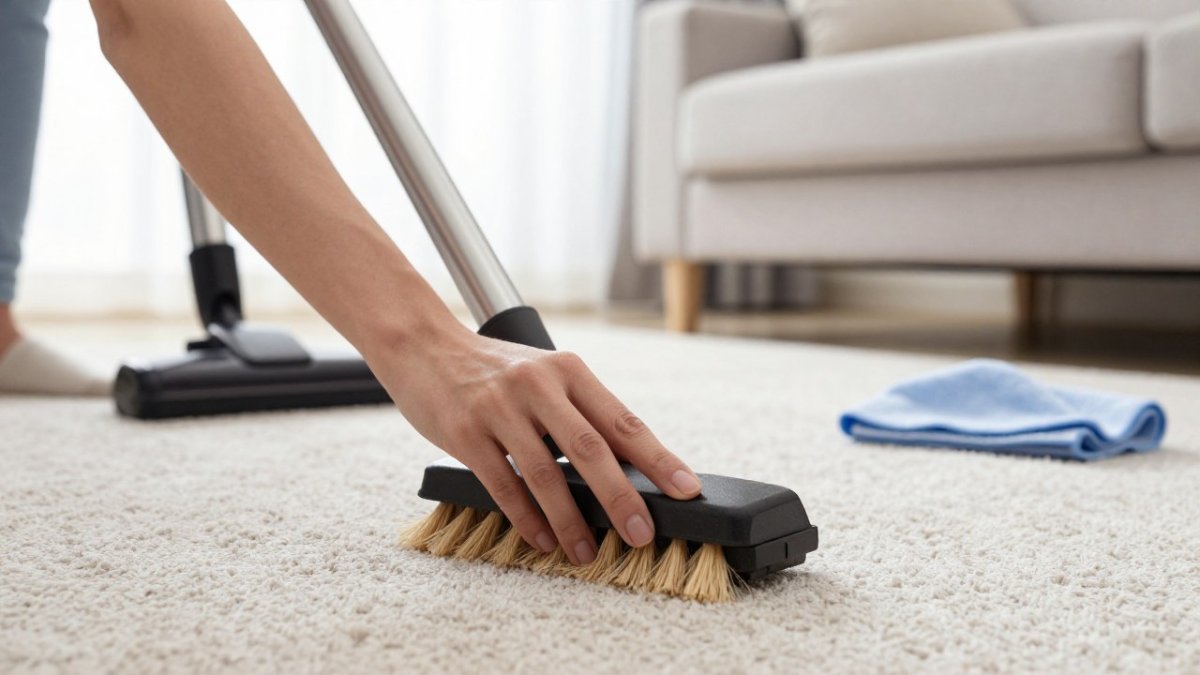
- Brush or rake the pile upright. Work a stiff-bristled brush or carpet rake across the pile in the opposite direction to its lie. Short strokes from the base lift fibres more effectively than long, light sweeps.
- Apply light moisture only where needed. Mist the flattened band so it feels damp, not wet. Over-wetting is the most common cause of backing delamination and lingering odour.
- Use heat only if the fibre allows it. The damp-cloth and iron method below is for stubborn patches, not for the whole strip. Skip it entirely for loop pile, delicate or unknown fibres.
- Dry fully and reassess. Use a fan or open window until the carpet is completely dry to the touch. Repeat brushing once dry; some areas need two or three rounds over a week.
Choose the right method for the job
Not every flattened patch needs every method. Use this comparison to decide where to start:
- Vacuuming alone: Lowest risk, suitable for all fibres. Best for light matting and weekly maintenance. Expect a modest lift, not a full recovery.
- Brushing or raking: Low risk on cut pile; can snag loop pile. Best for combing out directionally matted fibres. Expect visible improvement on traffic bands.
- Damp cloth and iron: Moderate risk. Best for stubborn cut-pile patches. Not suitable for loop pile, delicate fibres, or unknown materials. Expect the strongest lift but the highest chance of damage if misused.
Fibre-specific cautions
Heat and moisture behave differently across carpet types, and the wrong method can cause permanent damage:
- Wool: Tolerates moisture well but is sensitive to heat and agitation; over-brushing can felt the fibres. Use cool mist and gentle brushing, and keep the iron off unless you are confident.
- Synthetic (polypropylene, polyester, nylon): Generally resilient, but polypropylene has a low melting point and can distort under a hot iron. Keep heat low and keep the iron moving.
- Loop pile: Brushes and rakes can catch and pull loops, and heat can distort them permanently. Use suction-only cleaning and a soft brush.
Watch out: if the carpet looks shiny, melted or discoloured after any heat step, stop immediately and do not repeat it, that is a sign of fibre damage, not flattening.
Treating the strip without damaging the sofa or flooring
Work in sections about the width of your vacuum head rather than treating the whole strip at once. Keep moisture away from the sofa base and legs, and place a towel or plastic sheet under the legs if you are working close to them.
The steps below set out the sequence for lifting a flattened strip, with the time and frequency guidance the article gives.
| Step | What to do | Time or frequency |
|---|---|---|
| Clear and lift the sofa | Lift rather than drag; use a board under legs | Ask for help with heavy sofas |
| Vacuum the strip | Slow, overlapping passes | Two or three passes |
| Diagnose the flattening | Check for dents or a broad dull band | Before any treatment |
| Brush or rake the pile | Work against the lie of the pile | Short strokes from the base |
| Apply light moisture | Mist until damp, not wet | Only where needed |
| Dry fully and reassess | Use a fan or open window | Repeat over about a week |
Best Tools for Reviving Matted Carpet
The right tool makes a big difference. Here is what works well for lifting pile:
- Carpet rake: Best for combing out matted fibres in a single direction.
- Stiff-bristled brush: Good for gentle, all-over fluffing.
- Vacuum with adjustable suction: Useful for pulling up fibres without overpowering delicate pile.
Avoid wire brushes, which can snag or cut fibres. Choose tools with soft or medium bristles for most carpet types.
Troubleshooting: When the Pile Won’t Come Back
If the pile stays flat after two or three careful attempts, the problem is usually one of four things. Work through this diagnosis before trying anything stronger.
Distinguish temporary compression from permanent damage
Temporary compression is fibre bend without fibre breakage. The pile feels flattened but the fibres are intact, and it usually responds to moisture, brushing and time. Permanent damage is different: fibres are crushed at the base, worn thin, or the backing is distorted. Signs of permanent damage include:
- A hard, crusty feel at the base of the pile that brushing cannot loosen
- Visible thinning where the backing shows through
- A shiny, melted or discoloured patch after any heat treatment
If you see these signs, further DIY treatment is unlikely to help and may make the area worse.
Common causes and what to do
- Crushed backing: If the fibres are crushed at the base, lifting will only partly help. Stop brushing hard and consider a professional assessment.
- Long-standing furniture indentations: Dents from heavy legs that have sat for years often leave a permanent mark. Moving the sofa and treating the area can improve appearance but rarely restores original height.
- Worn fibres: Pile that has thinned with age will not regain its original height. No method reverses fibre loss.
What to try next, in order
If the first round did not work, escalate gradually rather than jumping to heat:
- Vacuum again in slow, overlapping passes once the carpet is fully dry.
- Brush or rake the pile in the opposite direction to its lie.
- Apply a light mist and dry fully before reassessing.
- Only then consider the damp-cloth and iron method, and only on suitable cut-pile fibres.
A common pattern is that traffic matting improves noticeably over two or three rounds spaced across a week, while deep indentations improve only slightly. Set expectations accordingly.
When to call in a professional
If the pile stays flat after several careful attempts, or you are unsure about the fibre type, a professional carpet cleaner can assess whether the carpet can be revived or whether it needs replacing. Ask for a clear quote before the visit, as pricing depends on the size of the area and the carpet type. Current prices are available on our website.
How to Prevent Carpet Flattening Under Your Sofa
Prevention is easier than repair. Try these habits:
- Move the sofa slightly every few months so the pressure shifts to fresh fibres, and see how to protect high-traffic carpet areas from wear.
- Place furniture coasters or protectors under the legs
- Keep the carpet dry after cleaning so the fibres do not stay matted, with practical upkeep steps to keep carpet pile fresh.
Good carpet care keeps the pile in better condition for longer. A quick brush once a week in the sofa area can stop small patches from becoming flat.
Booking a Professional Lift Before the Damage Sets In
If the carpet is badly flattened, has stains in the same area, or you are unsure about using heat, it may be time to call in help.
For a local service, you can book a carpet cleaner in Stockport, or visit our website to see what is available for your home. Acting early often gives better results than waiting until the pile is permanently crushed.
Frequently Asked Questions
Can you fix matted carpet pile?
In most cases, yes. Carpet pile that has been flattened by furniture or foot traffic is usually compressed rather than permanently damaged, so the fibres can often be lifted again. Vacuuming, brushing against the pile direction and a light mist of water followed by gentle drying will restore much of the height in a few hours. Severely crushed fibres, worn backing or fibres that have been damaged by heat or moisture may not recover fully, and in those cases the carpet may look better after a professional deep clean or a localised repair.
Does steam cleaning help lift flattened carpet?
Steam can help, but it should be used with care. Gentle moisture softens the fibres so they are easier to lift, and a low heat setting can encourage them to stand up. However, too much water or too much heat can damage synthetic fibres, loosen the backing or leave the carpet wet for too long, which encourages odour and mould. Test any method on a hidden patch first, keep the carpet only lightly damp, and make sure the room is well ventilated so it dries within a few hours.
Why does carpet flatten in front of the sofa?
The area in front of a sofa takes repeated pressure from people sitting down and standing up, feet pushing off, and the weight of furniture legs or recliner footrests when they are used. Because the same spot is compressed day after day, the fibres lose their spring and stay pressed down. Pile direction also matters, since fibres that are constantly brushed in one direction tend to lie flat. Moving the sofa slightly from time to time and using furniture coasters can reduce the pressure.
What tools are best for lifting carpet pile?
A stiff-bristled carpet brush or carpet rake works well for combing fibres upright, and a standard upright vacuum with a good beater bar or a handheld tool can lift loose pile. For moisture-based methods, a spray bottle and a clean white cloth are enough, plus an iron on a low setting with a damp cloth placed over the carpet. Avoid high heat and soaking the backing, as this can cause more damage than the flattening itself.