Last Updated: November 5, 2026
Quick Summary
Preventing future pet stains on carpets means removing every trace of old urine residue first, since uric acid salts in the backing and underlay reactivate in damp air and draw pets back to the same spot. Treat all three layers with an enzymatic cleaner, extract and dry fast, then add routine, a pet-safe protector and training on top.
- Blot fresh urine from the outside in and press rather than rub so it does not go deeper.
- Enzymatic cleaners break down uric acid instead of masking the smell.
- Never use ammonia-based cleaners because ammonia smells like urine and draws pets back.
- Apply a pet-safe protector only to a clean, dry carpet, never over old residue.
- New accidents in a house-trained adult pet deserve a vet visit.
Table of Contents
- Why Pet Stains Keep Coming Back to the Same Spot
- How to Remove Pet Urine Smell from Carpet Completely
- Cleaning Pet Accidents on Carpet: A Step-by-Step Routine
- How to Stop Dogs Peeing on Carpet: Training and Deterrents
- Choosing a Pet-Safe Carpet Stain Protector
- A Prevention Schedule by Pet Age, Health and Behaviour
- When Recurring Accidents Need Veterinary Attention
- Book a Professional Clean to Reset Your Carpets
- Frequently Asked Questions
Why Pet Stains Keep Coming Back to the Same Spot
If your dog keeps returning to the same patch of carpet, the cause is usually smell, not habit. Pet urine soaks through the carpet fibres and into the backing and underlay.
This guide explains how to break that cycle. Preventing future pet stains on carpets starts with removing every trace of old residue, then adding routine, protection and training on top.
The role of odour residue in repeat accidents
Urine residue is invisible once dry, but the smell survives for months. Warm, humid days make it stronger. Dogs and cats have far more scent receptors than us, so a carpet that looks clean can still smell like a toilet to them.
Watch out: scrubbing with a standard detergent often spreads the residue wider and leaves sticky film that attracts dirt. If you are not sure where old accidents are hiding, this guide on how to find hidden pet urine stains shows how to map them with a UV torch before you treat anything.
How to Remove Pet Urine Smell from Carpet Completely
Complete odour removal means treating three layers: fibres, backing and underlay. Miss the underlay and the smell returns within weeks.
Most shop-bought sprays only reach the top layer. A thorough job needs enough moisture to flush the salts out, then fast extraction so nothing stays damp.
Blotting, rinsing and extracting without spreading the stain
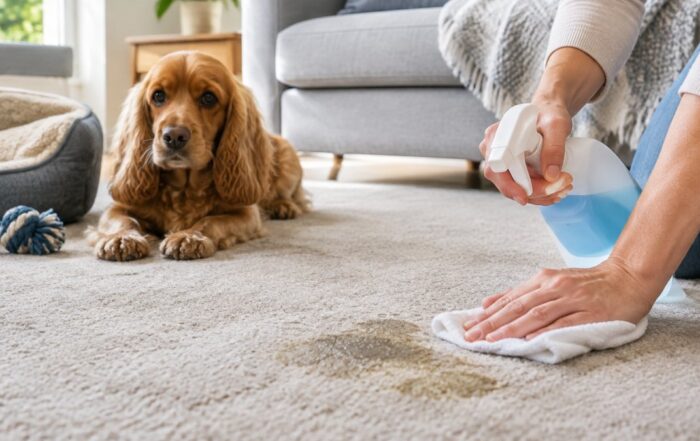
Work from the outside of the stain inwards, and press rather than rub. Rubbing pushes urine deeper and frays the fibres.
- Blot fresh urine with a clean white towel, pressing firmly until no more transfers.
- Rinse with cool water and blot again. Repeat until the towel comes up clean.
- Apply an enzymatic cleaner and leave it to dwell as the label directs. Enzymes break down uric acid rather than masking it.
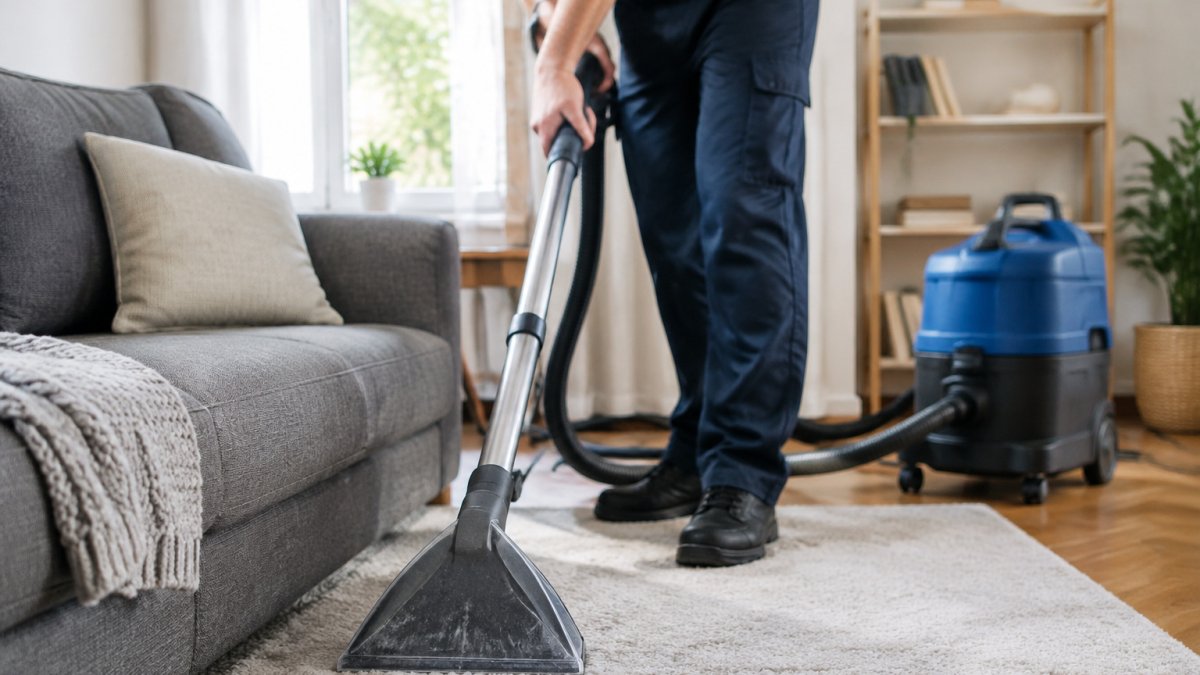
- Extract with a wet-dry vacuum using slow, overlapping passes.
- Rinse and extract once more to lift residual cleaner.
- Air dry with ventilation or a fan. Damp underlay is where musty smells start.
For a like-for-like comparison of enzyme products, see this roundup of the best enzyme cleaners for carpet odours. The NHS guidance on keeping your home free from pests and hygiene risks is a useful reminder that damp, soiled flooring affects indoor air quality, especially in homes with young children.
Cleaning Pet Accidents on Carpet: A Step-by-Step Routine
A repeatable routine beats panic cleaning. Keep a small kit ready so a fresh accident takes minutes, not hours.

The five-step routine we recommend:
- Isolate the area. Keep pets and children off until fully dry.
- Lift solids with paper towel, then bag and bin them.
- Blot, do not rub. Press a towel down and stand on it for fresh, deep stains.
- Treat with an enzyme cleaner and allow dwell time.
- Extract, rinse, and dry fast with airflow.
Deal with fresh stains the same day. Dried stains need rehydrating first: mist with water, cover with a damp towel for ten minutes, then treat as fresh. A common mistake is using more cleaner than needed.
How to Stop Dogs Peeing on Carpet: Training and Deterrents
Stopping dogs peeing on carpet combines three things: a clear toilet routine, removal of lingering scent, and deterrents that make indoor toileting less appealing. Most guides stop at “train the dog”, but the practical detail that decides whether prevention holds is what you put on the carpet and how you apply it.
Start with frequent, scheduled garden trips. Take your dog out first thing, after meals, after naps and before bed. Praise and reward every outdoor toilet immediately. Never punish an accident you find later; the dog cannot link the telling-off to the act.
Safe deterrents and product selection
A deterrent works in one of three ways: it masks the residual scent that prompts return visits, it changes the texture or smell of the spot so the pet avoids it, or it redirects the pet to an acceptable toilet area. Choose by mechanism rather than by marketing claims.
- Scent-masking and odour-neutralising sprays. These are not cleaners. Use them only after an enzymatic clean has removed the uric acid, otherwise you are layering fragrance over residue. Look for products labelled pet-safe and test on an inconspicuous patch first, because some essential-oil blends are irritants to cats and small dogs.
- Citrus and vinegar-based repellents. Diluted white vinegar (roughly one part vinegar to three parts water) is a common homemade option. It is safe on most solution-dyed carpets but can dull wool and natural fibres, so spot-test first. Citrus sprays work on the same principle: pets tend to avoid the smell, but the effect fades within days and needs reapplying.
- Commercial repellent granules and mats. For doorways and favourite corners, a pet-safe repellent mat or granule barrier is more durable than a spray. Check the label for indoor use and for compatibility with the carpet backing.
Application matters as much as the product. Clean and dry the spot completely first, then apply the deterrent lightly rather than soaking the carpet.
- Feed and water on a schedule so you can predict toilet times.
- Clean with enzymatic products, not ammonia-based cleaners.
- Keep the spot boring: feed, play and sleep areas away from old accidents.
- Use puppy pads only short-term near the door as a bridge to outdoor toileting.
If you are choosing cleaning products around pets, this guide to safe carpet cleaners for pet owners covers what to look for on the label. The RSPCA advice on house training puppies supports reward-based training over punishment, which is also the faster route.
Choosing a Pet-Safe Carpet Stain Protector
A pet-safe carpet stain protector is a treatment applied after cleaning that coats the fibres and slows liquid absorption, buying you time to blot before urine reaches the backing. It does not make a carpet waterproof, and it does not replace cleaning.
Apply protector only to a clean, dry carpet. Sealing in old residue traps the smell. Reapply after deep cleans or heavy traffic, following the product’s coverage guidance.
Carpet and rug protection compared by material
Stain resistance is not just about the surface fibre. Urine passes through the pile, into the primary and secondary backing, and then into the underlay.
| Material | Absorbs urine | Protector works well? | Notes |
|---|---|---|---|
| Wool | Slowly, holds odour | Yes, use wool-safe formulas | Wool has a scaly fibre surface that holds liquid and odour; never use bleach or strong alkali, and choose a pH-neutral wool-safe protector. |
| Nylon | Moderately | Yes, good uptake | Nylon is resilient and takes protector well, but solution-dyed nylon resists stains better than stock-dyed nylon because the colour sits throughout the fibre. |
| Polypropylene | Barely absorbs | Yes, but treat quickly | Polypropylene is olefin-based and naturally water-repellent, so urine pools on the surface; blot fast before it runs down the sides of the pile. |
| Polyester | Moderately | Yes | Polyester is softer but less resilient; protector helps, but crushed pile in high-traffic areas can trap residue. |
| Natural fibre rugs (jute, sisal) | Fast, hard to dry | Not recommended | These fibres swell and can shrink or brown when wet; a protector may slow absorption but will not prevent damage from a full soak. |
Backing and underlay matter as much as the face fibre. A carpet with a waterproof backing or a rubber underlay barrier limits how far urine travels, which makes cleaning and odour removal far easier.
For a fuller walkthrough, read this practical guide to protecting carpets from pet stains.
A Prevention Schedule by Pet Age, Health and Behaviour
Prevention should change as your pet changes. A puppy needs routine; a senior dog may need health checks.
- Puppies (under 12 months): garden trips every 1-2 hours, crate or pen when unsupervised, enzyme clean every accident.
- Adult dogs: fixed walk and toilet times, immediate clean-up, protector reapplied every few months.
- Senior dogs: more frequent trips, easy garden access at night, vet check if accidents are new.
- Anxious or newly rehomed pets: quiet toilet spots, no disruption to routine, patience for the first few weeks.
A practical weekly schedule looks like this: daily spot checks with a torch, immediate enzyme treatment of any accident, a weekly sniff test near old spots, and a deep clean every few months.
When Recurring Accidents Need Veterinary Attention
New or sudden accidents in a previously clean pet deserve a vet visit. Common causes include urinary tract infections, bladder stones, diabetes and joint pain that makes reaching the garden hard.
Speak to your vet if you notice any of these:
- Increased drinking or urinating
- Straining, or blood in urine
- Accidents in a house-trained adult pet
- Licking at the genital area
For general pet health information, the PDSA pet health advice is a reliable starting point. Cleaning fixes the carpet; it cannot fix a medical cause.
Book a Professional Clean to Reset Your Carpets
Deep-set urine in backing and underlay is hard to shift with DIY kit.
At Carpet Cleaning In Stockport, we use family-friendly and pet-safe cleaning solutions and a deep cleaning process that removes hidden contaminants. Same-day service is available, and our team is highly rated on Google Reviews.
If old stains keep returning, book a professional deep carpet clean in Hazel Grove and reset your carpets properly.
Frequently Asked Questions
How can I stop my pet from staining the carpet?
Start by removing every trace of past accidents, because lingering urine odour encourages pets to return to the same spot. Blot fresh stains, rinse with water, and use an enzymatic cleaner that breaks down uric acid. Then make the area less appealing with a safe deterrent and give your pet a designated potty area outdoors. A regular schedule, with extra trips outside after meals and waking, reduces accidents before they reach the carpet.
What can I put on carpet to deter pets from peeing on it?
Citrus, vinegar and commercial pet repellent sprays work for some animals, but always patch-test first. Avoid ammonia-based products entirely, as the smell resembles urine and can attract pets back. Place food bowls, toys or a scratching post on the favoured spot, and keep the area dry. For persistent marking, a pet-safe carpet stain protector plus a vet check for underlying health issues is a more reliable long-term approach than repeated deterrent sprays.
Does carpet protector help prevent pet stains?
A pet-safe carpet stain protector creates a barrier that buys you time to blot a fresh accident before it soaks into the backing. It does not stop the accident happening, and it will not neutralise odour already in the padding. Choose a protector labelled safe for pets and children, and reapply according to the manufacturer’s instructions. For wool and delicate rugs, check suitability first or ask a professional cleaner to apply it.
When should I contact a vet about repeated indoor accidents?
Contact your vet if a previously house-trained pet starts having accidents, if there is blood or straining, if accidents happen while resting, or if your pet drinks and urinates more than usual. These signs can point to urinary tract infections, diabetes or kidney problems. Sudden changes in behaviour, especially in older cats, also warrant a check. Treating the health cause is often the fastest way to stop repeat pet stains on carpets.
The smell that keeps pulling your pet back is solvable, but it usually needs deeper extraction than a rental machine can manage. Carpet Cleaning In Stockport offers pet-safe solutions, deep cleaning that removes hidden residue, and fast drying times to stop odours returning. Get started with Carpet Cleaning In Stockport and give your carpets a fresh, clean reset.