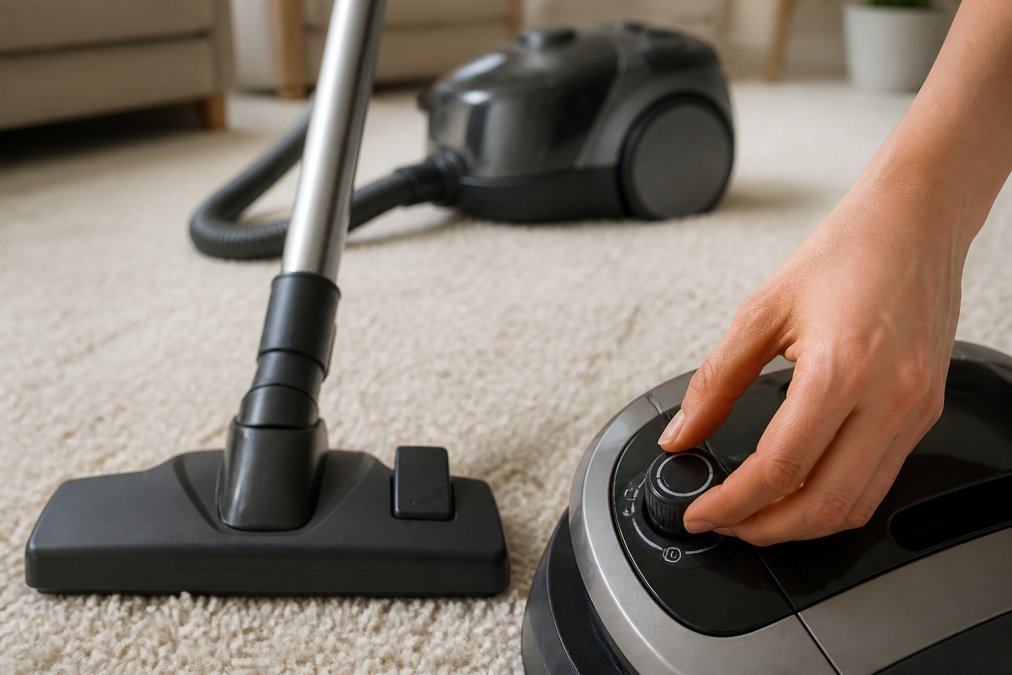
Table of Contents
- Why Vacuum Settings Matter After Professional Cleaning
- How Long to Wait Before Vacuuming After Carpet Cleaning
- Vacuum Height Settings for Different Carpet Types
- Adjustable Suction Power for Freshly Cleaned Carpets
- Best Vacuuming Techniques for Deep Cleaned Rugs
- Protecting Carpet Backing and Preventing Fibre Damage
- Maintenance Schedule to Extend Carpet Longevity
- Troubleshooting Suction Issues on Clean Carpets
- Frequently Asked Questions
Last Updated: September 1, 2026
Why Vacuum Settings Matter After Professional Cleaning
Professional cleaning removes embedded dirt, bacteria, and allergens that regular vacuuming can’t reach. Immediately after, your carpet is in a delicate state: fibres are freshly lifted, the pile is reset, and moisture is normalising. Wrong vacuum settings risk matting down fibres, reintroducing dirt, or damaging the carpet backing.
Adjusting your vacuum’s height, suction power, and technique takes minutes to learn and makes a measurable difference in how long your carpet stays clean.
How Long to Wait Before Vacuuming After Carpet Cleaning
Most professional carpet cleaning leaves fibres damp but not soaked, and you can safely vacuum after 24 hours (iicrc.org). Waiting 48 hours is better for maximum protection. Wet carpet fibres are soft and compress easily under vacuum pressure, flattening the pile and potentially trapping moisture deeper in the backing, which can lead to mildew or odour problems.
Press your palm firmly against the carpet in an inconspicuous spot. If moisture transfers to your hand, wait another 12-24 hours. If the carpet feels dry or just slightly cool, you’re safe to proceed with conservative vacuum settings.
Vacuum Height Settings for Different Carpet Types
The height adjustment is the single most important control after professional cleaning. The goal is surface contact without crushing the fibres. Professional cleaning temporarily lifts the pile, so your normal settings may be too aggressive.
Low-Pile and Saxony Carpets
Set your vacuum to the highest number or position marked for low pile, creating the smallest gap between the brush bar and carpet surface. You want light contact without digging in. One pass at the correct height will pick up loose debris; two passes is enough for high-traffic areas. Resist the urge to set the vacuum lower than normal during the first 48 hours when the pile is still soft.
High-Pile and Shag Carpets
Set your vacuum to the highest number (lowest suction and largest gap between brush and pile). Some vacuums have a “high pile” or “shag” setting specifically for this. Use slow, deliberate passes, speed creates more friction and suction, pulling the pile down. One slow pass per area is usually sufficient for freshly cleaned high-pile carpet.
High-pile carpets take 48-72 hours to dry completely (iicrc.org). Keep your vacuum on the highest setting during this entire period. Once the pile springs back when you run your hand across it, you can lower the height slightly, but avoid returning to your normal setting for at least a week.
Textured and Frieze Carpets
Set your vacuum to a mid-to-high position for the first 48 hours after cleaning. Alternate your direction by 45 degrees on each pass to prevent directional wear and matting, which happens faster on freshly lifted pile.
Adjustable Suction Power for Freshly Cleaned Carpets
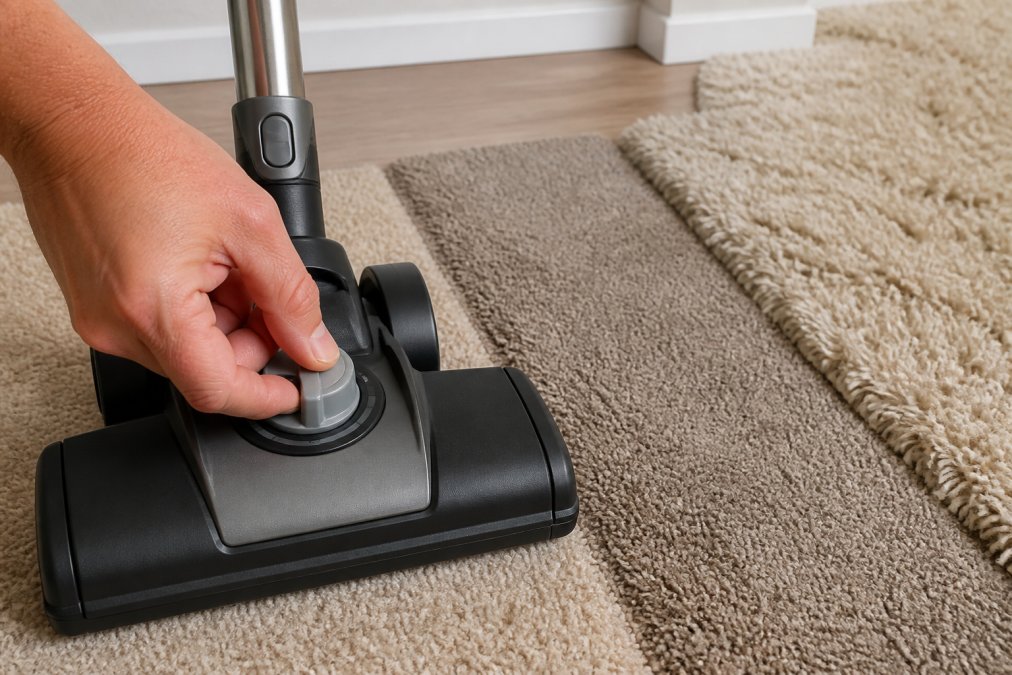
High suction creates powerful airflow that pulls hard on carpet fibres. On freshly cleaned, still-drying carpet, it can yank fibres, create premature matting, or pull moisture from deep in the pile back to the surface, extending drying time.
For the first 48 hours after professional cleaning, reduce suction to 60-70% of maximum (iicrc.org). This is enough to pick up loose debris without aggressive pulling. After 48 hours, when your carpet is mostly dry, increase suction to 80% of maximum. Reserve full suction for problem areas and periodic deep cleaning, not everyday use.
The interaction between height and suction matters: high setting with low suction gives gentle surface cleaning. For freshly cleaned carpets, keep both settings conservative. If your vacuum has a “carpet” versus “hard floor” mode, use carpet mode, which optimises for pile cleaning.
Best Vacuuming Techniques for Deep Cleaned Rugs
Vacuuming Pattern and Pass Speed
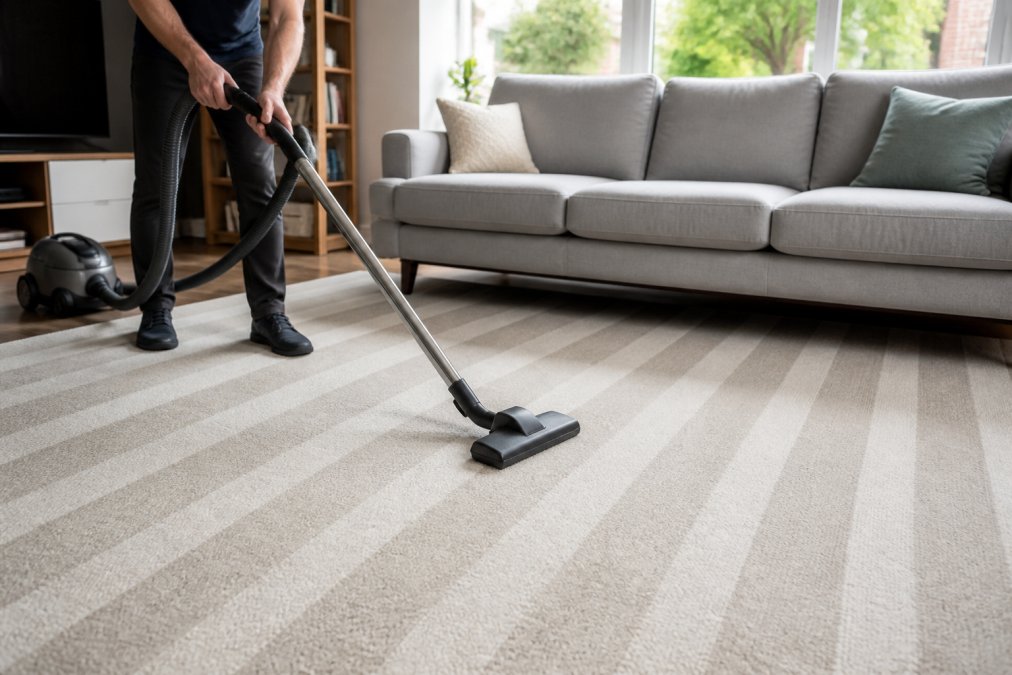
Overlap your passes by about 50% to ensure even coverage and prevent visible matting patterns. Move slowly, roughly one metre per second, the speed of a deliberate walk. Slow passes give the brush bar and suction time to work effectively and reduce mechanical stress on damp fibres.
Vacuum in straight lines. Pick a direction and maintain it across the room to create consistent fibre direction. After completing one full pass in one direction, you can do a second pass perpendicular to the first. For freshly cleaned carpet, one pass per direction is usually enough; two full passes is the maximum recommended in the first 48 hours.
High-Traffic Areas and Debris Extraction
One additional slow pass over high-traffic areas is acceptable. If you notice visible debris, do a second pass. Avoid the temptation to keep vacuuming until the area looks perfect, freshly cleaned carpet will have some loose fibres and dust from the cleaning process itself, which is normal.
If you find stubborn debris, reduce the height setting slightly and do another slow pass rather than increasing suction. Lower height with moderate suction is more effective and gentler on damp fibres.
Always vacuum toward doorways and open areas where the vacuum can easily capture loose material. Vacuuming away from open areas traps debris in the carpet and requires additional passes.
Protecting Carpet Backing and Preventing Fibre Damage
Professional cleaning temporarily saturates the backing. Vacuuming too aggressively before it’s fully dry risks pulling fibres loose or creating weak spots.
Heavier vacuums create more downward pressure on the pile and backing. Use extra caution with an upright on freshly cleaned carpet. Canister vacuums offer better manoeuvrability and slightly less weight concentration.
Avoid aggressive brush bar contact with the carpet backing by maintaining conservative height settings. The brush bar should contact the pile, not the backing. Minimise friction by using gentle forward passes only, rather than pushing and pulling repeatedly over the same area.
Pet owners should keep pets off the carpet for the first 24 hours and use conservative vacuum settings even after that period.
Maintenance Schedule to Extend Carpet Longevity
Professional carpet cleaning typically lasts 4-6 months. Your vacuuming habits between professional cleanings determine whether you get closer to 4 months or 6 months.
In the week after professional cleaning, vacuum twice per week with conservative settings. This removes loose fibres and surface dirt before it gets trampled into the pile. After the first week, return to your normal schedule, usually once or twice per week depending on foot traffic.
High-traffic areas benefit from three times per week vacuuming to prevent dirt accumulation. Vacuuming at least once per week is the minimum to maintain carpet health. More frequent gentle vacuuming is better than less frequent aggressive vacuuming.
Vacuums with adjustable suction and height settings give you finer control and reduce accidental damage. Schedule professional cleaning from Carpet Cleaning In Stockport every 6 months for normal household use, or every 3-4 months if you have pets or high traffic.
Troubleshooting Suction Issues on Clean Carpets
If your vacuum feels weak immediately after professional cleaning, check that your height setting isn’t too high. Lowering the height slightly often restores suction feel without being aggressive on damp pile.
Dampness affects suction feel. Wet carpet fibres don’t resist the brush bar as much, so the vacuum feels less effective even though it’s working normally. This is another reason to wait 24-48 hours before vacuuming.
Dustbags and filters clog faster on freshly cleaned carpet because there’s more loose debris. If suction drops noticeably, check your dustbag or filter. Empty the bag or rinse the filter and suction will return.
If your vacuum pulls up moisture from freshly cleaned carpet, reduce suction immediately and wait another 24 hours before vacuuming. Pulling moisture back up delays drying and can create odour problems.
If suction remains weak after adjusting height and checking your bag or filter, check for a clogged hose or intake. Disconnect the hose and look through it toward a light. If you can’t see light, clear the blockage.
After professional carpet cleaning, your vacuum settings are your first line of defence against undoing that investment. Waiting 24-48 hours before vacuuming, using conservative height and suction settings, and following proper technique protects your carpet’s appearance and extends the time between professional cleanings.
Carpet Cleaning In Stockport’s deep-cleaning process removes embedded dirt, bacteria, and allergens that regular vacuuming can’t reach. Pair that professional cleaning with smart vacuuming habits, and your carpet will look fresh and feel healthier for months.
Frequently Asked Questions
How long should I wait before vacuuming after professional carpet cleaning?
Most professionals recommend waiting 24 hours after carpet cleaning before vacuuming. This allows the carpet fibres to dry completely and the cleaning solution to be fully extracted. Vacuuming too soon can damage damp fibres and disrupt the cleaning process. If your carpet feels damp after 24 hours, wait longer. Professional services typically dry carpets quickly, but humidity and carpet thickness affect drying time. Check with your cleaning provider for their specific recommendations.
What vacuum height setting is best for freshly cleaned carpets?
Set your vacuum to the highest position initially after professional cleaning to avoid putting pressure on damp or recovering fibres. For low-pile carpets, use a mid-to-high setting. For high-pile and shag carpets, always use the highest setting to prevent crushing recovered fibres. Once carpets are completely dry (typically 24-48 hours), gradually lower the height to match your carpet pile depth. The brush should just barely touch the surface without flattening the fibres.
Should I use the brush roll or suction-only mode on freshly cleaned carpets?
For the first week after professional cleaning, use suction-only mode if your vacuum has this option. This minimises agitation and prevents unnecessary fibre disturbance while the carpet recovers. The brush roll can be reintroduced once carpets are fully dry and recovered. On subsequent cleanings, use the brush roll on low-pile carpets for deep cleaning, but switch to suction-only on high-pile and shag carpets to avoid fibre damage and matting.
Can vacuuming too soon after professional cleaning ruin the results?
Yes, vacuuming immediately after professional cleaning can disrupt the cleaning process and damage damp fibres. Wet or damp carpet fibres are more fragile and susceptible to permanent distortion from brush roll agitation. Premature vacuuming can also pull up loosened dirt that hasn’t fully been extracted. Additionally, moisture combined with aggressive vacuuming can create matting or pilling on the carpet surface. Waiting the recommended 24 hours protects your investment and preserves the professional clean.
This article was written using GrandRanker