Table of Contents
- Why Carpets Smell After Cleaning
- How to Dry Carpet Fast After Cleaning
- Understanding Carpet Cleaning Drying Time
- Why Do Carpets Get Crunchy After Cleaning
- Preventing Odors After Professional Cleaning
- Health Risks of Damp Carpets
- Conclusion
Last Updated: August 28, 2026
Why Carpets Smell After Cleaning
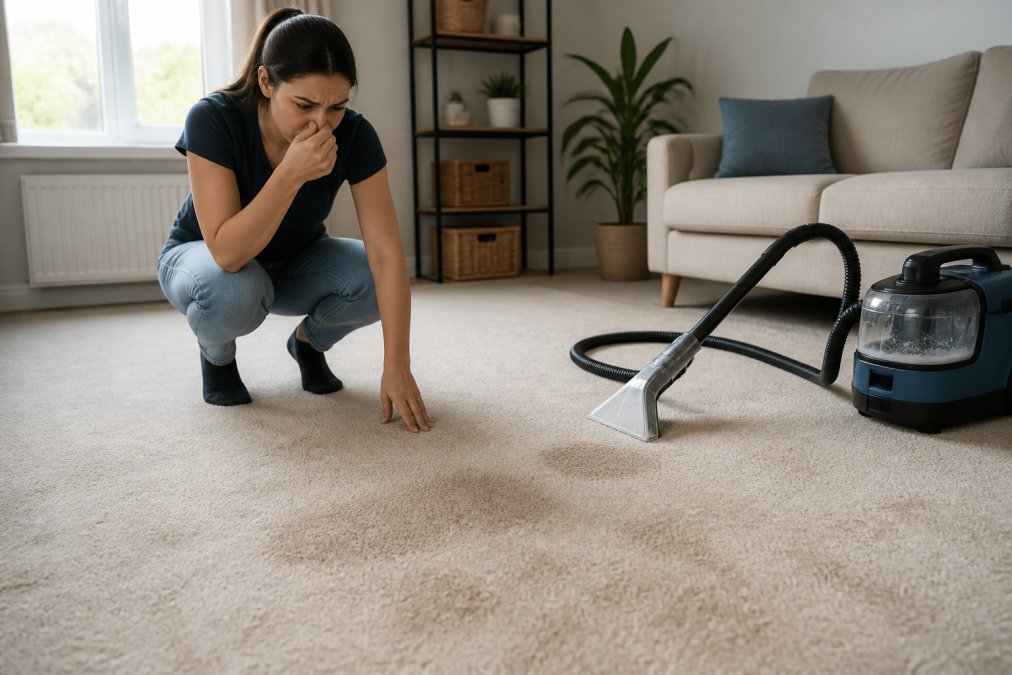
Carpets smell after cleaning because moisture becomes trapped in the fibres and underlay, creating the perfect environment for bacterial growth and mildew. This isn’t a sign the cleaning failed, it’s a physics problem. When water saturates carpet fibres and the backing doesn’t dry quickly enough, the smell develops within hours or days. We’ve identified the core culprits behind post-cleaning odours and the practical solutions that eliminate them.
Trapped Moisture and Dampness
Moisture retention is the primary cause of musty odours in recently cleaned carpets. When water is injected during cleaning, it must be extracted and dried thoroughly. If dampness lingers beyond 24 hours, bacteria begin to proliferate. The problem intensifies when carpet backing and underlay stay saturated, as these layers absorb water like a sponge.
Professional-grade extraction equipment removes significantly more moisture than rental machines, reducing drying time to 4-8 hours rather than 24-48 hours (peer-reviewed research). Airflow and humidity levels directly affect drying speed, a room with poor ventilation and high humidity will trap moisture for days.
Mold and Mildew Growth
Mold spores and mildew thrive in damp environments. When carpet remains wet, these microorganisms colonise the fibres and underlay, producing the characteristic musty smell. This is a hygiene concern: mold growth releases allergens and can trigger respiratory issues, particularly in households with young children, elderly relatives, or people with asthma.
Mould can begin to establish within 24-48 hours of moisture exposure (the CDC). By day three or four, the smell becomes noticeable and harder to reverse. Professional-grade equipment prevents this by extracting enough water that drying completes before mould colonisation begins. Wool and natural fibres are more vulnerable than synthetics because they absorb more water and take longer to dry.
Detergent Residue and Chemical Sensitivity
Cleaning solutions leave residue if rinsing is incomplete. This residue traps moisture and creates a sticky surface that feels uncomfortable underfoot. The chemical smell itself can linger for days if extraction isn’t thorough enough.
Detergent residue also reactivates dirt, once the carpet dries, dust and particles stick to the residual surfactant, making the carpet look dirty again within days. Professional cleaning services rinse multiple times to remove residue. Rental machines typically have weaker rinsing cycles, which is why DIY cleaning often leaves this problem behind.
Reactivated Pet Urine and Stains
Pet urine odours can return after cleaning if the stain wasn’t fully removed during the cleaning process. Urine soaks deep into carpet fibres, the underlay, and sometimes the subfloor. Standard cleaning may remove the surface stain, but if deeper layers retain urine, moisture from the cleaning process reactivates that smell.
Enzymatic cleaners break down the uric acid crystals in pet urine, addressing the root cause rather than just masking the odour. However, if enzymatic treatment wasn’t applied before hot water extraction, the cleaning process alone won’t eliminate the smell permanently. Professional services that specialise in pet odour removal use enzyme treatments as a separate step before extraction.
Underlay and Padding Saturation
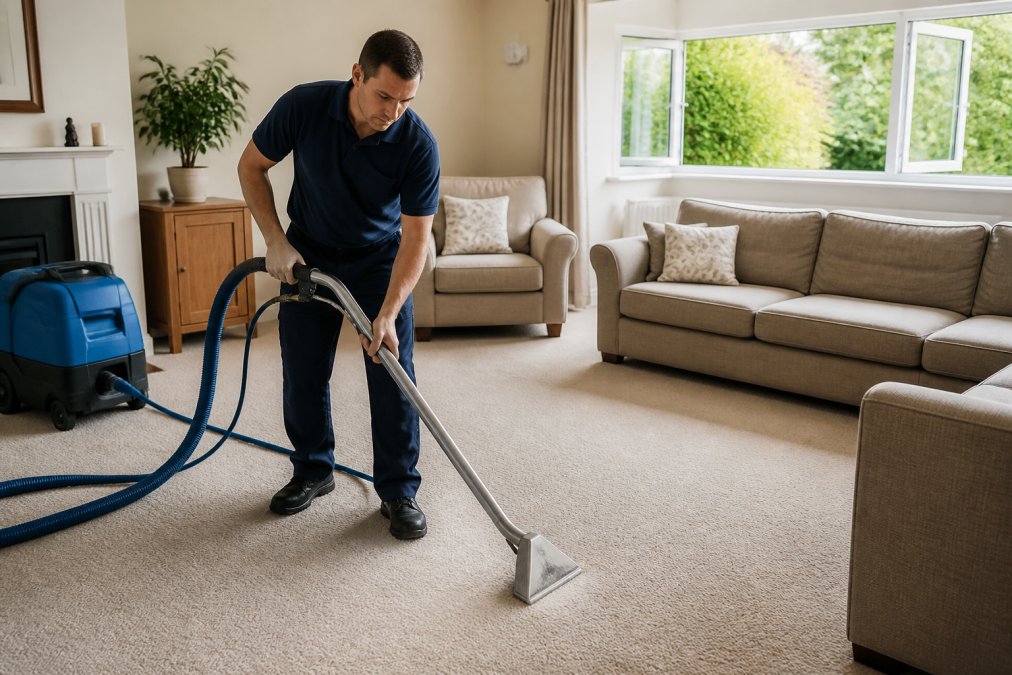
Carpet underlay and padding sit beneath the visible fibres and absorb significant amounts of water during cleaning. This layer dries much more slowly than the carpet itself. Even if the surface feels dry, the padding underneath remains damp, and odours develop from moisture trapped in that layer.
Some carpet types have attached padding that cannot be separated, making drying even more challenging. Professional equipment applies powerful suction to extract water from the padding, but if the room lacks airflow, the padding will still take 24+ hours to dry completely. In severe cases, saturated padding requires the carpet to be lifted and dried from underneath.
How to Dry Carpet Fast After Cleaning
The speed at which your carpet dries determines whether odours develop. Fast drying prevents mould growth, bacterial proliferation, and the musty smell that makes a recently cleaned carpet feel worse than before.
Increase Air Circulation
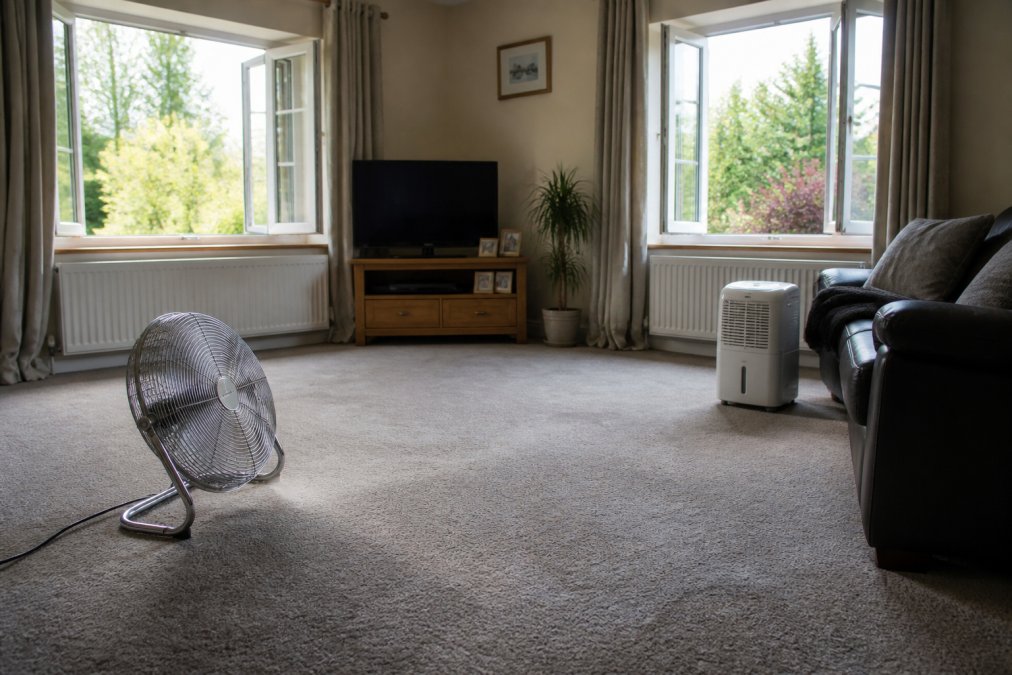
Open all windows and doors to create cross-ventilation. This is the single most effective step you can take immediately after cleaning. Air movement carries moisture away from the carpet surface and prevents it from being reabsorbed.
Position fans to push air across the carpet rather than in a single direction. Ceiling fans should be set to push air downward. Portable fans work best when angled low, moving air horizontally across the wet carpet. Keep doors open between rooms to allow air to flow throughout the property. If you have an extractor fan in a bathroom or kitchen, run it to pull damp air out of the house.
Weather matters. Drying is fastest on dry, warm days with low humidity. Avoid cleaning carpets on damp or humid days if possible.
Use a Dehumidifier
A dehumidifier removes moisture from the air, which accelerates carpet drying. This is particularly important in humid climates or during seasons when natural ventilation isn’t sufficient. Place the dehumidifier in the room with the wet carpet and keep doors closed to trap the dry air.
Combining a dehumidifier with open windows and fans produces the fastest drying times. The dehumidifier removes moisture from the air, fans move that dry air across the carpet, and open windows prevent humidity from building up again.
Extract Moisture Thoroughly
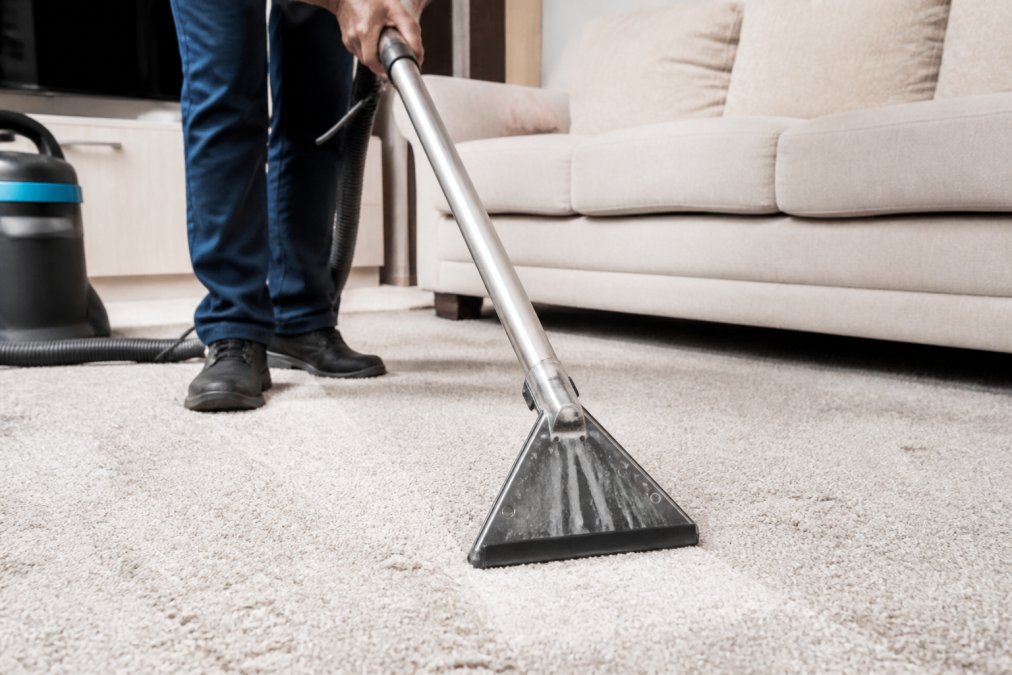
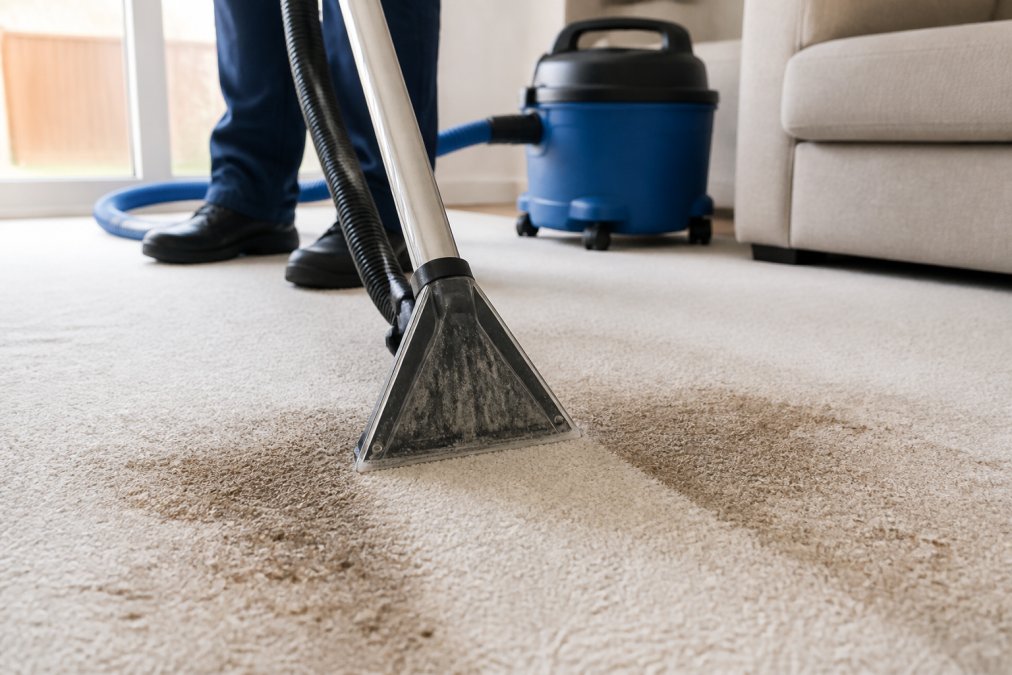
Professional extraction equipment removes far more water than rental machines. High-powered suction pulls water from deep within carpet fibres and the underlay, reducing drying time significantly. Carpets cleaned by professionals typically dry in 4-8 hours, while DIY-cleaned carpets often take 24-48 hours.
If you’ve used a rental machine, consider hiring professionals for a second pass with commercial-grade equipment. This prevents days of damp carpet and the odours that develop during that time. The extraction process matters more than the cleaning solution, a thorough rinse followed by powerful suction removes both water and detergent residue.
Understanding Carpet Cleaning Drying Time
Drying time varies based on several factors. Professional carpet cleaning drying time differs significantly from DIY methods.
Factors That Affect Drying Speed
Carpet material is the primary factor. Synthetic fibres like polyester and polypropylene dry faster than natural fibres like wool. Thick carpets with dense pile take longer to dry than low-pile carpets.
Underlay type affects drying dramatically. Rubber crumb underlay dries faster than felt or memory foam padding. Humidity and temperature influence evaporation rates, warm, dry air accelerates drying while cold, humid air slows it significantly. Winter cleaning in a poorly ventilated room can extend drying time to 48+ hours.
Ventilation and airflow are controllable factors. Rooms with poor airflow, no windows, and closed doors dry much more slowly than well-ventilated spaces.
Professional vs. DIY Equipment Limitations
Rental carpet cleaning machines extract approximately 50-60% of the water from carpet (peer-reviewed research). Professional equipment extracts 70-85% of the water. This difference translates directly to drying time and odour prevention.
Professional equipment also applies more consistent pressure and suction. Rental machines require operator skill to use effectively, and most people don’t apply sufficient pressure or make enough passes to achieve optimal extraction. DIY cleaning also tends to over-saturate carpet because rental machines allow users to apply too much water. Professional technicians calibrate water application to match extraction capacity, preventing over-wetting.
Why Do Carpets Get Crunchy After Cleaning
A crunchy, stiff feeling after carpet cleaning usually indicates detergent residue or incomplete rinsing.
Detergent Residue Buildup
Cleaning solutions contain surfactants that break down dirt and oils. If these surfactants aren’t completely rinsed away, they dry on the carpet fibres and create a stiff, waxy coating. This coating feels crunchy when you walk on it and traps dirt, making the carpet look dirty again within days.
The problem is worse with rental machines because they have weaker rinsing cycles. Professional equipment applies multiple rinses with high-pressure extraction, removing residue thoroughly. Using too much detergent exacerbates the problem, more detergent requires more rinsing to remove completely.
Underlay and Padding Saturation
When padding absorbs excessive water and dries while still saturated, it can become stiff and compressed. This affects the feel of the carpet above it. The padding loses its cushioning, and the carpet feels hard underfoot.
This typically resolves as the padding fully dries and regains its original texture. However, if the padding was over-saturated or if drying conditions are poor, it may take several days to fully recover. Preventing this requires controlling water application during cleaning and ensuring rapid drying afterward.
Preventing Odours After Professional Cleaning
Choosing the right professional cleaning service and ensuring proper technique prevents post-cleaning odours.
Choose Appropriate Cleaning Methods for Your Carpet Type
Different carpet materials require different cleaning approaches. Wool carpets need gentler cleaning than synthetic fibres. Hot water extraction works well for most carpets but can damage certain types if water temperature or pressure isn’t carefully controlled.
Professional services assess carpet type before cleaning and adjust their method accordingly. Pet-stained carpets require enzymatic treatment before standard cleaning. This step breaks down urine compounds at the molecular level, preventing reactivation during cleaning.
Ensure Proper Rinsing and Extraction
Request that your professional cleaner make multiple rinsing passes. A single rinse leaves detergent residue; multiple rinses remove it completely. Ask about extraction power, higher suction removes more water, reducing drying time and preventing odours.
Confirm that they’ll leave fans running or recommend fans for after-cleaning drying. A service that doesn’t address drying is prioritising speed over results.
At Carpet Cleaning In Stockport, we use advanced equipment and family-friendly, pet-safe cleaning solutions specifically designed to remove dirt, stains, bacteria, and allergens whilst ensuring fast drying times. Our process includes multiple rinses to eliminate detergent residue and professional-grade extraction to remove moisture thoroughly, preventing the musty odours that develop when carpets dry slowly.
Health Risks of Damp Carpets
Damp carpets pose genuine health risks beyond discomfort. Moisture-related problems in carpet create environments where harmful microorganisms thrive.
Mould growth releases spores into the air. Inhaling these spores triggers allergic reactions, asthma attacks, and respiratory irritation. People with existing respiratory conditions, young children, and elderly relatives are most vulnerable. Bacteria proliferate in damp environments, and dust mites thrive in damp conditions, producing allergens that accumulate in carpet fibres.
The longer a carpet remains damp, the greater the health risk. Carpets that dry within 12 hours rarely develop significant mould or bacterial populations. Carpets that remain damp for 24+ hours develop visible mould and substantial bacterial colonies. For households with health-conscious priorities or vulnerable individuals, professional carpet cleaning with fast drying times is an investment in health.
Post-cleaning carpet odours stem from trapped moisture, incomplete rinsing, and the biological growth that follows. The solution is ensuring rapid, thorough drying and professional-grade extraction that removes water and detergent residue completely. When you choose professional carpet cleaning with attention to drying, you eliminate the problem before it starts. Carpet Cleaning In Stockport’s deep-cleaning process removes hidden contaminants and uses advanced extraction equipment to ensure carpets dry quickly, leaving your home fresher and healthier without the musty smell that plagues DIY cleaning.
Frequently Asked Questions
Q: Is it normal for carpet to smell after cleaning?
A: A slight odour immediately after cleaning is common and usually fades within 24 to 48 hours. However, a persistent musty smell suggests trapped moisture, mold growth, or detergent residue. This indicates the carpet wasn't dried sufficiently or the cleaning solution wasn't fully rinsed out. Professional carpet cleaning should eliminate odours rather than create them. If the smell persists beyond two days, ventilation, dehumidifiers, and proper extraction are needed to resolve it.
Q: How long does it take for carpet to stop smelling after cleaning?
A: Drying time depends on humidity, airflow, and extraction efficiency. Most carpets dry within 4 to 8 hours with proper ventilation and dehumidification. Professional hot water extraction removes more moisture than DIY rental machines, reducing drying time to 6 to 12 hours. Poor air circulation, high humidity, or inadequate extraction can extend drying to 24 to 48 hours or longer. Opening windows, using fans, and running a dehumidifier accelerates the process significantly.
Q: Why do carpets get crunchy after cleaning?
A: Crunchy texture results from detergent residue, mineral deposits, or incomplete rinsing. When cleaning solutions aren't fully extracted, they crystallise as the carpet dries, creating a stiff, sticky feel. This also makes carpets attract dirt faster. Professional equipment with thorough rinsing prevents this. Additionally, over-wetting without adequate extraction can leave surfactant buildup in carpet fibres and underlay, causing the crunchy sensation and musty odours that persist even after drying.
Q: Can pet urine smell return after professional cleaning?
A: Pet urine odours can reactivate if the urine has penetrated the underlay or padding beneath the carpet. Standard cleaning may remove surface stains but miss the source. Enzymatic cleaners break down uric acid crystals that cause recurring smells. Professional deep cleaning with extraction reaches deeper layers, but stubborn cases may require underlay replacement. Identifying all affected areas before cleaning prevents reactivation. Using pet-safe enzymatic treatments during cleaning ensures odours don't return.
This article was written using GrandRanker