Table of Contents
- What Commercial Carpet Cleaning Costs Depend On
- Office Carpet Cleaning Prices Per Square Metre
- Pricing Models for Commercial Cleaning
- Commercial Carpet Cleaning Frequency and Budget Planning
- Hot Water Extraction vs. Dry Cleaning Methods
- How to Choose a Commercial Carpet Cleaner
- Hidden Costs and What to Expect
- Conclusion
- Frequently Asked Questions
Last Updated: September 3, 2026
What Commercial Carpet Cleaning Costs Depend On
Commercial carpet cleaning isn’t a one-size-fits-all service. The price you’ll pay depends on several interconnected factors that vary significantly between businesses. Understanding what drives costs helps you budget accurately and avoid nasty surprises when the invoice arrives.
The primary cost drivers are carpet area (measured in square metres), cleaning method, carpet condition, and frequency of service. A small office with light foot traffic costs far less to maintain than a busy retail space or restaurant with persistent staining. Drying time also matters, some methods dry faster than others, which directly impacts how long your business disruption lasts.
Carpet type plays a crucial role. Natural fibres like wool respond differently to cleaning solutions than synthetic materials. High-traffic commercial premises often have different carpet specifications than residential spaces, and those differences affect both the method used and the time required. Similarly, the extent of pre-treatment needed, whether you’re dealing with light dust or embedded soil and stains, directly influences labour costs.
Location and accessibility affect pricing too. A ground-floor retail unit is cheaper to service than a carpeted office on the fifth floor. Equipment access, parking availability, and the number of stairs or lifts technicians must navigate all contribute to the final quote. Finally, your cleaning frequency and contract terms matter. Regular maintenance contracts typically cost less per visit than emergency deep cleans, because technicians can work more efficiently on well-maintained carpets.
Office Carpet Cleaning Prices Per Square Metre
When comparing commercial carpet cleaning cost quotes, pricing per square metre gives you a standard benchmark. However, this figure varies considerably based on the factors above, so understanding the range helps you evaluate whether a quote is reasonable.
Most professional commercial carpet cleaning services charge within a range that reflects the cleaning method, carpet condition, and local market rates. The cost per square metre typically reflects labour, equipment use, cleaning solutions, and drying time. Simpler methods on lightly soiled carpet cost less than intensive deep cleaning on heavily stained, high-traffic areas.
Several pricing variables affect the per-square-metre rate. Pre-treatment for stubborn stains or odour neutralisation adds cost. If your carpet requires soil extraction or sanitisation beyond standard cleaning, expect to pay more. Conversely, regular maintenance cleaning, where carpet is cleaned before soil builds up significantly, often costs less per square metre than emergency restoration of neglected carpet.
The size of the area matters too. Cleaning 500 square metres costs less per square metre than cleaning 100 square metres, because fixed costs like equipment setup and travel are spread across a larger area. Smaller jobs have higher per-unit costs due to these overheads.
When you request a commercial carpet cleaning cost quote, ask for a breakdown by square metre plus any additional charges. This transparency helps you compare fairly between providers and understand where your money goes. Some companies bundle small areas into minimum call-out charges, which can affect the per-square-metre calculation on very small jobs.
Pricing Models for Commercial Cleaning
Commercial carpet cleaning services typically use three main pricing approaches: fixed pricing, hourly rates, and per-area charges. Each model suits different situations, and understanding the differences helps you choose the right contract structure for your business.
Fixed pricing works best for regular maintenance contracts. You agree on a set price for cleaning your carpet at a defined frequency, for example, monthly deep cleaning of your office space. Fixed contracts remove uncertainty and make budgeting straightforward. The cleaner knows exactly what they’re doing each visit, so they can work efficiently and predictably. This model rewards businesses that maintain consistent cleaning schedules.
Hourly rates apply when the scope is unpredictable or when you need ad-hoc cleaning. A technician charges for time on-site, which covers their labour and equipment use. This model works for emergency spillages, one-off deep cleans, or situations where the extent of cleaning needed isn’t clear until assessment. Hourly rates protect the cleaner from underpricing complex jobs, but they can be harder to budget for since you won’t know the final cost until work is complete.
Per-area pricing charges based on square metres cleaned, sometimes with a minimum call-out charge. This suits businesses with defined carpet areas and predictable cleaning needs. You pay for what you get, larger areas cost more, smaller areas cost less. This model is transparent and scalable, making it popular for commercial premises with multiple zones or varying cleaning requirements.
Many commercial cleaning contracts combine elements of these models. For instance, a contract might offer fixed monthly maintenance at a set price, with additional charges for stain removal or emergency callouts on an hourly basis. Understanding which model your provider uses, and what triggers additional charges, prevents billing surprises.
Commercial Carpet Cleaning Frequency and Budget Planning
How often you clean your commercial carpet directly affects both the condition of your floors and your annual cleaning budget. The right frequency depends on foot traffic, carpet type, and the nature of your business.
Light-traffic office spaces with professional environments typically need deep cleaning every 6 to 12 months, with regular vacuuming between visits (the CDC). Moderate-traffic commercial premises, such as most retail shops or service offices, benefit from quarterly deep cleaning (four times yearly) (the CDC). High-traffic areas like busy restaurants, cafes, or retail stores with heavy customer footfall may need monthly or even fortnightly deep cleaning to prevent soil buildup and maintain appearance.
Regular maintenance cleaning costs less per visit than emergency restoration. When you clean carpet before soil becomes embedded, technicians work faster and use gentler methods. Neglected carpet requires intensive soil extraction and longer drying times, which costs significantly more. This is why preventative maintenance schedules save money long-term, you’re spending modest amounts regularly instead of large sums on occasional emergency deep cleans.
Budget planning should account for both routine maintenance and occasional intensive cleaning. Set aside funds for quarterly or monthly cleaning based on your traffic patterns, then add a contingency for unexpected stains or spills. If your carpet experiences a major incident, water damage, significant staining, or odour issues, you may need emergency cleaning outside your regular schedule.
Contract cleaning arrangements often provide the best value for businesses with consistent needs. Providers typically offer discounts for regular contracts compared to one-off jobs, because they can schedule work efficiently and rely on steady income. Discuss your cleaning frequency and budget with potential providers; they can recommend an optimal schedule that balances appearance, hygiene, and cost.
Hot Water Extraction vs. Dry Cleaning Methods
The cleaning method used significantly impacts both cost and drying time. Understanding the differences between hot water extraction and dry cleaning helps you choose the right approach for your commercial premises.
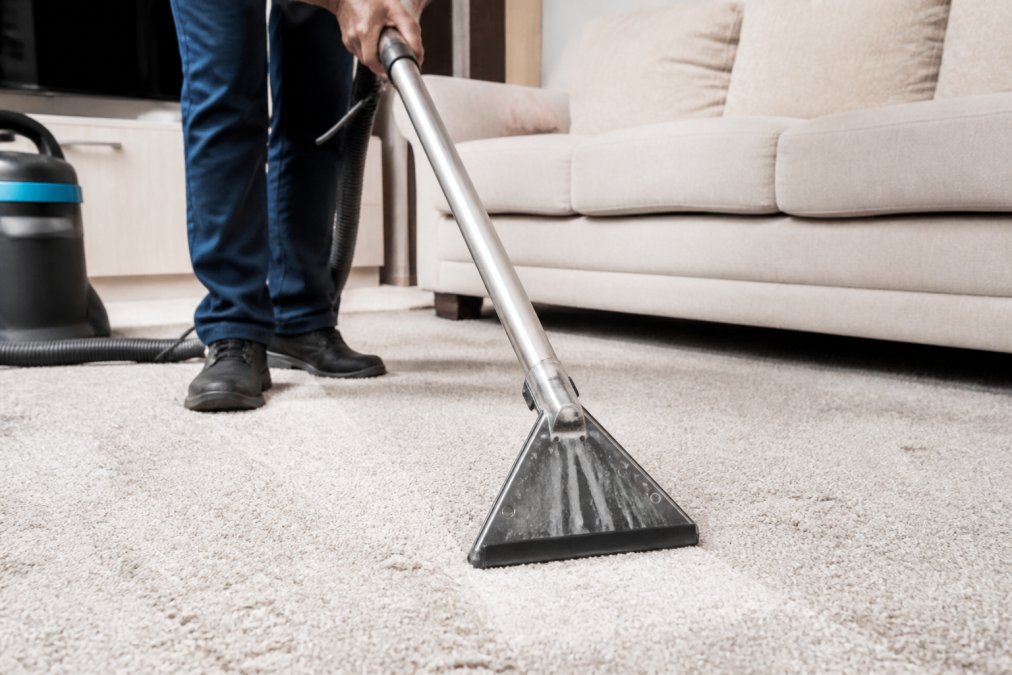
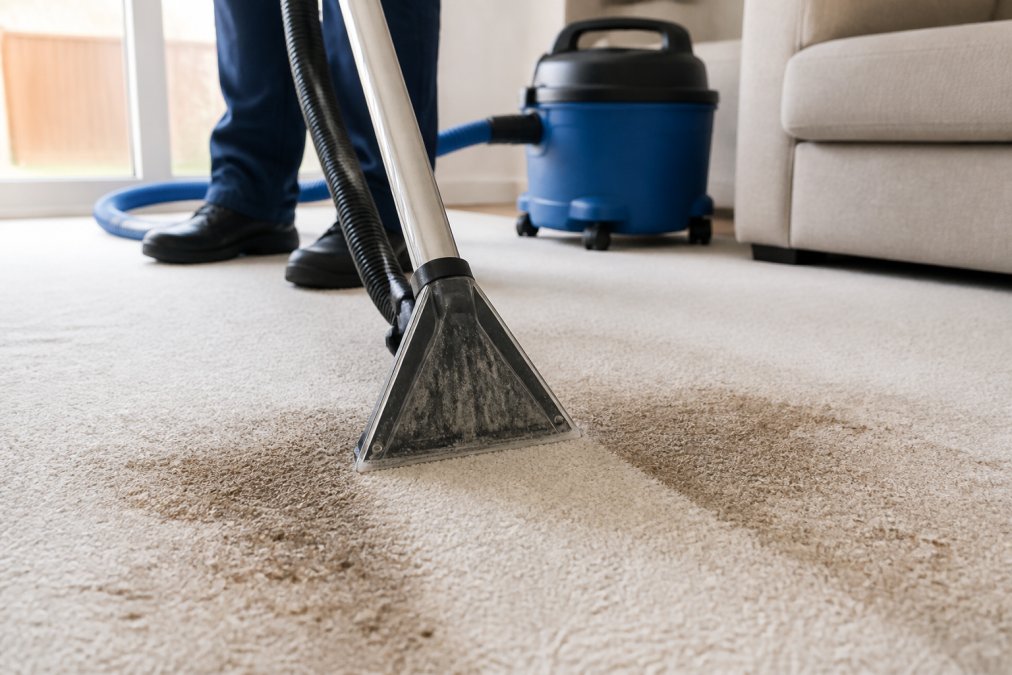
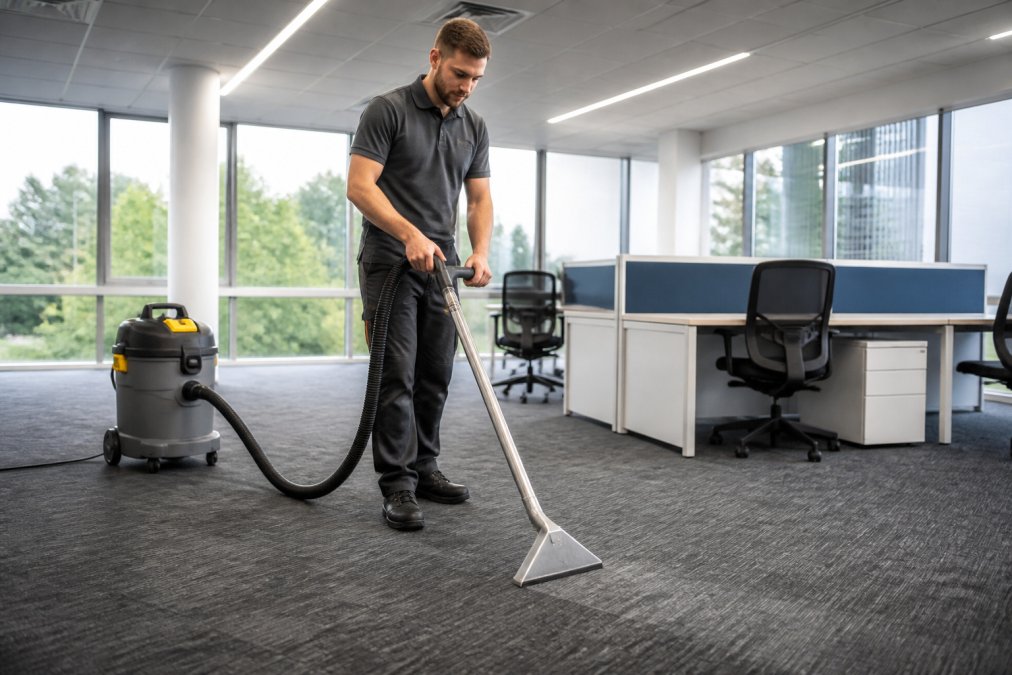
Hot water extraction (also called steam cleaning) is the most thorough method for deep cleaning commercial carpet. Technicians apply hot water mixed with cleaning solution to the carpet, then use powerful vacuum extraction to remove the moisture and soil. This method removes deep-seated dirt, bacteria, and allergens that sit below the surface. It’s particularly effective for high-traffic areas and carpet that hasn’t been professionally cleaned for some time.
The drawback is drying time. Hot water extraction typically requires 4 to 24 hours for carpet to dry fully, depending on humidity, ventilation, and carpet thickness (peer-reviewed research). For commercial premises, this means potential business disruption, customers or staff walking on damp carpet, or areas needing to be cordoned off. Some businesses schedule this method outside business hours or during quieter periods.
Dry carpet cleaning uses minimal moisture, allowing carpet to dry within 1 to 2 hours. Technicians apply a dry cleaning compound or foam to the carpet, work it in with brushes, then vacuum it away. This method suits businesses that can’t tolerate downtime and need carpet ready for use quickly. It’s ideal for regular maintenance cleaning, particularly in busy commercial environments.
Dry cleaning is gentler on carpet and doesn’t risk moisture-related issues like mildew or odour. However, it’s less intensive than hot water extraction, so it works best on regularly maintained carpet rather than heavily soiled carpet. For deep cleaning of neglected carpet, hot water extraction delivers better results. professional duct cleaning.
Many commercial cleaning providers recommend a hybrid approach: regular dry cleaning for maintenance, with periodic hot water extraction for deep cleaning. This balances cost, effectiveness, and business disruption. Ask your provider which method suits your carpet type and cleaning frequency.
How to Choose a Commercial Carpet Cleaner
Selecting the right carpet cleaning provider for your commercial premises requires evaluating several factors beyond just price. The cheapest option isn’t always the best value, particularly if it results in poor results, extended drying times, or damage to your carpet.
Start by checking credentials and experience. Look for providers with professional certifications and proven experience in commercial premises similar to yours. A cleaner who specialises in residential work may lack the equipment or expertise for heavy-duty commercial cleaning. Ask about their experience with your carpet type and any specific concerns, pet stains, food spills, high-traffic restoration, or allergen removal.
Insurance and liability matter significantly. A reputable commercial cleaning provider carries public liability insurance, protecting you if damage occurs during cleaning. Ask to see proof of insurance before booking. This protects both parties and signals a professional operation.
Equipment quality directly affects results and drying time. Industrial-grade equipment removes more soil and moisture than consumer-level machines, meaning faster drying and better deep cleaning. Ask what equipment they use, professional-standard machines are a good sign.
Transparency in pricing is essential. Request a detailed quote that breaks down costs by square metre, any minimum call-out charges, and additional fees for stain treatment or sanitisation. Avoid providers who can’t or won’t provide written quotes. A clear quote prevents billing surprises and lets you compare fairly between providers.
Ask about their cleaning solutions and methods. Professional providers should explain whether they use hot water extraction, dry cleaning, or a combination, and why they recommend that approach for your carpet. If you have concerns about chemical residue or pet-friendly solutions, discuss this upfront. At Carpet Cleaning In Stockport, we use family-friendly and pet-safe cleaning solutions that remove dirt, stains, bacteria, and allergens while maintaining carpet integrity.
Check reviews and references. Ask the provider for testimonials from similar commercial clients. Online reviews provide insight into reliability, professionalism, and quality. A provider with consistently positive feedback from commercial customers is a safer choice than one with mixed reviews or no track record.
Finally, discuss your cleaning frequency and budget. A good provider will recommend an appropriate maintenance schedule rather than pushing the most expensive option. They should help you balance appearance, hygiene, and cost, understanding that different businesses have different needs.
Hidden Costs and What to Expect
Beyond the base cleaning cost, several additional charges can appear on your invoice if you’re not aware of them. Understanding these potential extras helps you budget accurately and avoid surprises.
Minimum call-out charges are common, particularly for smaller jobs. If your carpet area is small or you’re in a remote location, providers may charge a minimum fee even if the actual cleaning time is brief. This covers their travel costs and equipment setup. Ask about minimum charges upfront so you can factor them into your budget.
Stain removal and pre-treatment often cost extra. If your carpet has stubborn stains, odours, or requires special treatment before the main clean, expect additional charges. Emergency stain removal, for fresh spills or accidents, may carry a premium, particularly if it’s outside regular business hours.
Drying time acceleration can incur extra costs. If you need carpet dry faster than the standard drying time, some providers offer additional dehumidification equipment or fans for an extra fee. This is worth considering if your business can’t tolerate extended downtime.
Travel costs vary by location. If you’re outside the provider’s usual service area, they may charge a travel surcharge. Some providers include travel in their base price for local areas, so clarify this when getting quotes.
Furniture moving is sometimes charged separately. If the cleaner needs to move desks, chairs, or other furniture to access carpet, ask whether this is included or charged extra. For large commercial spaces, this can add significantly to the cost.
Sanitisation and odour neutralisation beyond standard cleaning cost extra. If you need antimicrobial treatment, allergen removal, or odour elimination, these are typically add-ons priced separately.
Carpet protection treatments offer long-term value. After cleaning, a protective coating can help carpet resist staining and soil buildup, extending the time between deep cleans. This is optional but can reduce your long-term cleaning costs by improving carpet longevity.
When requesting a quote, ask the provider to itemise all potential charges. A transparent quote that lists base cleaning, any minimum charges, and optional extras lets you make an informed decision. Some providers bundle services differently, so comparing detailed quotes is more reliable than comparing headline prices.
Conclusion
Commercial carpet cleaning costs depend on area, cleaning method, carpet condition, and frequency, not a single fixed price. Understanding these factors helps you budget realistically and choose the right provider for your business needs. Whether you need light maintenance or intensive deep cleaning, the right approach balances cost, effectiveness, and minimal business disruption.
At Carpet Cleaning In Stockport, we provide professional deep cleaning that removes dirt, stains, bacteria, and allergens while restoring your carpet to its original quality. Our experienced technicians use advanced equipment and family-friendly, pet-safe cleaning solutions, with fast drying times to minimise disruption to your commercial premises. Get a detailed quote for your commercial carpet cleaning needs and discover how professional maintenance can extend your carpet’s lifespan and create a healthier workspace.
Frequently Asked Questions
How much does commercial carpet cleaning cost per square metre?
Commercial carpet cleaning cost per square metre varies based on carpet condition, cleaning method, and location. Pricing depends on whether you choose hot water extraction, dry cleaning, or steam cleaning, plus factors like soil level, stain removal requirements, and drying time. Request a service quote from a professional cleaner for an accurate figure tailored to your commercial premises.
How often should commercial carpets be professionally cleaned?
Commercial carpet cleaning frequency depends on foot traffic levels and business type. High-traffic office spaces typically benefit from deep cleaning every 3-6 months, whilst lower-traffic areas may need cleaning annually. Regular preventative maintenance between deep cleans extends carpet longevity and maintains a professional appearance. A professional can recommend a schedule based on your specific usage patterns.
What’s the difference between hot water extraction and dry carpet cleaning?
Hot water extraction uses pressurised water and cleaning solutions to remove soil and contaminants, offering thorough deep cleaning but requiring longer drying times. Dry carpet cleaning uses minimal moisture and special compounds, allowing faster drying and less business disruption. Hot water extraction is more effective for heavy soiling and sanitisation, whilst dry cleaning suits businesses needing minimal downtime.
What factors increase the cost of professional commercial carpet cleaning?
Several factors affect pricing: carpet condition and soil level, presence of stubborn stains requiring pre-treatment, carpet type and pile density, square footage of commercial premises, drying time requirements, and whether sanitisation or odour neutralisation is needed. Minimum call-out charges may apply, and high-traffic areas often cost more due to intensive industrial vacuuming and soil extraction requirements.
This article was written using GrandRanker