Table of Contents
- Why Carpet Gets Dirty Faster After You Clean It
- What You’ll Need for Spot Cleaning
- How to Spot Clean Carpet: A Step-by-Step Method
- Removing Soap Residue From Carpet
- Best Carpet Cleaning Solutions for Spot Removal
- Common Mistakes That Cause Sticky Carpet
- When to Call a Professional Carpet Cleaner
- Final Checklist for a Clean Carpet
- Frequently Asked Questions
Last Updated: September 9, 2026
Why Carpet Gets Dirty Faster After You Clean It
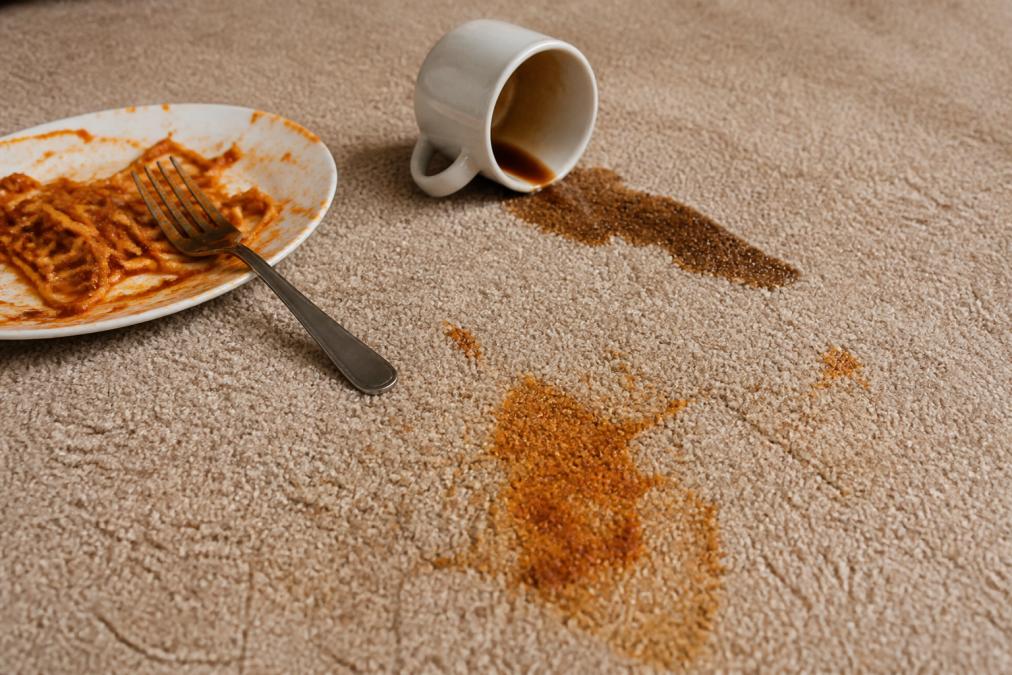
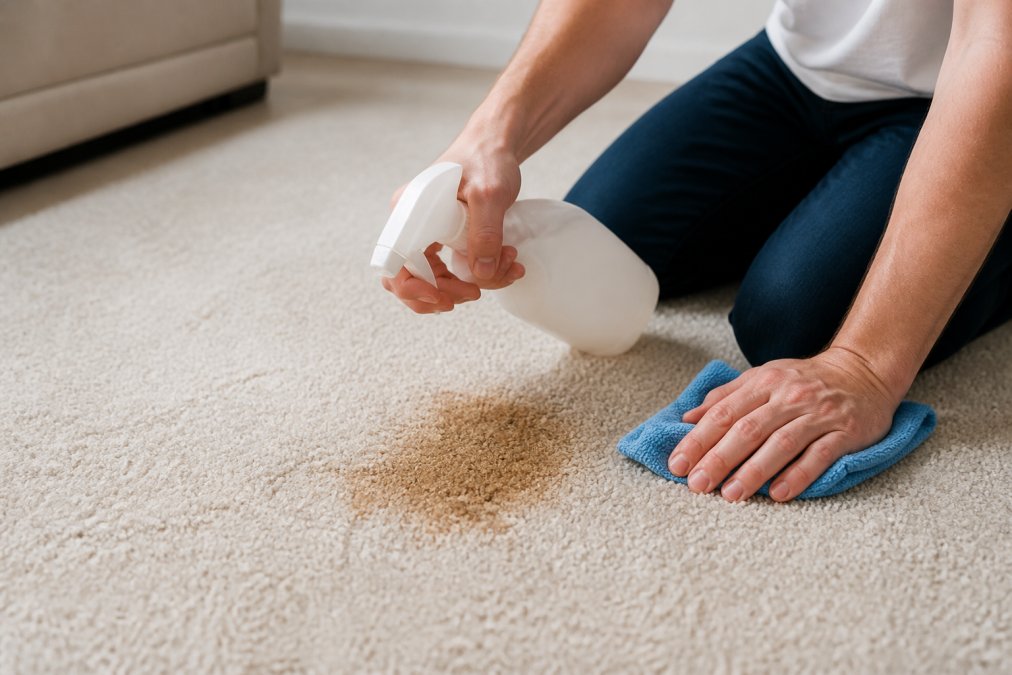
You scrub a fresh stain, watch the spot disappear, and feel satisfied. Then, within days, that exact area looks dirtier than the rest of the room. This frustrating cycle is a common complaint, and it usually has a single cause: leftover soap residue.
Spot cleaning carpet without attracting dirt is not about scrubbing harder. It is about removing the cleaning agent completely. Most household carpet shampoos and DIY solutions contain surfactants, molecules with a hydrophilic (water-loving) head and a hydrophobic (oil-loving) tail. When you apply them, the tails latch onto oily dirt while the heads keep the mixture suspended in water, allowing the stain to lift away. That is the intended action. The problem begins when you do not rinse thoroughly: surfactant molecules remain anchored to the carpet fibres, their hydrophobic tails pointing outward. That exposed tail is chemically sticky to airborne oils, dust, and foot-traffic grit. Every particle that crosses that patch adheres to the residue, creating a magnet for grime. The tackiness is not imagined, it is the surfactant actively bonding with new soil.
The problem is compounded by wicking, a physical process driven by capillary action. When you over-wet a carpet, moisture penetrates the pile and saturates the backing and underlay. As the surface dries, evaporation pulls moisture upward through the fibres, carrying dissolved salts, sugars, and fine particulate with it. That dissolved soil deposits at the fibre tips as the water evaporates, leaving a brownish discolouration that appears days later. This is why a spot that looked clean immediately after treatment can darken within 48 to 72 hours, the wicking cycle completes long after you have walked away.
There is also the pH factor. Many off-the-shelf cleaners are formulated alkaline (pH 8-10) to break down protein-based stains like food or sweat (cleanfax.com). Alkaline residues are hygroscopic, meaning they attract moisture from the air. A carpet left with alkaline residue does not just attract dirt, it attracts humidity, keeping the fibres damp and accelerating re-soiling. Acidic residues, such as those from vinegar used without rinsing, are less hygroscopic but can still leave a film that dulls the pile and attracts dust over time. The only way to break this cycle is to neutralise and flush the residue away, which the rinse protocol in this guide addresses directly.
Understanding these mechanisms changes how you approach spot cleaning. It is not enough to lift the visible stain; you must remove the chemistry you introduced. That is the difference between a carpet that stays clean for weeks and one that re-soils within days.
What You’ll Need for Spot Cleaning
Before you begin, gather the right tools. Using incorrect equipment causes more damage than the original stain.
- A vacuum cleaner with strong suction and a crevice tool
- Clean white microfibre cloths (never coloured, as dyes can transfer)
- A spray bottle filled with plain water for rinsing
- A soft-bristled brush for gentle agitation
- A dry towel or absorbent cloth for moisture extraction
- A small fan to speed up drying
Avoid paper towels, which break apart and leave lint in the carpet pile. Avoid brushes with stiff bristles, which fray natural fibres and distort synthetic ones.
How to Spot Clean Carpet: A Step-by-Step Method
The goal of any spot clean is to remove the stain and the cleaning agent, leaving the carpet as dry as possible. This method prioritises moisture extraction at every stage, which prevents residue build-up and wicking.
Step 1: Vacuum and Prepare the Area
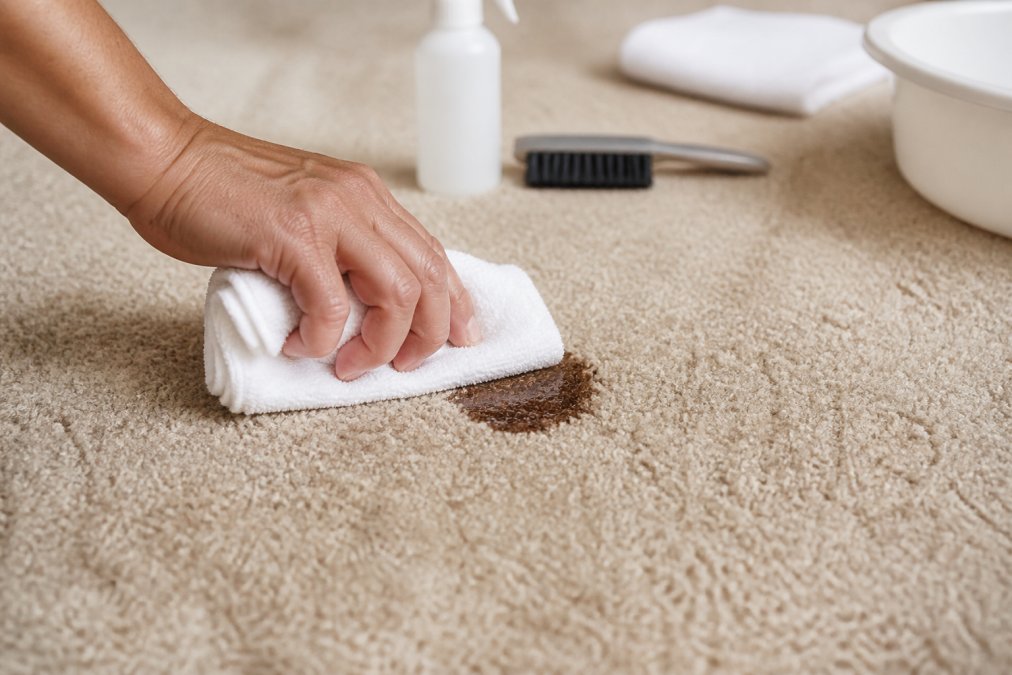
Start by vacuuming the stained area thoroughly. Loose dirt and grit act like sandpaper when you work on the stain, grinding fibres and spreading the mark. Use the crevice tool along edges and into the carpet pile.
If the spill is fresh, scrape up any solid matter with a blunt knife before vacuuming. Work from the outside of the stain toward the centre to prevent spreading.
Step 2: Blot, Don’t Rub
Apply your cleaning solution to the cloth, not directly to the carpet. Then press the cloth onto the stain and blot firmly. Rubbing twists the fibres, forces the stain deeper into the backing, and frays the pile. Blotting lifts the stain into the cloth through absorbency.
Keep blotting with clean sections of the cloth until no more stain transfers. This step requires patience. Most stains need ten to fifteen blots before they lift fully.
Removing Soap Residue From Carpet
Removing soap residue from carpet is the step most DIY guides skip, and it is the difference between a carpet that stays clean and one that attracts dirt within days.
After blotting the stain, rinse the area with plain water. Spray lightly, then blot again with a dry microfibre cloth. Repeat this rinse-and-blot cycle until the cloth comes away completely clean. This is called the rinse cycle, and it flushes out the surfactant residue left by your cleaning solution.
Test for residue by pressing a dry white cloth onto the cleaned area. If it feels tacky or picks up dirt when dry, you have not rinsed enough. Continue the rinse cycle until the carpet feels crisp, not sticky.
Skipping the rinse cycle is the number one cause of sticky carpet and rapid re-soiling. Cleaning agents left in the fibres attract dirt continuously, undoing your work within days.
Best Carpet Cleaning Solutions for Spot Removal
The best carpet cleaning solutions for spot removal depend on your fibre type and the nature of the stain. A mild solution of warm water and a few drops of pH-neutral detergent works for most synthetic carpets. The pH balance matters: alkaline cleaners break down protein stains but leave residue, while acidic solutions handle mineral deposits. However, the fibre composition of your carpet dictates which approach is safe and effective.
Synthetic Carpets (Nylon, Polyester, Polypropylene)
Synthetics are the most forgiving. Nylon is durable and responds well to pH-neutral detergents, but it is also the most prone to attracting dirt if residue remains, because its molecular structure holds onto surfactants tenaciously. Polyester and polypropylene are more stain-resistant but can be damaged by high-heat cleaning or harsh solvents. For general spot cleaning on synthetics, mix 1 teaspoon of a pH-neutral liquid detergent (such as a mild dish soap without degreasers or moisturisers) into 500 ml of lukewarm water. This dilution is weak enough to rinse out easily but strong enough to break the surface tension of most fresh stains. Always follow with a plain-water rinse cycle, synthetics release residue readily when flushed, but they also hold onto it stubbornly if left unrinsed.
Wool and Natural Fibres
Wool is the most demanding fibre. It is protein-based, so alkaline cleaners (pH above 8) break down its structure, causing shrinkage, brittleness, and a harsh feel. Wool also absorbs moisture more slowly than synthetics, which means over-wetting is a greater risk. Use a solution of 1 part white vinegar to 3 parts cool water for general spots, vinegar is mildly acidic (pH around 2.5), which is safe for wool when diluted, and it cuts through residue without leaving a sticky film. For heavier stains, choose a product explicitly labelled ‘wool-safe’ or ‘pH-neutral for natural fibres’. Avoid enzymatic cleaners on wool; the enzymes that break down protein stains can also attack the wool fibre itself. Test any solution on an inconspicuous area first, and blot, never saturate, wool, as it can take over 24 hours to dry fully in humid conditions.
Silk, Viscose, and Blends
Less common but worth knowing: silk and viscose carpets are highly sensitive to water. Water-based cleaning can cause shrinkage, colour bleeding, and a rough texture. For these fibres, dry cleaning solvents or foam cleaners designed for delicate textiles are safer. If you are unsure of your carpet’s composition, check the manufacturer’s label or the original documentation, using the wrong solution on a delicate fibre can void warranties and cause permanent damage.
Solution Comparison Table
| Solution Type | Best For | Key Consideration | Dilution Guideline |
|---|---|---|---|
| pH-neutral detergent | Synthetic carpets, general stains | Must be rinsed thoroughly | 1 tsp per 500 ml water |
| Vinegar and water | Deodorizing, mild stains, wool | Safe for most fibres, test first | 1 part vinegar to 3 parts water |
| Enzymatic cleaner | Pet stains, organic matter | Needs dwell time; avoid on wool | Follow label instructions |
| Wool-safe cleaner | Natural fibre carpets | Avoid alkaline formulas | Follow label instructions |
| Dry solvent | Silk, viscose, delicate blends | Minimal water contact | Apply sparingly, blot immediately |
The Role of Solvents and Additives
For oil-based stains (grease, cosmetics, shoe polish), water-based solutions will not work. Use a solvent-based spot cleaner or isopropyl alcohol diluted 1:1 with water, applied sparingly and blotted quickly. Solvents evaporate faster than water, reducing the risk of wicking, but they can damage certain fibres, particularly acetate and triacetate, so test first. Avoid fabric softeners, bleach, or ammonia-based products; these leave residues that attract dirt or discolour fibres. If you are using a commercial spot cleaner, check the label for ‘no-residue’ or ‘rinse-free’ claims, these products are formulated to evaporate without leaving surfactants behind, making them a safer choice for quick touch-ups.
A Note on Homemade Solutions
Baking soda paste is a popular DIY option for absorbing odours, but it is abrasive and can leave a white residue in dark carpets if not vacuumed thoroughly. Salt is effective on fresh red wine spills because it absorbs moisture, but it must be vacuumed completely once dry. Neither should replace a proper rinse protocol, they are pre-treatments, not cleaners. The most reliable homemade solution remains the vinegar-water mix for mild stains and the pH-neutral detergent dilution for tougher marks, both followed by a thorough plain-water rinse.
Common Mistakes That Cause Sticky Carpet
Several habits turn a routine spot clean into a recurring dirt problem. Over-wetting tops the list. When you saturate the carpet, moisture penetrates the backing and underlay, and the drying time stretches to days. This invites mildew and causes wicking.
Scrubbing instead of blotting is another frequent error. It damages the carpet pile and spreads the stain. Using too much cleaning solution is equally problematic, as more product means more residue to rinse away. A common mistake is assuming that if a little cleaner works, more works better. The opposite is true for carpets.
Skipping the final dry pass also causes trouble. After rinsing, press a dry towel over the area to extract as much moisture as possible. This step significantly shortens drying time and prevents browning.
When to Call a Professional Carpet Cleaner
Some situations call for equipment and expertise beyond what a spray bottle can provide. Deep-set stains that have penetrated the backing, pet urine that has soaked into the underlay, and widespread re-soiling across high-traffic areas all benefit from professional attention.
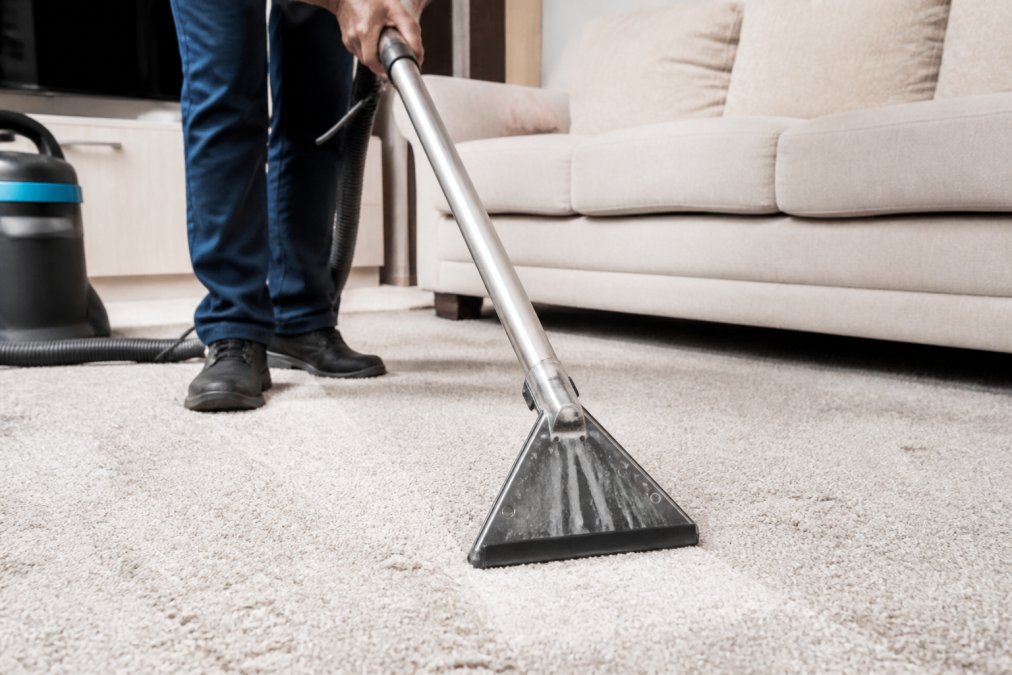
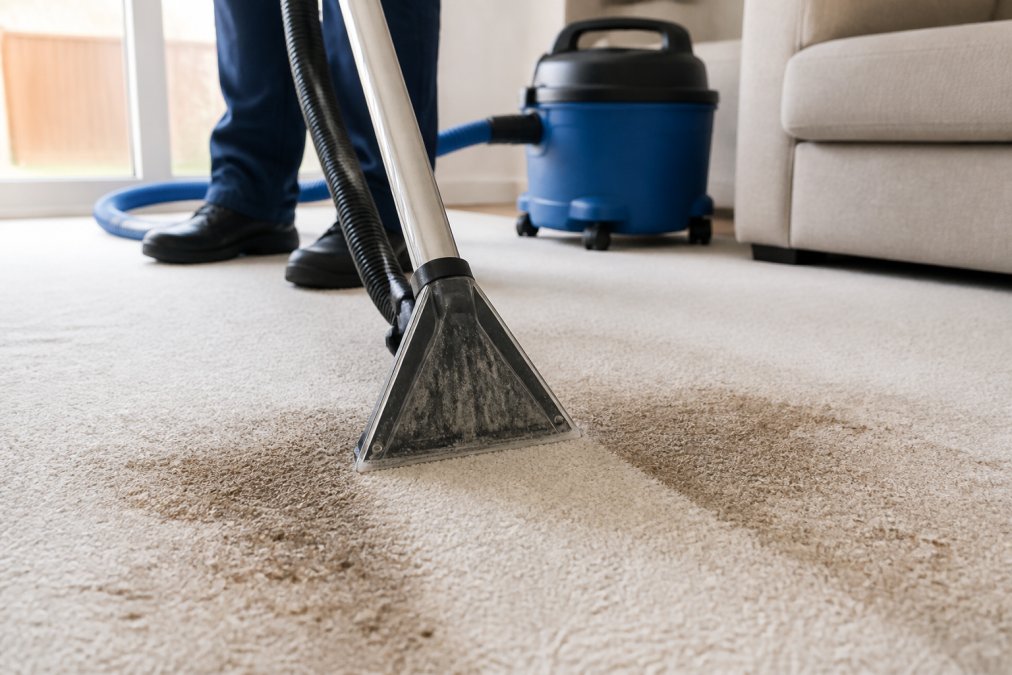
Professional units use hot water extraction with powerful suction, which flushes cleaning agents and dissolved soil from deep within the carpet pile (carpet-rug.org). Rental machines often lack the suction strength to remove the water they inject, leaving carpets damp for days. This is why many people report that their carpet stayed wet and smelled musty after a DIY rental clean, a common objection we hear from customers.
For families with pets or young children, allergen removal is another reason to call in professionals. Household spot cleaning lifts surface stains, but it cannot remove bacteria and allergens embedded deep in the fibres. A professional deep clean using family-friendly, pet-safe solutions addresses these hidden contaminants.
If a stain returns after a proper spot clean, the residue is likely deeper than your cloth can reach. Professional extraction equipment is the reliable fix for persistent re-soiling and odours.
Final Checklist for a Clean Carpet
Before you finish, run through this checklist to confirm your spot clean will not attract dirt:
- Vacuum the area before and after cleaning
- Blot all stains, never rub
- Rinse with plain water until no residue remains
- Extract moisture with a dry cloth or towel
- Allow the area to dry completely before walking on it
- Use a fan to accelerate drying and prevent mildew
When spills happen, act fast. Fresh stains lift far more easily than set ones. Keep a spray bottle of plain water and a stack of white microfibre cloths accessible so you can respond immediately.
Deep cleaning remains a separate task from spot cleaning. While spot cleaning handles accidents and marks as they occur, a full carpet clean every six to twelve months keeps the entire surface fresh. For homes with heavy foot traffic, pets, or allergy sufferers, more frequent professional cleaning makes a measurable difference to indoor air quality.
The Carpet Cleaning In Stockport team uses advanced extraction equipment and family-friendly, pet-safe solutions to remove dirt, stains, bacteria, and allergens from carpets, rugs, upholstery, and mattresses. Their process is designed for fast drying times, so you avoid the musty smell and sticky residue that can follow poorly executed DIY cleans. Highly rated on Google Reviews, the team restores carpets to their original quality while eliminating odours.
Frequently Asked Questions
Why does my carpet get dirty faster after I clean it?
This is almost always caused by soap residue left behind after spot cleaning. Many cleaning solutions contain surfactants that, if not fully rinsed away, act like a magnet for dust and dirt. This is known as carpet re-soiling. The residue is often sticky, so every footstep brings in new particles that cling to the carpet fibres, making it look dirtier than before you started.
Is it better to use soap or vinegar for spot cleaning carpets?
For most stains, a simple solution of white vinegar and water is safer than soap because it leaves less residue. If you do use a dedicated carpet cleaning solution, choose one with a neutral pH balance and follow the rinsing instructions carefully. The key step is to blot the area with plain water afterwards to remove any remaining cleaning agent.
What is the best way to rinse carpet after spot cleaning?
After treating a stain, dampen a clean microfibre cloth with plain water and blot the area thoroughly. Repeat this a few times, using a fresh part of the cloth each time, to lift out the cleaning solution. Finish by pressing a dry towel on the spot to absorb excess moisture, which helps prevent wicking and speeds up drying time.
How do I remove ingrained dirt from carpet without a carpet cleaner?
Start by vacuuming thoroughly in multiple directions to lift the carpet pile. For ingrained dirt, use a soft-bristled brush to agitate the fibres before vacuuming again. A mixture of white vinegar and water can help break down ground-in grime. Always blot the area dry afterwards to prevent over-wetting the carpet backing.
The frustration of watching a freshly cleaned carpet attract dirt disappears once you understand residue and moisture. Effective spot cleaning means removing the cleaning agent, not just the stain. When a spill is too deep or a stain keeps returning, professional extraction is the dependable answer. Get started with Carpet Cleaning In Stockport and give your carpets a clean that lasts.