Table of Contents
- Why Soap Residue Stays Trapped in Carpet Fibres
- Signs of Carpet Shampoo Residue You Should Not Ignore
- Tools and Materials for Removing Soap Residue Safely
- Step-by-Step: How to Remove Soap Residue From Carpet
- Does White Vinegar Remove Soap From Carpet?
- When to Call Professional Carpet Deep Cleaning Services
- Conclusion
- Frequently Asked Questions
Last Updated: September 10, 2026
Why Soap Residue Stays Trapped in Carpet Fibres
Soap residue stays trapped in carpet because the fibres hold onto the sticky film left behind by shampoo long after the water has dried. A carpet that looked clean for a week can turn grey and grimy again, as the residue never truly left, it just went invisible.
Carpet fibres are designed to trap particles. When you don’t rinse cleaning solution out completely, surfactant molecules cling to the fibre surface and stay tacky. Every footstep presses dust, skin cells, and soil into that film, and normal vacuuming can’t release it.
How Detergent Buildup Causes the Sticky Cycle
Detergent buildup creates a self-perpetuating loop: you shampoo, the carpet looks brighter, then within days it’s dirtier than before, so you shampoo again and the layer thickens.
This is the sticky cycle, and it explains why home carpet shampooers often make things worse over time. The machine lifts some soil, but it leaves a fresh layer of cleaning solution behind. The Carpet and Rug Institute guidance on cleaning products notes that residue left in the pile is a leading cause of rapid re-soiling. Breaking the cycle requires removing the soap, not adding more.
Signs of Carpet Shampoo Residue You Should Not Ignore
Signs of carpet shampoo residue are usually obvious once you know what to look for: a sticky texture underfoot, rapid re-soiling, and a carpet that feels stiff or crunchy in high-traffic areas.
Watch for these specific signals:
- The pile feels tacky or slightly sticky when you press your palm into it
- Footprints stay visible in the carpet long after you’ve walked across it
- The carpet darkens along walkways within days of cleaning
- A dull, grey cast returns even after a fresh vacuum
- Foam appears when you blot the carpet with a damp cloth
Why Your Carpet Gets Dirty Again So Quickly
Rapid re-soiling happens because residue acts like flypaper for airborne particles. A clean, residue-free pile releases soil into the vacuum; a detergent-coated carpet holds onto it. The difference shows up within a week.
If you’ve noticed this after a rental machine clean, you’re not imagining it: the machine cleaned the surface but didn’t rinse the chemistry out of the fibre.
Tools and Materials for Removing Soap Residue Safely
Removing soap residue safely requires only basic items you likely already own; a wet-dry vacuum speeds drying but isn’t essential for one room. What matters more than the kit list is matching the chemistry to the fibre, the same vinegar solution that rescues a nylon hallway can dull a wool rug.
Gather the following before you start:
- A spray bottle with a fine mist setting, you want the fibre damp, not soaked
- Distilled water (tap water leaves mineral deposits that show as a grey haze on dark carpet)
- White vinegar (around 5% acetic acid) or isopropyl rubbing alcohol, chosen by fibre type
- Several clean microfibre cloths, at least four per square metre so you always blot with a clean face
- A bucket of clean, lukewarm water for rinsing cloths
- A wet-dry vacuum or carpet shampooer with a suction-only setting
- A soft-bristled brush for spot cleaning only, never the main pile
- Clean towels for blotting and the weighted-dry method
- A white colour-fastness test cloth for the patch test
Match the Solution to the Fibre Before You Start
Most residue-removal advice treats all carpet as one material. It isn’t, and the wrong solution can set the problem rather than solve it.
- Nylon and polyester (the most common synthetic pile): tolerant of diluted white vinegar at one part to four parts water. Both hold colour well, and these are the fibres where DIY rinsing works best.
- Polypropylene (olefin): chemically resistant and happy with vinegar, but low resilience means heavy scrubbing crushes the pile permanently. Blot only.
- Wool: naturally acidic, so vinegar is broadly compatible, but wool dislikes alkaline residue and agitation. Use one part vinegar to six parts water, test a hidden patch for 10 minutes, and never let the pile stay wet long, wool can felt and lose its loft.
- Viscose, rayon, or any ‘soft-touch’ plant-derived fibre: the risky ones. They lose strength when wet and can bruise or distort. Use distilled water only, blot sparingly, and dry fast.
- Solution-dyed versus yarn-dyed: solution-dyed fibres hold colour through the polymer and tolerate mild acid well; yarn-dyed wool and some nylons can bleed, which is why the patch test is not optional.
Safety Precautions Most Guides Skip
- Never mix vinegar with a bleach-based product. The combination releases chlorine gas, the single most common DIY mistake, and genuinely dangerous in a closed room (the CDC).
- Never mix vinegar with hydrogen peroxide or ammonia-based cleaners either, the reactions range from useless to irritating.
- Check what your shampoo already contains. If it had a bleach or oxidiser in it, don’t apply acid on top until the carpet has fully dried and been vacuumed.
- Ventilate. Open windows and doors when using alcohol, and keep pets and children out until the carpet is dry.
- Never use hot water on an unidentified stain. Heat can set protein-based soiling and activate some dyes.
- Test on a hidden patch first, under a sofa leg or in a wardrobe, and wait a full 10 minutes before committing to the visible area.
Never mix vinegar with a bleach-based product. The combination releases chlorine gas. If you’ve already used a commercial shampoo, check its label before applying anything acidic on top.
Fibre type decides your solution, not the other way round. Synthetic pile tolerates a 1:4 vinegar mist; wool wants 1:6 and a light touch; viscose and other plant-derived fibres want water only. When unsure, test a hidden patch for 10 minutes.
Step-by-Step: How to Remove Soap Residue From Carpet
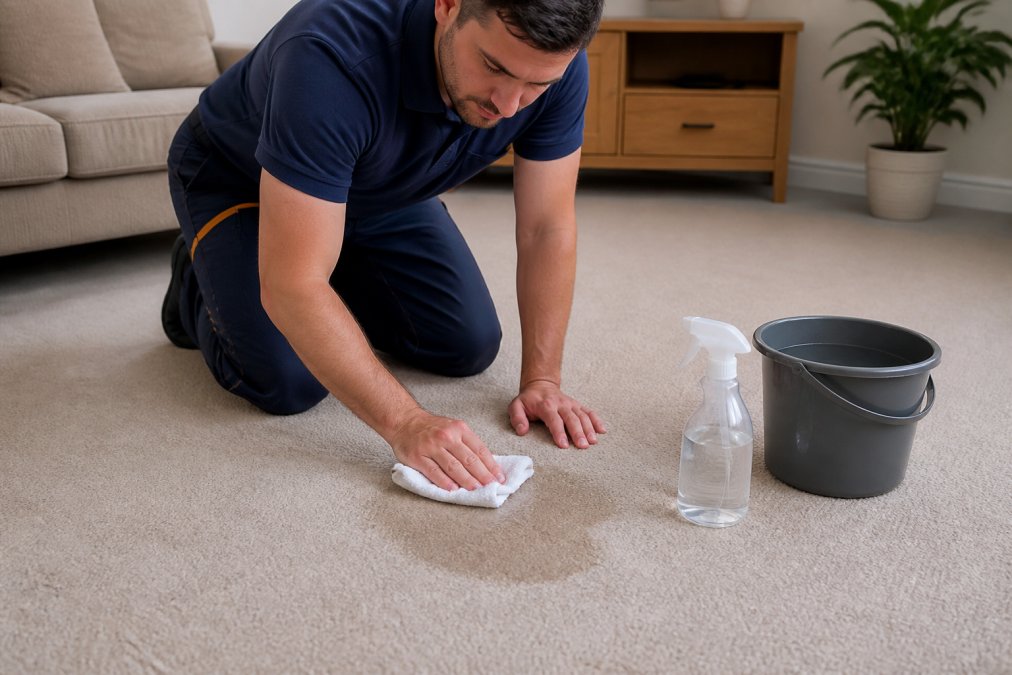
To remove soap residue from carpet, you rinse the fibre repeatedly with a mild acidic solution and extract the water before it dries. The goal is dilution and removal, not more cleaning.
Total time: 60-90 minutes per room, plus drying
Difficulty: Beginner
- Vacuum the carpet thoroughly on both passes to lift loose soil.
- Test your solution on a hidden patch of carpet and wait 10 minutes for any reaction.
- Fill the spray bottle with one part white vinegar to four parts distilled water.
- Mist a 1 square metre section lightly. Do not soak it.
- Blot with a clean microfibre cloth, pressing down rather than rubbing.
- Rinse the cloth or swap to a fresh one as it picks up residue.
- Extract the section with a wet-dry vacuum on suction only.
- Repeat the mist-and-blot cycle until the cloth comes away clean.
- Move to the next section and work in the same order across the room.
- Dry the carpet completely before walking on it.
Blotting vs Scrubbing: What Actually Works
Blotting works; scrubbing damages. Scrubbing pushes soap deeper into the pile and abrades the fibre surface, making the carpet hold even more soil next time.
Press a clean cloth down firmly and let the fibre release moisture into it. For stubborn patches, apply palm pressure for ten seconds, then lift. If the cloth comes away tacky, the residue is still there, keep going.
Rinsing and Extraction to Prevent Re-Soiling
Rinsing removes the chemistry; extraction removes the water. Skipping either brings the sticky cycle back. Extraction separates a professional finish from a DIY one, because a wet-dry vacuum pulls water and suspended residue out of the padding rather than leaving it to wick upward as it dries.
If you don’t own an extractor, blot as dry as you can with towels, then weight a dry towel over the area for an hour. Wicking happens from the padding up, so the deeper you dry, the less returns to the surface. remove stubborn carpet odors.
Does White Vinegar Remove Soap From Carpet?
White vinegar does remove soap from carpet because its mild acidity neutralises the alkaline residue left by most shampoos. Shampoos are formulated alkaline to lift grease, and that same alkalinity leaves the tacky film behind. Acetic acid, at roughly 5% strength in household vinegar, brings the fibre surface back towards neutral so the residue releases into your cloth.
Dilute it one part vinegar to four parts distilled water, mist lightly, and blot. The vinegar smell fades completely once the carpet dries, usually within a couple of hours in a ventilated room.
Why Vinegar Works, and Where It Stops Working
The neutralisation is real chemistry: alkaline surfactant residue + mild acid = a neutral salt and water, both of which your cloth and extractor can lift. That’s why vinegar outperforms plain water on a sticky pile, water dilutes the residue but doesn’t change its pH, so the film can re-form as it dries.
Where it stops working:
- Greasy or oil-based residue, vinegar is water-based and will not cut oil. Use isopropyl rubbing alcohol instead, applied to a cloth rather than sprayed directly, and ventilate well.
- Very thick buildup, one pass won’t fix a carpet shampooed repeatedly without rinsing. Expect three to five mist-and-blot cycles per section, with extraction between passes.
- Delicate natural fibres, see the fibre notes above. Viscose and some plant-derived fibres should not see vinegar at all.
Fibre-by-Fibre Vinegar Guidance
This is where DIY jobs go wrong.
- Nylon: 1:4 dilution, mist and blot, safe. Nylon is the most forgiving common fibre.
- Polyester: 1:4 dilution, safe. Watch for pile crush if you scrub, blot only.
- Polypropylene (olefin): 1:4 dilution, safe, but the fibre has low resilience so keep pressure light.
- Wool: 1:6 dilution, patch test for 10 minutes, blot only, dry fast. Wool is acidic by nature so vinegar is compatible, but wet wool felts.
- Viscose / rayon / plant-derived ‘soft’ fibres: do not use vinegar. Distilled water only, minimal moisture, fast drying.
- Unknown fibre: treat as wool until proven otherwise. The patch test is your insurance.
Rubbing Alcohol as the Alternative
Rubbing alcohol (isopropyl alcohol) works as an alternative for greasy residue. It evaporates faster than water, an advantage on wool and any fibre you want dry quickly, but it needs more ventilation and can dull some synthetic dyes if over-applied. Apply to a cloth, not the carpet, and blot. Never combine it with vinegar in the same bottle.
Practical Points That Matter
- Never saturate the carpet. You want the fibre damp, not wet through to the padding, if a pressed dry towel comes away wet, you’ve used too much.
- Work in 1 square metre sections and finish each before moving on, so you’re not leaving half-treated patches to dry.
- Rinse your cloth often. A cloth loaded with residue just smears it back in.
- If the carpet still smells of vinegar after drying, you used too much. A light mist dries odourless within a couple of hours; a soaked carpet can smell for days and risks the padding underneath.
If the carpet still smells of vinegar after drying, you used too much. A light mist dries odourless within a couple of hours. A soaked carpet can smell for days and risks the padding underneath.
Vinegar neutralises alkaline shampoo residue, which is why it beats plain water on a sticky pile. Match the dilution to the fibre, 1:4 for synthetics, 1:6 for wool, water only for viscose, and switch to isopropyl alcohol for greasy residue.
When to Call Professional Carpet Deep Cleaning Services
Professional carpet deep cleaning services make sense when residue is deep in the padding, when the carpet is wool or another delicate fibre, or when repeated DIY rinsing hasn’t broken the sticky cycle, at that point you’re fighting chemistry already soaked through the backing.
Carpet Cleaning In Stockport provides professional, deep-cleaning services. Our experienced technicians use advanced equipment and family-friendly, pet-safe cleaning solutions to effectively remove dirt, stains, bacteria, and allergens. We are dedicated to restoring your flooring to its original quality while ensuring a healthier, fresher home environment for your family.
Households with pets or young children, tenants preparing for a move-out inspection, and anyone who’s already tried a rental machine and watched the carpet re-soil within a week.
If you’re weighing up whether it’s worth it, the NHS guidance on indoor allergens and dust mites is worth a read. Residue that traps soil also traps allergens, and a carpet that stays damp invites mould. Deep extraction removes both.
Conclusion
Breaking the sticky cycle comes down to one principle: remove the soap, don’t add more. Rinse with a diluted acidic solution, blot rather than scrub, extract the water, and dry the carpet fully before walking on it. If residue has worked into the padding, or you’re dealing with wool, pets, or a deadline, bring in proper equipment.
Carpet Cleaning In Stockport offers same-day service, prices from only £29.00 per area, and a deep cleaning process that lifts hidden contaminants along with the residue. Our experienced technicians use family-friendly and pet-friendly cleaning solutions, and our process offers fast drying times. Get started with Carpet Cleaning In Stockport and get your carpet back to clean, residue-free fibre.
Frequently Asked Questions
How can I safely remove soap residue from my carpet?
Mix one part white vinegar with two parts cool water in a spray bottle. Lightly mist the affected area, then blot with a clean, damp cloth to lift the loosened soap residue. Repeat with fresh water until no suds appear. Finish by pressing a dry towel into the carpet to absorb moisture, then allow it to air dry with good ventilation. Always test on a hidden patch first to check colourfastness, and avoid over-wetting the carpet padding.
What happens if soap dries on carpet?
When soap residue dries on carpet fibres, it leaves a sticky film that attracts dirt and dust particles. This creates a cycle where the carpet looks dirty again within days of cleaning. The residue can also make carpet pile feel stiff or crunchy underfoot. Over time, repeated detergent buildup traps more soil in the fibres, making each subsequent clean less effective and potentially causing fibre damage if aggressive scrubbing is used.
Will white vinegar damage a carpet?
White vinegar is acidic, so it neutralises alkaline soap residue effectively. When diluted properly (one part vinegar to two parts water), it is safe for most synthetic carpets including nylon and polyester. However, vinegar can affect wool or natural fibre carpets, and it may damage colour in some dyed carpets. Always test on a small, hidden area first. Never use undiluted vinegar, and rinse thoroughly after treatment to avoid leaving new residue behind.
How do I know if I have soap residue left in my carpet?
Common signs include a sticky or tacky feel when you touch the carpet, rapid re-soiling within days of cleaning, stiff or crunchy carpet pile, and visible suds appearing when you apply fresh water to the surface. You may also notice a dull appearance despite recent cleaning. If you used a carpet shampooer and did not rinse thoroughly, residue is likely present. A simple test is to dampen a white cloth, rub it across the carpet, and check for soapy bubbles.