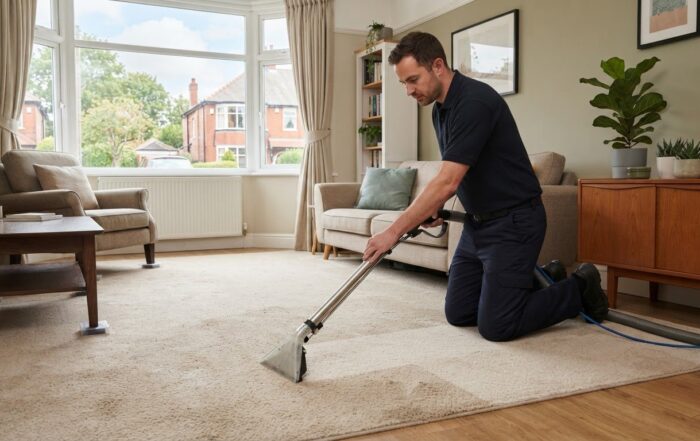
Last Updated: October 25, 2026
Quick Summary
Professional carpet drying cost depends on the affected area, water damage severity, carpet type, and urgency. Costs range widely because some jobs need only surface extraction and fan placement, while others demand industrial dehumidifiers, monitoring equipment, and multiple visits over several days.
- Water damage is classified into three categories, with Category 1 (clean water) being lowest cost and Category 3 (sewage or external floodwater) requiring carpet removal and restoration project pricing.
- Area is the single biggest driver of cost; a 12-square-metre bedroom typically costs far less than a 40-square-metre lounge with the same water category.
- Emergency and out-of-hours call-outs typically attract a surcharge of 25-50% above regular pricing, but rapid extraction often saves money overall by preventing mould and structural damage.
- A strong quote itemises extraction, equipment deployment per day, monitoring visits, and any treatment or removal separately rather than showing only a lump sum total.
- Mould growth typically begins within 24-48 hours of water exposure, making urgent professional extraction essential to prevent exponentially higher costs.
Table of Contents
- How Much Does Professional Carpet Drying Cost?
- What Affects Professional Carpet Drying Prices
- Carpet Water Extraction Cost and Service Breakdown
- Carpet Drying Time: What to Expect
- Carpet Water Damage Restoration: When Professional Help Matters
- Carpet Drying Equipment Hire Versus Professional Service
- Emergency Call-Outs and Out-of-Hours Rates
- Getting a Quote for Your Carpet Drying Needs
- Frequently Asked Questions
How Much Does Professional Carpet Drying Cost?
Professional carpet drying cost depends on the affected area, water damage severity, carpet type, and urgency.
Homeowners often underestimate water damage restoration. A small spillage that dries within hours costs far less than flooding that saturates underlay and subfloors, the difference can mean hundreds of pounds in additional charges.
The cost of professional carpet drying services ranges widely. Some jobs need only surface extraction and fan placement; others demand industrial dehumidifiers, monitoring equipment, and multiple visits over several days.
What Affects Professional Carpet Drying Prices
Drying is priced differently from routine cleaning. A cleaning quote is usually a per-room rate; a drying quote is built from the affected area, water category, equipment needed, and monitoring visits. Providers typically use a fixed price per square metre, a banded per-room price with an uplift for severe saturation, or an hourly equipment-and-labour rate for larger jobs. Ask which structure is used before comparing quotes, because a low per-room figure can hide equipment and monitoring charges.
Water damage severity and category
Water damage is classified into three categories, and the category changes both the method and the price. Category 1 water comes from a clean source such as a burst supply pipe or an overflowing tap. Category 2 water carries some contamination, for example from a washing machine discharge or a toilet overflow with urine present. Category 3 water is grossly contaminated, such as sewage backup or floodwater from an external source.
The practical effect on price is the treatment layer added on top of drying. Category 1 jobs usually need extraction, air movement, and dehumidification only. Category 2 jobs add antimicrobial treatment and may require disposal of contaminated underlay. Category 3 jobs usually mean the carpet and underlay are removed as controlled waste, with drying redirected to the subfloor and structure.
If the water source is sewage, external flooding, or has been standing for more than 48 hours, assume Category 3 until a technician says otherwise. Drying a contaminated carpet rather than removing it can spread contamination and is rarely the cheaper option once remediation is included.
Affected area and room size
Area is the single biggest driver of a drying quote. Providers measure the affected carpet in square metres, then add the underlay and subfloor where moisture has travelled.
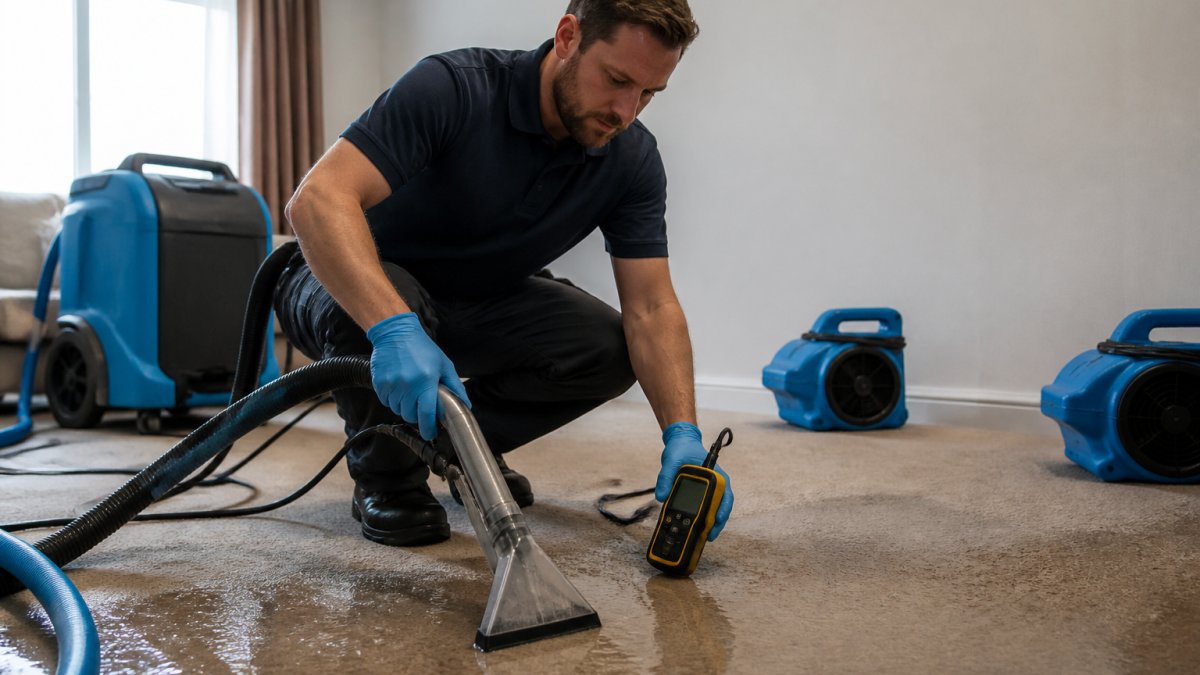
Area drives both extraction time and equipment on site.
Carpet material and fibre type
Fibre type changes the drying method and sometimes the price. Wool absorbs moisture more slowly than synthetic but holds it longer and is prone to shrinkage and colour bleed if dried too aggressively.
The cost effect is mainly in time and equipment settings. Delicate natural fibres may need lower-temperature drying and longer run times, extending equipment hire. Wool carpets with jute backings may need the underlay lifted and replaced rather than dried in place.
Response time and urgency
Emergency and out-of-hours attendance carries a premium. Evening, weekend, and bank holiday call-outs typically attract a surcharge, with overnight response usually the highest band.
Paying an emergency premium to start extraction within hours usually reduces total drying time and lowers the risk of mould, odour, and underlay replacement. Waiting until the next working day can turn a dryable carpet into a replacement job.
Access, containment, and property layout
Quotes can also move on access. Flats above ground floor, tight stairwells, and rooms with little space for equipment require more labour to move extraction units and position air movers. Where contamination is present, containment to stop spores and moisture spreading adds time and materials.
Water damage is classified into three categories, each requiring different treatment methods and affecting the overall cost.
| Water Category | Source | Treatment Required | Cost Impact |
|---|---|---|---|
| Category 1 | Clean source, burst pipe, overflowing tap | Extraction, air movement, dehumidification | Lowest cost, area-based pricing |
| Category 2 | Some contamination, washing machine discharge, toilet overflow | Extraction plus antimicrobial treatment, possible underlay disposal | Medium cost, separate treatment lines |
| Category 3 | Gross contamination, sewage backup, external floodwater | Carpet and underlay removed as waste, subfloor and structure drying | Highest cost, restoration project pricing |
Carpet Water Extraction Cost and Service Breakdown
Water extraction is the first and most critical step in carpet drying, removing standing water and moisture from carpet fibres and underlay using industrial-grade equipment.
Powerful truck-mounted or portable extraction units create suction to pull water from carpet layers.
Most quotes break down into extraction and drying charges as separate line items. Extraction might represent 30-40% of the total cost, with equipment rental and monitoring making up the remainder.
Carpet Drying Time: What to Expect
Drying duration varies with humidity, temperature, air circulation, and moisture absorbed.
The cost of professional carpet drying services often reflects the drying timeline, since technicians must return to monitor progress and adjust equipment. Longer periods mean more visits, more equipment rental time, and higher labour costs.
Temperature and humidity control speed up drying significantly. Professional dehumidifiers remove moisture from the air so carpet releases water more efficiently, and heated air circulation accelerates the process.
Carpet Water Damage Restoration: When Professional Help Matters
DIY drying rarely matches professional extraction and restoration.
Professional restoration addresses moisture in all carpet layers and prevents secondary damage. To understand why professional intervention protects your investment, learn about the full restoration process after drying.
Mould growth typically begins within 24-48 hours of water exposure, at which point professional extraction and drying become essential. Acting quickly prevents exponentially higher costs down the line.
Carpet Drying Equipment Hire Versus Professional Service
You can hire carpet drying equipment from tool rental shops, but consumer-grade equipment lacks the power and precision of industrial extraction units, and hire dehumidifiers often run at lower capacity than professional models.
If you’re considering the DIY route, explore available equipment rental options. Professional service typically delivers faster drying, better moisture removal, and lower risk of residual dampness.
Professional technicians bring expertise in equipment placement, humidity monitoring, and timing adjustments that maximise drying efficiency across carpet types and water damage categories, reducing drying time and preventing mistakes that trap moisture.
Emergency Call-Outs and Out-of-Hours Rates
Water damage doesn’t follow business hours. Burst pipes, flooding, and overflows happen on weekends, evenings, and holidays. Emergency response services charge premium rates for rapid deployment and urgent extraction work.
When you need same-day or after-hours service, learn about fast response options for urgent situations. Standard emergency surcharges typically range from 25-50% above regular pricing, depending on the time and day.
Despite the premium, emergency extraction often saves money overall.
Getting a Quote for Your Carpet Drying Needs
A drying quote should be specific enough to show what you are paying for. The strongest quotes are itemised rather than a lump sum, separating one-off extraction from daily equipment and monitoring charges. Compare line items, not just totals, because a lower total often means fewer monitoring visits or a shorter assumed drying period.
What a drying quote should itemise
Ask for the quote to show, as separate lines where they apply:
- Attendance and assessment, the call-out or survey charge, including any out-of-hours premium.
- Water extraction, the labour and equipment time to remove standing and free water from carpet and underlay.
- Equipment deployment, air movers and dehumidifiers, usually charged per unit per day rather than as a single fee.
- Monitoring visits, moisture readings and equipment adjustments, charged per visit or included in a daily rate.
- Antimicrobial or sanitisation treatment, where the water category requires it.
- Removal and disposal, carpet, underlay, or both, as controlled waste, where the carpet cannot be saved.
- Underlay replacement, materials and labour if the underlay is not salvageable.
- Drying certificate or moisture record, a written record of readings at start and finish.
A quote listing only a total or per-room figure gives you no way to check whether monitoring visits are included or equipment is charged for the full drying period. Ask how many days of equipment hire and monitoring visits are assumed, and what happens if drying takes longer than estimated.
Ask for the quote in writing with the drying period stated in days. If the technician cannot say how many days of equipment are included, the total is not comparable with a quote that can.
Insurance claims and documentation
If the damage is being claimed on home or commercial insurance, the quote and drying record become part of the claim file.
Ask before work begins whether the provider can supply moisture readings, a drying log, and an itemised invoice suitable for a claim, and whether they work with loss adjusters. Some invoice the insurer directly; others require you to pay and reclaim.
Comparing quotes fairly
Compare quotes on four points: the water category assumed, the measured area, the equipment days and monitoring visits included, and whether removal, disposal, and underlay replacement are in or out. A quote assuming Category 1 when the water is Category 2 is not cheaper, it is incomplete. One excluding underlay replacement may look lower until the underlay is found unsalvageable.
Be cautious of a quote significantly below the others without a stated reason. Common explanations are a shorter assumed drying period, no monitoring visits, consumer-grade equipment, or excluded disposal costs. None is necessarily wrong, but each should be visible so you can decide whether the saving is real.
Questions to ask before you book
- Which water category have you assessed, and what treatment does that add?
- How many square metres of carpet and underlay are affected?
- How many air movers and dehumidifiers will be used, and for how many days?
- How many monitoring visits are included, and what is the charge for extra visits?
- Is antimicrobial treatment included, and is it needed for this water category?
- Is underlay replacement included if the underlay cannot be dried?
- Will you provide moisture readings and an itemised invoice for an insurance claim?
- What is the out-of-hours or emergency surcharge, and does it apply to this booking?
Get a quote for your area by contacting professionals directly, and use the line items above to check each quote covers the same scope before comparing totals. Find local pricing and booking information for your area.
Frequently Asked Questions
How much do professional carpet drying services cost?
Professional carpet drying cost varies based on water damage severity, room size, and drying method. Factors include the affected area, carpet material, response time, and whether additional treatments are needed. For an accurate quote tailored to your situation, contact a professional drying service who can assess the damage and provide a detailed estimate.
What is the average carpet drying time after professional treatment?
Professional carpet drying typically takes 24 to 48 hours, depending on humidity, air circulation, and carpet thickness. Advanced drying equipment and dehumidifiers accelerate the process significantly compared to natural drying. Technicians monitor moisture levels throughout and adjust equipment placement to ensure thorough drying and prevent mould or odour.
Is professional carpet water damage restoration worth the cost?
Yes, professional carpet water damage restoration prevents costly replacements and health risks. DIY drying often leaves moisture trapped beneath the carpet, leading to mould growth, bacterial contamination, and permanent odours. Professional extraction removes water from padding and subfloor, restores the carpet to original condition, and protects your deposit if you are renting.
Should I hire carpet drying equipment or use a professional service?
Professional drying services are more effective than equipment hire. Professionals have industrial-grade water extraction machines, dehumidifiers, and expertise to handle different water categories and carpet types. They monitor progress, prevent secondary damage, and complete the job faster. Equipment hire requires manual operation, takes longer, and may not extract water from padding or subfloor adequately.