Table of Contents
- Why Baking Soda Isn’t Your Only Option for Carpet Odour
- How to Remove Smells from Carpet with Vinegar Solutions
- Using Enzyme Cleaners to Neutralise Odour Sources
- How to Get Urine Smell Out of Carpet Permanently
- Natural Carpet Deodoriser Methods That Work
- How to Freshen Carpet Without Washing It Thoroughly
- Drying and Preventing Odours from Returning
- When to Call a Professional
- Frequently Asked Questions
Last Updated: October 6, 2026
Why Baking Soda Isn’t Your Only Option for Carpet Odour
Many people assume baking soda is the only way to remove carpet odours. It’s the most common suggestion. But it’s not always the best choice, especially if you have pets, young children, or sensitive skin in your home.
Baking soda leaves residue. It can cling to carpet fibres and make them sticky. Over time, this sticky layer attracts dirt. Your carpet gets dirty faster. You end up cleaning more often, not less.
Better alternatives exist. They work faster. They don’t leave residue behind. Some are safer for families with allergies or asthma.
The truth is simple: how to deodorize carpet without baking soda opens up better options. You’ll get fresher-smelling carpets without the downsides.
Here’s what makes a good odour solution:
- Neutralizes the smell, not just masks it
- Dries quickly to prevent mildew
- Leaves no sticky residue
- Safe for children and pets
- Works on the odour source, not just the surface
Let’s explore the methods that actually work.
How to Remove Smells from Carpet with Vinegar Solutions
White vinegar is one of the most effective odour neutralizers for carpet. It doesn’t just cover bad smells, it breaks them down.
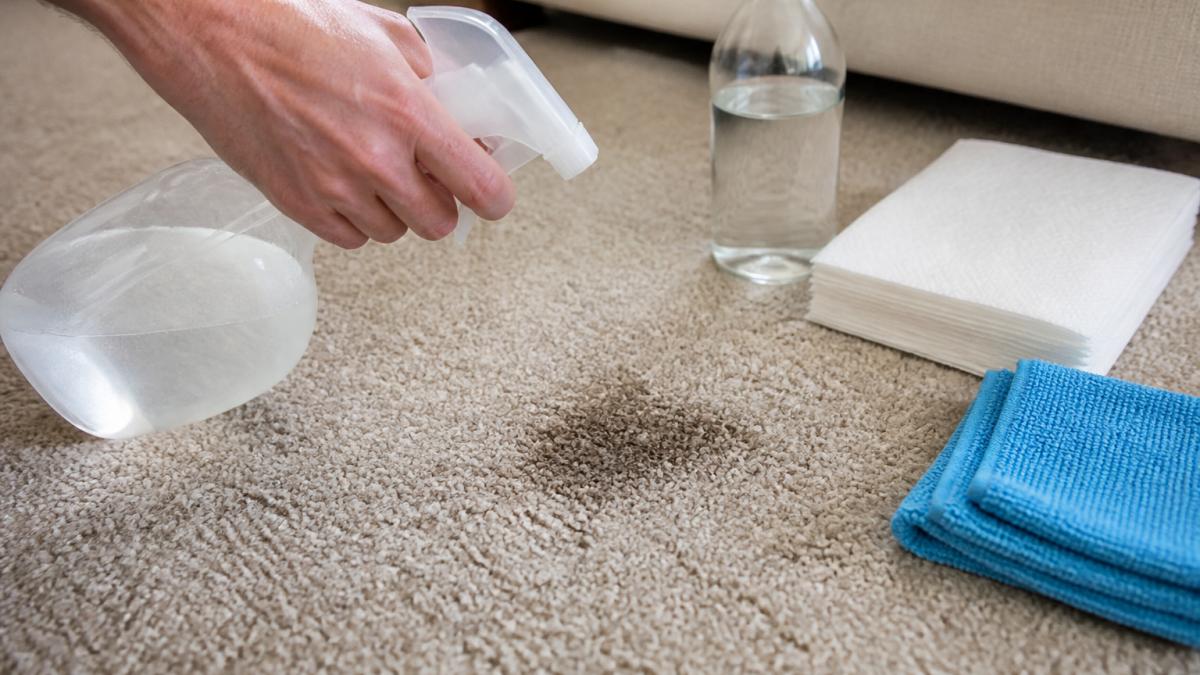
Vinegar works because it’s acidic. Odours are often alkaline. When acid meets alkaline, they neutralise each other. The smell disappears.
Basic vinegar spray method:
- Mix equal parts white vinegar and warm water in a spray bottle
- Spray the affected area lightly (don’t soak it)
- Let it sit for 10-15 minutes
- Blot with clean towels
- Open windows or use a fan to dry the carpet
- Vacuum once fully dry
The vinegar smell will fade as the carpet dries. This usually takes 2-4 hours depending on humidity and air flow.
For stubborn odours, add a few drops of dish soap to your vinegar solution. The soap helps break down oils that trap smells. This works especially well for pet accidents or spilled food.
Club soda method:
Club soda is another effective option. The carbonation helps lift odours from carpet fibres.
- Pour club soda directly onto the problem area
- Scrub gently with a soft brush
- Blot with clean towels
- Repeat if needed
- Allow to air dry completely
This method works well for fresh spills. It’s less effective on old, set-in odours.
Vodka spray:
Vodka contains alcohol, which evaporates quickly and kills odour-causing bacteria. Use plain, cheap vodka, no need for premium brands.
- Fill a spray bottle with vodka
- Spray lightly over the odour source
- Let it dry (the alcohol evaporates in 30 minutes)
- The smell disappears as it dries
This is one of the fastest-drying methods. It leaves no residue.
Using Enzyme Cleaners to Neutralise Odour Sources
Enzyme cleaners are different from vinegar or other sprays. They actually break down the organic matter causing the smell.
Enzymes are proteins that eat bacteria and proteins. Pet urine, food residue, and mould all contain proteins. Enzymes destroy them at the source. This is why enzyme cleaners work so well on pet accidents.
These products are worth the investment if you have persistent odours.
How to use enzyme cleaners:
- Identify the exact location of the odour
- Apply the enzyme cleaner according to product instructions
- Let it sit (usually 12-24 hours for best results)
- Blot or rinse as directed
- Allow to dry completely
Enzyme cleaners need time to work. Don’t rush the process. The longer they sit, the more odour they eliminate.
Never mix enzyme cleaners with vinegar or bleach. The chemical reaction can be harmful. Use one product at a time, and rinse thoroughly between treatments.
How to Get Urine Smell Out of Carpet Permanently
Pet urine is the hardest odour to remove. Regular cleaning won’t work. The urine soaks into carpet padding underneath the fibres.
This is where enzyme cleaners become essential. They’re specifically designed to break down urine compounds.
Step-by-step urine removal:
- Find the exact spot using a blacklight (urine glows under UV light)
- Blot any fresh urine with paper towels
- Apply an enzyme-based odour neutralizer designed for pet urine
- Cover the area with plastic to keep moisture in (enzymes work better when damp)
- Leave for 24 hours minimum
- Remove plastic and allow to air dry
- Vacuum once completely dry
If the smell returns after a few weeks, the carpet padding is still contaminated. Professional cleaning becomes necessary at this point.
The key to permanent urine removal is treating the padding underneath, not just the carpet surface. Surface cleaning alone will never stop the smell from returning.
Prevention after treatment:
- Use enzymatic cleaners regularly in problem areas
- Improve ventilation to reduce moisture
- Consider a carpet deodoriser spray between cleanings
- Address the source (litter box location, marking behavior) to prevent future accidents
Natural Carpet Deodoriser Methods That Work
Natural methods can freshen carpet, but they are not interchangeable. Some mask odours, some absorb them, and some can damage certain fibres or leave residue that attracts dirt.
Know your fibre first. Most household carpets are synthetic, nylon, polyester or polypropylene (often called olefin). These tolerate diluted vinegar, mild soap and most essential oil sprays.
Essential oil spray:
- Mix 10-15 drops of essential oil (lavender, lemon or eucalyptus) with 250 ml of water and a few drops of mild dish soap in a spray bottle.
- Shake well, then spray lightly, never soak the carpet.
- Let it dry fully, then vacuum.
This works best on mild, surface-level smells. It masks more than it neutralises, so it is a maintenance step rather than a fix for urine, mildew or smoke.
Citrus peel method:
Scatter fresh peels (lemon, orange, grapefruit) over the carpet overnight, then vacuum in the morning. The oils release a fresh scent and the peel adds a light abrasive action. This suits mild staleness.
Coffee grounds:
Use fully dried, used grounds. Sprinkle thinly, leave for 30 minutes, then vacuum thoroughly. Grounds absorb some surface odour and add a coffee scent.
Activated charcoal:
Place bowls of activated charcoal around the room and leave for 24-48 hours.
Which method for which odour:
- Mild staleness or cooking smells: essential oil spray, coffee grounds or charcoal.
- Fresh food or drink spills: blot first, then a light vinegar spray (see the vinegar section).
- Pet urine: enzyme cleaner, natural methods will not break down uric acid crystals.
- Mildew or damp: fix the moisture source first, then dry thoroughly; fragrance will only mask it.
- Smoke: ventilation and repeated light treatments; charcoal helps in the room but not in the fibres.
Never mix essential oils, vinegar, peroxide or commercial cleaners in the same bottle. Some combinations produce irritating fumes or damage fibres. Use one method at a time and let the carpet dry between treatments.
Natural methods are best for mild, recent odours. For strong, set-in or recurring smells, an enzyme cleaner or professional clean will do more than any fragrance.
How to Freshen Carpet Without Washing It Thoroughly
Sometimes you need the room to smell better without a full wet clean. These methods work on surface odours and general staleness.
Dry powder method (baking-soda-free):
Commercial dry carpet deodorisers use a carrier powder, often cornstarch, clay or a zeolite blend, that absorbs surface oils and odour molecules. Sprinkle lightly and evenly, leave for 10-15 minutes, then vacuum with slow, overlapping passes.
Spray and air method:
A light vinegar spray (equal parts white vinegar and water) or a commercial fabric deodoriser spray can refresh the surface. Spray a fine mist, never soak, then open windows and run fans for 2-3 hours.
Sunlight and ventilation:
UV light from direct sun helps kill surface bacteria and dries the pile, which reduces musty smells. Open windows wide and let sun into the room for several hours.
Air circulation:
Run ceiling fans, portable fans or a dehumidifier to keep air moving. Better airflow speeds drying after any spill and stops the damp, closed-in smell that builds in humid rooms.
How these compare:
- Dry powder: best for general staleness; leaves fine residue if over-applied.
- Vinegar spray: best for mild, recent odours; needs full drying to avoid damp.
- Sunlight: best for mustiness; slow and weather-dependent.
- Air circulation: best as a support method; does not remove odour on its own.
If the smell returns within a day or two of any quick method, the odour source is deeper than the surface, likely in the backing or underlay. Move to an enzyme cleaner or book a professional clean rather than repeating the quick fix.
These methods buy time between deeper cleanings. They maintain freshness; they do not solve persistent odour problems.
Drying and Preventing Odours from Returning
Moisture is the enemy of fresh carpet. Damp carpet smells musty. It also encourages mould and bacteria growth.
Proper drying technique:
- After any wet cleaning method, blot thoroughly with clean towels
- Use fans to increase air circulation
- Open windows if weather allows
- Consider a dehumidifier in very humid conditions
- Avoid walking on damp carpet
- Wait until completely dry before vacuuming
Drying usually takes 4-8 hours depending on humidity and air flow. Some areas may take longer.
Preventing future odours:
- Vacuum weekly to remove dust and bacteria
- Address spills immediately before they set
- Improve home ventilation, open windows regularly
- Control humidity with dehumidifiers in damp rooms
- Use carpet deodoriser sprays monthly as maintenance
- Keep carpet padding dry (fix leaks promptly)
Moisture and mould prevention:
Standing water in carpet leads to mould. Mould smells terrible and damages health. If carpet gets wet:
- Remove excess water immediately with towels
- Dry as fast as possible (fans, dehumidifiers, open windows)
- If it doesn’t dry within 24 hours, professional drying is needed
- Check padding underneath for dampness
When professional help is needed, advanced drying equipment removes moisture quickly. Fast drying prevents mould and odours from developing.
When to Call a Professional
DIY methods work for mild to moderate odours. But some situations require professional help.
Call a professional when:
- The smell persists after multiple DIY treatments
- You have large areas affected by pet urine
- The carpet was flooded or has water damage
- You need the carpet cleaned before moving house
- The odour comes from unknown sources
- You have commercial carpet that needs deep cleaning
- Mould or mildew is visible or suspected
Professional carpet cleaners have equipment that reaches deep into carpet padding. They use industrial-strength enzyme cleaners. They can dry carpet in hours instead of days.
Carpet Cleaning In Stockport offers deep-cleaning services that remove odours at the source. Our technicians use family-friendly, pet-safe solutions. We have the equipment to dry carpet, preventing mould and musty smells from returning.
For persistent odours that won’t go away, professional cleaning is an effective solution. It saves time.
Frequently Asked Questions
What can I use instead of baking soda to deodorize carpet?
White vinegar mixed with water, enzyme-based cleaners, club soda, hydrogen peroxide solutions, and essential oil sprays all work without baking soda. Vinegar neutralises odours by breaking down odour molecules, while enzyme cleaners actively digest organic matter causing smells. Choose based on your carpet material and the odour source, pet urine responds best to enzymes, while general mustiness improves with vinegar or ventilation.
How do I remove urine smell from carpet without baking soda?
Enzyme-based cleaners are most effective for urine odours. Apply the enzyme cleaner directly to the affected area, let it sit for 24-48 hours to break down uric acid crystals, then blot thoroughly. For fresh urine, blot immediately with towels, rinse with warm water, apply the enzyme cleaner, and allow complete drying. Enzyme neutralisers work by breaking down the source of the odour rather than masking it, preventing the smell from returning.
Can white vinegar really deodorise carpet?
Yes. White vinegar neutralises odours by reacting with odour-causing molecules. Mix one part white vinegar with three parts warm water in a spray bottle, lightly mist the problem area, and blot with clean towels. The vinegar smell dissipates as the carpet dries, taking the original odour with it. This method works well for general staleness and musty smells but is less effective for stubborn pet urine, enzyme cleaners are better for that.
How do I freshen carpet without making it wet?
Use dry methods: improve ventilation by opening windows and using fans to air out the room. These approaches deodorise without adding moisture that can lead to damp carpet or mould growth.
The bottom line: You don’t need baking soda to remove carpet odours. Vinegar, enzyme cleaners, and natural methods work better for most situations. They leave no residue and dry faster. For stubborn smells or large areas, professional cleaning delivers the fastest, most reliable results. Carpet Cleaning In Stockport specializes in eliminating odours that DIY methods can’t handle. Contact us for a quote on deep cleaning that restores your carpet to fresh, clean condition.