Table of Contents
- Best Carpet Cleaning Methods for Pets: Overview
- Quick Comparison: Carpet Cleaning Methods & Equipment
- Best Carpet Cleaner Machines for Pets
- Homemade Pet Carpet Cleaner Solutions
- How to Remove Pet Urine Smell from Carpet
- Professional Carpet Cleaning for Pet Stains
- Carpet Material Compatibility & Long-Term Health
- Maintenance Schedule: Vacuuming Frequency & Prevention
Last Updated: July 20, 2026
When you’re dealing with pets at home, carpet cleaning becomes a constant battle. Pet accidents, stubborn odors, and embedded hair transform your flooring into a source of frustration. Understanding the best carpet cleaning methods for pets, whether through professional services or targeted DIY approaches, can restore your carpets and eliminate lingering smells. At Carpet Cleaning In Stockport, we’ve spent years helping pet owners tackle these challenges with both immediate solutions and long-term strategies.
Standard vacuuming and surface cleaning miss the root of pet-related carpet problems. Urine crystals embed deep into carpet fibers and backing, enzymatic cleaners work differently than traditional solutions, and certain methods damage carpet longevity if applied incorrectly. This guide covers the full spectrum of best carpet cleaning methods for pets, from portable spot cleaners to professional deep cleaning services.
Quick Comparison: Carpet Cleaning Methods & Equipment
| Method | Best For | Equipment Cost | DIY Difficulty | Drying Time |
|---|---|---|---|---|
| Enzymatic spray | Fresh accidents, quick cleanup | $7-20 | Very easy | 2-4 hours |
| Portable spot cleaner | Targeted stains, upholstery | $130-175 | Easy | 4-6 hours |
| Full-size carpet shampooer | Whole-room deep cleaning | $300-400 | Moderate | 30 min-1 hour |
| Professional deep cleaning | Severe odors, set-in stains | N/A | N/A | 2-4 hours |
| DIY enzymatic solution | Budget-conscious pet owners | $5-10 | Very easy | 3-5 hours |
Best Carpet Cleaner Machines for Pets
Finding the right carpet cleaning machine makes the difference between removing surface dirt and eliminating pet odors at their source. Machines range from lightweight cordless options to heavy-duty full-size units, each with distinct advantages for pet households.
Full-Size Carpet Shampooers
Full-size carpet shampooers deliver powerful cleaning for comprehensive pet stain removal. The BISSELL Revolution HydroSteam Pet Carpet Cleaner combines steam technology with strong suction, reaching deep into carpet fibers where pet urine crystals hide. It includes specialized pet hair tools and dries carpets within 30 minutes using Speed Dry mode.
The Hoover SmartWash Pet Automatic Carpet Cleaner offers automatic cleaning features that eliminate manual trigger control, automatically mixing cleaning solution and water. This hands-free operation appeals to pet owners seeking simplicity, though it may leave carpets slightly wetter than competing models for very deep stains.
Full-size machines work best when you pre-treat visible stains with an enzymatic cleaner 15-30 minutes before running the machine. This gives enzymes time to break down organic matter, making extraction far more effective.
Full-size machines cost $300-400 and pay for themselves after 2-3 professional cleaning sessions. They’re ideal if you have multiple pets, frequent accidents, or high-traffic areas needing regular deep cleaning.
Portable Spot Cleaners
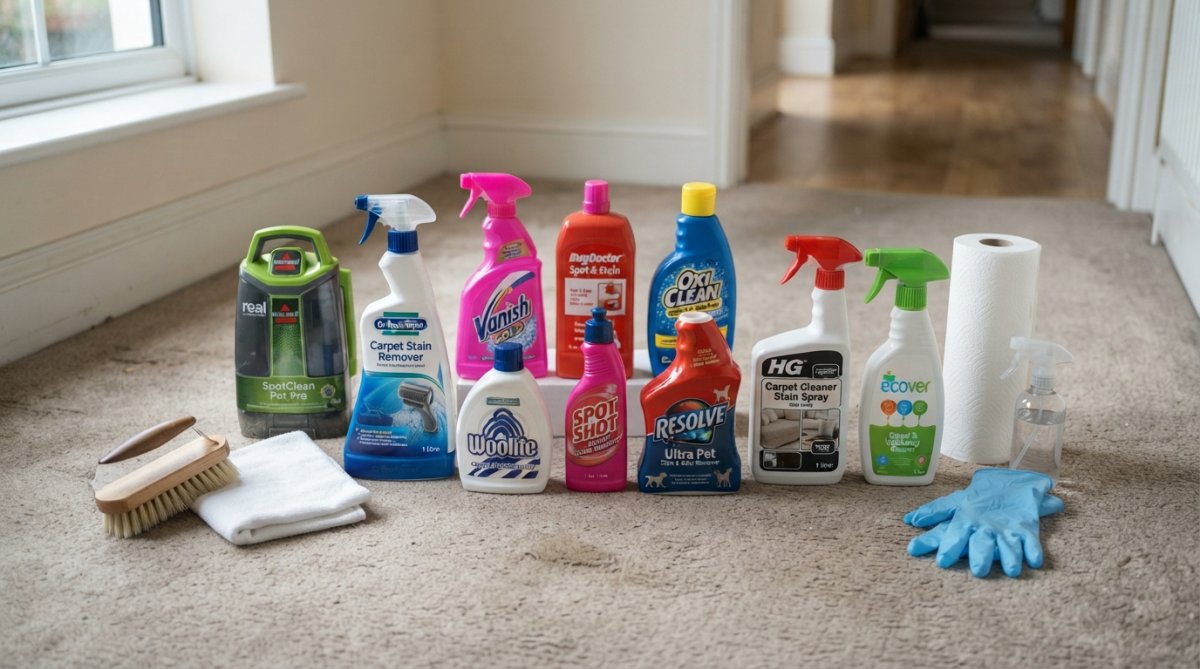
Portable spot cleaners handle fresh accidents and localized stains effectively without bulk. The BISSELL SpotClean Pet Pro Portable Carpet Cleaner delivers strong suction designed for tough pet messes, with XL tank capacity reducing refills during cleanup. The included Stain Trapper Tool prevents mess from spreading during extraction.
Portable cleaners excel at stairs, car interiors, and furniture, areas where full-size machines can’t reach. The trade-off is they’re not designed for whole-room cleaning and may lack the heating power of larger units.
Cordless Portable Options
The BISSELL Pet Stain Eraser PowerBrush Plus Cordless Portable Carpet Cleaner offers grab-and-go convenience with a rotating power brush for enhanced scrubbing. Cordless design enables immediate response to accidents, critical for fresh pet stains. However, the 10-15 minute battery life limits coverage area, making this best for quick spot cleaning rather than extensive treatment.
Cordless machines shine when you need immediate response to fresh accidents. The rotating brush works well on upholstery and car seats, though suction power trails behind corded portable models.
Homemade Pet Carpet Cleaner Solutions
The cleaning solution you use determines whether you’re truly eliminating odors or just masking them temporarily. Understanding enzymatic versus non-enzymatic cleaners gives you control over what touches your carpets.
Enzymatic vs. Non-Enzymatic Cleaners
Enzymatic cleaners work by breaking down organic compounds in pet urine, feces, and vomit at a molecular level. Enzymes consume these materials, eliminating odors rather than covering them up. This matters because pets smell residual urine that humans can’t detect; if enzymatic treatment is incomplete, pets will re-mark the same spots.
Non-enzymatic cleaners rely on surfactants and oxidizing agents to lift stains and neutralize odors chemically. They work faster and often include pleasant fragrances, but don’t break down urine crystals as thoroughly, so they often fail on set-in stains or recurring accidents.
Never mix enzymatic and non-enzymatic cleaners. The chemical reaction can neutralize both products’ effectiveness and may damage carpet fibers. Always rinse thoroughly between applications if switching solution types.
For best results with pet accidents, use an enzymatic cleaner first (letting it sit 6-12 hours), then follow with a non-enzymatic solution if odor persists.
DIY Recipe Approaches
A basic enzymatic solution can be made using white vinegar, baking soda, and water, though commercial enzymatic cleaners contain more potent enzyme cultures. Mix equal parts white vinegar and water in a spray bottle, apply to the stain, let sit 15-20 minutes, then sprinkle baking soda. Vacuum after the baking soda dries completely.
For older, set-in stains, commercial enzymatic products like Rocco & Roxie Supply Co. Professional Strength Stain & Odor Eliminator deliver more concentrated enzymes specifically bred to attack pet stains.
A more effective DIY approach uses hydrogen peroxide (3% solution) mixed with dish soap and water. Mix one cup of 3% hydrogen peroxide, one tablespoon of dish soap, and two cups of water. Test on a hidden carpet area first, as peroxide can lighten some carpet dyes.
The most important factor in DIY cleaning is allowing adequate drying time. Enzymes need moisture to work, so keep treated areas damp for 6-12 hours, then allow complete drying before allowing pets back on the carpet.
How to Remove Pet Urine Smell from Carpet
Pet urine smell persists because urine contains uric acid crystals that standard cleaning doesn’t fully dissolve. These crystals reactivate when carpets get damp, releasing ammonia smell again. Properly removing urine odor requires identifying hidden spots and using the right chemical approach.
Identifying Hidden Urine Spots
A UV blacklight reveals dried urine invisible to the naked eye; the urine fluoresces under UV light, making hidden accidents obvious. Scan your carpet systematically, especially in corners, near doorways, and under furniture where pets tend to mark territory. Mark identified spots with tape or chalk so you don’t lose track during cleaning.
Step-by-Step Odor Neutralization Process
Step 1: Blot and Extract (5 minutes)
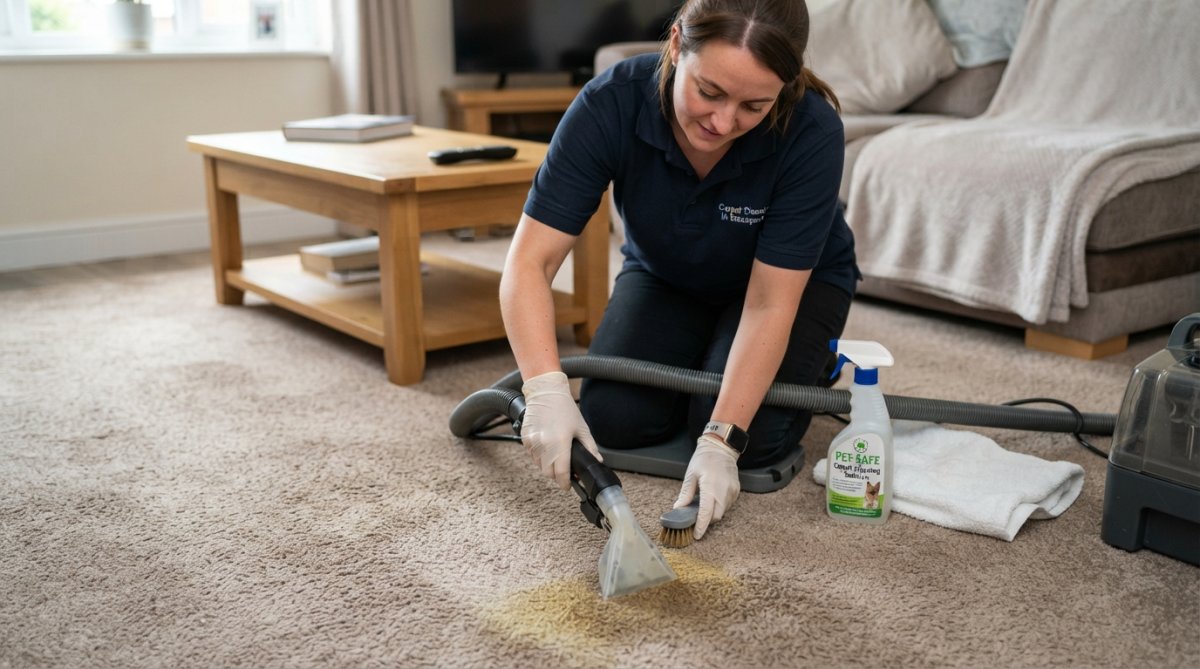
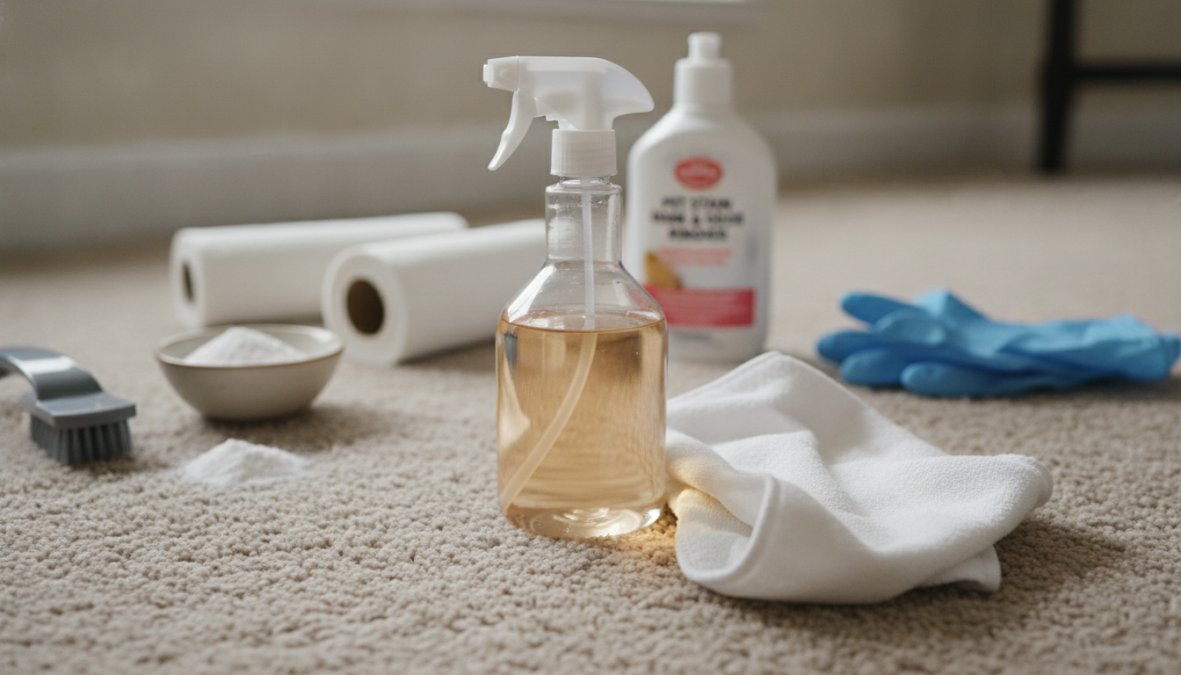
For fresh accidents, blot up as much liquid as possible using paper towels or cloth. Don’t rub; rubbing pushes urine deeper into fibers. Use a portable spot cleaner with just water to extract remaining moisture.
Step 2: Apply Enzymatic Cleaner (10 minutes active time)
Spray an enzymatic cleaner generously over the affected area and surrounding carpet. Follow product instructions for contact time, typically 6-12 hours. Don’t let the carpet dry completely; enzymes need moisture to work.
Step 3: Rinse and Extract (10 minutes)
After enzyme contact time, use a portable spot cleaner with clean water to rinse out the enzymatic solution. Extract as much liquid as possible.
Step 4: Neutralize Remaining Odor (ongoing)
Sprinkle baking soda over the treated area and let it sit 4-8 hours. Vacuum thoroughly when dry. If odor persists after 24 hours, repeat the enzymatic treatment.
Step 5: Prevent Re-marking (behavioral)
Block access to the area or use a pet-safe deterrent spray. Pets can smell residual scent markers that humans can’t detect, so behavioral prevention matters as much as chemical cleaning.
Professional Carpet Cleaning for Pet Stains
DIY methods handle fresh accidents and minor stains well. Professional cleaning becomes necessary when multiple accidents have occurred in the same location, when enzymatic treatments haven’t eliminated odor after repeated attempts, or when urine has soaked through the carpet backing into the subfloor.
When DIY Methods Fall Short
If your carpet still smells like urine after treating with commercial enzymatic cleaners twice, the problem likely extends beyond the carpet pile into the backing and padding. Urine wicks downward through carpet fibers, and once it reaches the backing, home equipment can’t extract it effectively.
According to research from the American Cleaning Institute, professional-grade hot water extraction removes 95% of embedded contaminants compared to 60-70% for consumer equipment. This difference is critical for pet households where complete odor removal prevents re-marking behavior.
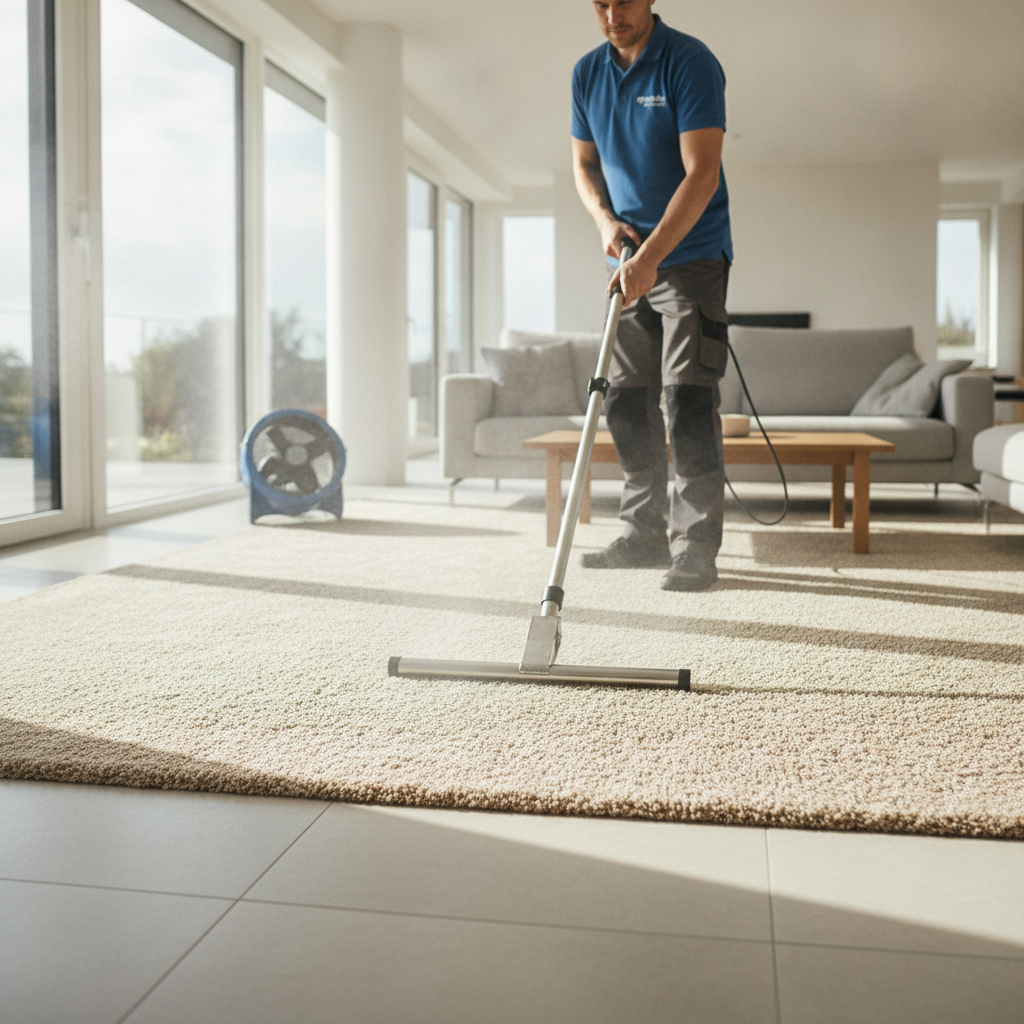
Carpet Cleaning In Stockport uses advanced extraction equipment that applies heated water under pressure, then immediately extracts it along with dissolved urine compounds. Our deep cleaning process removes dirt, stains, bacteria, and allergens that accumulate in pet-heavy homes, with fast drying times of 2-4 hours.
Deep Cleaning vs. Spot Treatment
Deep cleaning treats the entire room or carpet section, extracting all embedded soils, pet dander, and bacteria. This approach works best for general maintenance in pet homes, especially high-traffic areas where dirt accumulates regardless of accidents.
Spot treatment targets specific stains and odor areas using concentrated enzymatic solutions and stronger extraction than consumer equipment. However, spot treatment doesn’t address general soil load in surrounding carpet, so odors may return if bacteria and allergens remain in untreated areas.
For pet households, a combination approach often works best: professional deep cleaning once or twice yearly for overall maintenance, with targeted spot treatment for fresh accidents between professional visits.
Households with multiple pets, frequent accidents, or carpets that smell despite repeated DIY cleaning attempts.
Carpet Material Compatibility & Long-Term Health
Not all carpet cleaning methods suit all carpet types. Natural fibers like wool require different approaches than synthetic fibers, and aggressive cleaning can damage delicate carpet backing or cause color bleeding.
Wool carpets are naturally stain-resistant but sensitive to excessive moisture and heat. Hot water extraction can felt wool fibers if not carefully controlled. Enzymatic cleaners work well on wool, but you must rinse thoroughly; soap residue attracts dirt and causes rapid re-soiling. For wool carpets with pet stains, enzymatic treatment followed by careful extraction works best.
Synthetic carpets (polyester, nylon, polypropylene) tolerate hot water extraction well and dry faster than wool. Always test any new cleaning solution on a hidden carpet area first, especially if your carpet has been treated with stain protection coatings.
Carpet backing matters significantly. Traditional jute backing absorbs and holds moisture, which can cause mildew and odor if not dried completely. Modern latex or polypropylene backings resist moisture better. If your carpet has jute backing and has experienced multiple pet accidents, the backing itself may need replacement if odor persists despite cleaning.
Long-term carpet health in pet homes depends on balancing thorough cleaning with fiber preservation. Enzymatic cleaners are gentler on fibers than oxidizing cleaners, making them preferred for frequent use. Deep cleaning once or twice yearly maintains carpet longevity better than waiting until stains become severe.
Maintenance Schedule: Vacuuming Frequency & Prevention
The most effective carpet cleaning strategy combines regular maintenance with targeted treatment of accidents. Vacuuming frequency directly impacts how quickly odors and allergens accumulate in pet homes.
Homes with one pet should be vacuumed 2-3 times weekly. Homes with multiple pets or heavy shedding breeds need daily vacuuming to prevent hair and dander from embedding into carpet fibers. High-traffic areas where pets spend the most time need more frequent attention.
Professional deep cleaning should occur every 6-12 months for pet households, depending on the number of pets and accident frequency. This removes embedded allergens and bacteria that regular vacuuming misses. Carpet Cleaning In Stockport offers same-day service with family-friendly, pet-safe cleaning solutions.
Prevention strategies matter as much as cleaning frequency. Place washable rugs in high-traffic pet areas to protect carpet underneath. Use enzymatic odor preventers in favorite pet spots to discourage re-marking. Groom pets regularly to reduce shedding.
Pet-related carpet stains and odors are frustrating, but they’re not permanent. Whether you choose DIY enzymatic treatments for fresh accidents or professional deep cleaning for stubborn, set-in odors, the right approach restores your carpets and eliminates lingering smell. Carpet Cleaning In Stockport specializes in removing dirt, stains, bacteria, and allergens with pet-safe cleaning solutions and advanced equipment that delivers fast drying times. Contact Carpet Cleaning In Stockport today to eliminate pet odors completely.
Frequently Asked Questions
What's the difference between enzymatic and non-enzymatic pet carpet cleaners?
Enzymatic cleaners contain live bacteria that break down organic matter in pet accidents, neutralizing odors at the source. Non-enzymatic cleaners use chemical surfactants to lift stains but may only mask odors temporarily. For deep-set pet urine stains, enzymatic formulas are typically more effective because they target the urine crystals causing lingering smells. However, enzymatic cleaners require time to work and proper moisture levels to activate.
How often should I vacuum carpets with multiple pets?
With multiple pets, daily vacuuming is ideal to manage pet hair, dander, and dirt tracked in from outside. High-traffic areas benefit from vacuuming every 1-2 days. An upright vacuum or pet-specific vacuum with strong suction removes embedded pet hair from carpet fibers more effectively than other methods. Weekly deep vacuuming helps maintain carpet pile and prevents allergen buildup that affects both carpet longevity and indoor air quality.
Can I use homemade pet carpet cleaner solutions safely on all carpet types?
Not all carpet materials respond the same to homemade solutions. Delicate fibers like wool or silk require gentler, pH-neutral cleaners to avoid damage. Synthetic carpets tolerate stronger enzymatic or vinegar-based solutions better. Always test any solution on an inconspicuous area first. Some DIY recipes can leave residue or moisture that damages carpet backing if not properly diluted and extracted. When in doubt, check your carpet manufacturer's care guidelines or consult a professional.
Why does pet urine smell return after I clean the carpet myself?
Pet urine odor returns because standard cleaning methods often don't reach all contaminated areas. Urine penetrates deep into carpet fibers and backing, and sometimes into the subfloor. Incomplete extraction leaves moisture that reactivates remaining urine crystals, causing the smell to resurface. Professional hot water extraction and enzymatic treatments target these deeper layers more effectively. Set-in stains from repeated accidents may require professional odor neutralization treatments to permanently eliminate the problem.
What should I look for in a carpet cleaning machine designed for pet owners?
Choose a machine with strong suction power, a specialized pet hair tool or upholstery attachment, and fast drying capabilities. Look for models with large tank capacity to minimize refilling during multiple spot treatments. Machines offering both hot water extraction and steam cleaning provide better stain removal. Consider portability for quick cleanups versus full-size models for deep cleaning entire rooms. Pet-specific machines often include stain trapper tools and enzymatic solution compatibility for tackling tough pet accidents effectively.
This article was written using GrandRanker